
This article's table of contents introduction:
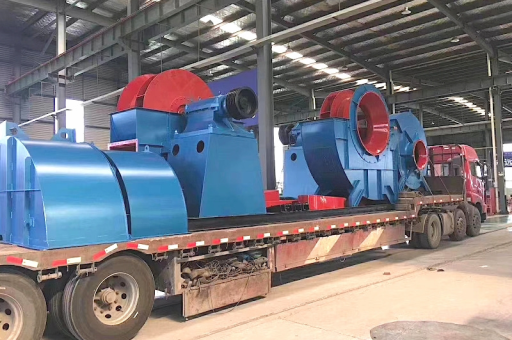
- Table of Contents
- Introduction: What Is a Single Suction FD Explosion Proof Blower?
- Key Technical Specifications and Design Features
- Industrial Low Pressure Applications: Where and Why It Matters
- Explosion Proof Certification: Ensuring Safety in Hazardous Environments
- Performance Optimization: Efficiency, Noise, and Maintenance
- FAQ: Common Questions About Single Suction FD Blowers
- Conclusion: Choosing the Right Blower for Your Operation
** The Ultimate Guide to Single Suction FD Explosion Proof Blower: Industrial Low Pressure Applications, Safety, and Efficiency
Table of Contents
- Introduction: What Is a Single Suction FD Explosion Proof Blower?
- Key Technical Specifications and Design Features
- Industrial Low Pressure Applications: Where and Why It Matters
- Explosion Proof Certification: Ensuring Safety in Hazardous Environments
- Performance Optimization: Efficiency, Noise, and Maintenance
- FAQ: Common Questions About Single Suction FD Blowers
- Conclusion: Choosing the Right Blower for Your Operation
Introduction: What Is a Single Suction FD Explosion Proof Blower?
In modern industrial ventilation, combustion, and pneumatic conveying systems, few components are as vital—and as misunderstood—as the Single Suction FD Explosion Proof Blower. This machine, often referred to in engineering blueprints as a forced draft (FD) fan, is purpose-built to move large volumes of air or gas at relatively low static pressures, all while operating in environments where flammable dusts, vapors, or gases present a constant explosion risk.
The term "single suction" indicates that the impeller draws air in from one side only (as opposed to double suction, which draws from both sides). This design simplifies ductwork connections, reduces axial loads on bearings, and allows for more compact installation footprints—a significant advantage in retrofits or space-constrained facilities.
The "explosion proof" classification means the blower meets strict international standards (such as ATEX, IECEx, or NEC Class I/II) to contain any internal ignition and prevent it from igniting the surrounding atmosphere. This makes it indispensable in industries like chemical processing, mining, biogas plants, and grain handling.
A wind turbine manufacturer, for example, might use such a blower for cooling electrical cabinets or purging hydrogen from generator enclosures, where even a tiny spark could lead to catastrophic failure. The operating pressure range for these units typically falls below 20 kPa (3 psi), placing them firmly in the "industrial low pressure" category.
Key Technical Specifications and Design Features
When selecting a Single Suction FD Explosion Proof Blower, engineers must evaluate several critical parameters:
- Flow Rate (CFM or m³/h): Ranges from 500 CFM for small purge systems to over 100,000 CFM for large boiler applications.
- Static Pressure (in. w.g. or Pa): Usually 2–20 inches of water gauge for low-pressure FD blowers.
- Impeller Type: Forward-curved, backward-inclined, or radial. For explosion-proof service, backward-inclined or radial designs are preferred due to lower risk of stall and debris accumulation.
- Construction Materials: Cast aluminum, stainless steel, or coated carbon steel. Non-sparking materials (e.g., aluminum-bronze impellers) are mandatory for certain gas groups.
- Motor: Typically TEFC (Totally Enclosed Fan Cooled) with a certified explosion-proof enclosure. Motors must match the ATEX gas group (e.g., IIA, IIB, IIC) and temperature class (T3, T4).
- Bearing and Shaft Seal Design: Heavy-duty bearings with grease relief lines, and labyrinth or mechanical seals to prevent gas leakage along the shaft.
A well-engineered wind turbine air handling system may incorporate a single suction FD blower to maintain positive pressure inside the nacelle, preventing the ingress of corrosive salt mist or dust. The blower's low-pressure, high-volume characteristic is ideal for this blanket pressurization role.
Industrial Low Pressure Applications: Where and Why It Matters
The term "industrial low pressure" is often misunderstood. It does not mean "unimportant." In fact, low-pressure air movement is the backbone of dozens of critical processes:
- Boiler and Furnace Forced Draft: FD blowers supply combustion air to burners. A single suction design matches the air intake plenum of most packaged boilers.
- Pneumatic Conveying (Dilute Phase): Low-pressure blowers move bulk solids like cement, plastic pellets, or grains through pipelines at moderate velocities.
- Aeration in Wastewater Treatment: Diffused aeration systems require reliable, continuous low-pressure air.
- Cooling and Ventilation of Enclosures: Transformer rooms, motor control centers, and wind turbine nacelles all depend on FD blowers to remove heat and prevent condensation.
- Vapor Recovery and Gas Blanketing: In petrochemical plants, low-pressure blowers circulate inert gases to prevent explosive mixtures from forming.
Because many of these applications involve solvents, hydrogen, methane, or combustible dust, the explosion-proof feature is not optional—it's legally mandated. A single suction FD explosion proof blower offers the best balance of flow, pressure, and safety for these environments.
Explosion Proof Certification: Ensuring Safety in Hazardous Environments
The explosion-proof rating of a blower is not a single label—it's a system of design, testing, and documentation. Here's what you need to know:
- ATEX (Europe): Classifies equipment into groups (I for mining, II for surface industries) and categories (1, 2, 3). A blower with ATEX II 2G Ex d IIB T4 is suitable for Zone 1 explosive gas atmospheres.
- NEC/CEC (North America): Uses Class, Division, and Group (e.g., Class I, Division 1, Group D for gasoline vapors). Equivalent explosion-proof blowers meet UL 705 and CSA C22.2 standards.
- IECEx (International): Harmonizes requirements globally. Most manufacturers now offer IECEx-certified blowers.
Key explosion-proof features include:
- Flame path gaps (e.g., between the housing and shaft) that cool escaping gases below ignition temperature.
- Enclosures capable of withstanding internal explosion pressure without deformation.
- Grounding lugs and bonding straps to prevent static charge accumulation.
For a wind turbine installation, the blower must also withstand salt spray (corrosion), vibration (fatigue), and temperature extremes. Many operators now specify stainless steel impellers and epoxy-coated housings as standard, even though the base price is higher.
Performance Optimization: Efficiency, Noise, and Maintenance
Owning a Single Suction FD Explosion Proof Blower is only half the battle. To maximize ROI, you must consider:
Efficiency: Low-pressure FD blowers typically operate at 60–75% static efficiency. Variable frequency drives (VFDs) can adjust speed to match actual demand, cutting energy costs by up to 40%. Select a motor with IE3 or IE4 premium efficiency.
Noise: These blowers produce 85–95 dB(A) at 1 meter. Solutions include inlet silencers, acoustic enclosures, and flexible connectors. For wind turbine applications, noise limits are often dictated by local environmental regulations near residential areas.
Maintenance:
- Inspect and grease bearings every 1,000 running hours.
- Check V-belt tension (if belt-driven) quarterly.
- Clean impeller blades from dust buildup—imbalance can cause vibration leading to seal failure.
- Verify explosion-proof conduit seals annually.
A predictive maintenance approach (using vibration analysis and thermography) can extend blower life well beyond 10 years.
FAQ: Common Questions About Single Suction FD Blowers
Q1: Can I use a standard centrifugal fan in an explosive environment?
No. Standard fans lack certified flame paths, spark-resistant construction, and proper grounding. Using them in a hazardous area violates safety codes and insurance policies.
Q2: What is the difference between a single suction FD blower and a forced draft fan?
In practice, they are the same. "FD blower" is the term used in power generation and boiler contexts; "single suction" describes the inlet arrangement.
Q3: Does an explosion-proof blower need a different motor?
Yes. The motor must have the same explosion-proof rating as the blower housing. A mismatched motor is a safety risk and voids certification.
Q4: Can a wind turbine facility use a non-explosion-proof blower?
Only if the area is classified as non-hazardous. Most turbine nacelles are considered Zone 2 (rarely, but potentially, hazardous) due to hydrogen from battery banks or transformer oil vapors. Many operators choose explosion-proof blowers for insurance simplicity.
Q5: How do I calculate the required CFM for my system?
Add the air consumption of all burners, purge flows, and cooling loads. Then multiply by 1.10–1.20 for safety margin. Consult a fan selection software or an engineer from the blower manufacturer.
Q6: Is a single suction FD blower more efficient than a double suction?
For low-pressure applications, single suction is often more efficient because there is no turning loss at the inlet. Double suction blowers require complex inlet boxes and can have higher friction losses.
Q7: Are these blowers available with VFD compatibility?
Yes, most modern explosion-proof AC motors are inverter-duty rated. Confirm that the blower manufacturer supports variable speed operation within the ATEX/IECEx scope.
Q8: What typical lifespan can I expect?
With proper maintenance, 12–15 years. Critical factors: operating temperature, dust load, and run hours per year. In a clean wind turbine environment, 20 years is possible with regular bearing replacement.
Q9: Do I need a special foundation or mounting?
These blowers are usually mounted on a steel baseplate with vibration isolators. For outdoor use, ensure the motor and electrical box have appropriate weatherproof enclosures (e.g., IP55 or IP56).
Q10: Can I retrofit a standard blower to become explosion proof?
No. Retrofitting would require recertification of the entire assembly, which is almost always more expensive than buying a certified unit.
Conclusion: Choosing the Right Blower for Your Operation
The Single Suction FD Explosion Proof Blower Industrial Low Pressure is a specialized piece of equipment that sits at the intersection of fluid dynamics, safety engineering, and industrial reliability. Whether you're moving combustion air into a boiler, aerating a wastewater basin, or pressurizing a wind turbine nacelle, the right blower can dramatically improve process safety, energy efficiency, and uptime.
When specifying your next blower:
- Define your air demand (flow, pressure, and gas composition).
- Classify your hazardous zone using ATEX or NEC guidelines.
- Select a certified manufacturer with a proven track record in your industry.
- Plan for maintenance from day one—install access platforms, spare parts kits, and a monitoring system.
By doing so, you ensure that your single suction FD explosion proof blower not only meets code but also becomes a cornerstone of your industrial low-pressure air system for years to come.





