
This article's table of contents introduction:
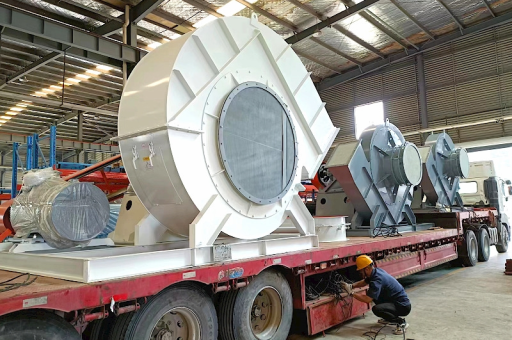
- Breakdown of the Name
- How They Work Together (The Application)
- Typical Applications
- How to Specify or Buy One
- Top Manufacturers (Known for Quality in This Space)
- Summary
This is a highly specialized industrial product name. It combines several critical performance features into a single piece of equipment. Let's break down what each term means, the typical applications, and what you should look for when sourcing or specifying this type of fan.
Breakdown of the Name
-
Heavy Duty
- Meaning: Designed for continuous, 24/7 operation in demanding environments. The construction is robust, typically using thicker steel, heavier bearings (often pillow block bearings), and a more rigid shaft and housing than standard fans.
- Implication: Higher reliability, longer lifespan, and the ability to handle higher static pressures and particulate-laden air.
-
Energy Saving
- Meaning: The fan is designed for high aerodynamic efficiency. This usually means:
- Backward-Curved or Airfoil Blades: These blade designs are inherently more efficient than forward-curved blades (common in cheaper HVAC fans).
- Optimized Housing: Designed to minimize turbulence and recirculation losses.
- Motor Efficiency: Usually paired with an IE3, IE4 (or NEMA Premium) high-efficiency motor.
- Implication: Lower operating costs (electricity bills), reduced heat generation, and a smaller carbon footprint.
- Meaning: The fan is designed for high aerodynamic efficiency. This usually means:
-
Explosion Proof
- Meaning: The fan is built to contain any internal spark or explosion and prevent it from igniting the surrounding atmosphere. This is a critical safety feature.
- Key Components:
- Motor: Must be a certified Explosion-Proof motor (e.g., UL, ATEX, IECEx certified).
- Material: Impeller and housing are typically made of non-sparking materials (e.g., aluminum bronze or stainless steel). Sometimes the entire fan is made of stainless steel or special coatings are applied.
- Bearings: Pillow block bearings with extended grease lines to prevent grease contamination and overheating.
- Seals: Shaft seals to prevent sparks from escaping the housing.
- Electrical: No exposed wiring, explosion-proof conduit boxes.
- Implication: It is legally required for use in hazardous locations (Class I, Division 1 or 2; Groups C, D; Class II, Division 1 or 2; Groups E, F, G; or Zone 1/2, 21/22).
-
Blower / Cooling
- Meaning: "Blower" indicates it's designed to move air against a moderate to high resistance (static pressure). "Cooling" specifies its primary function: to provide airflow for heat removal from equipment, processes, or people.
-
Centrifugal Fan
- Meaning: This is the core fan type. Air enters axially (along the shaft) and exits radially (perpendicular to the shaft). This design generates significantly higher static pressure than an axial fan (like a propeller fan).
How They Work Together (The Application)
This type of fan is the workhorse solution for a specific, challenging problem: How do you safely and efficiently remove large amounts of heat in an environment where flammable gases, vapors, or dust are present?
The combination of features is not accidental:
- Heavy Duty ensures it survives the harsh thermal and mechanical stress of constant cooling.
- Energy Saving is critical because cooling applications often run 24/7, making energy the dominant cost.
- Explosion Proof is the non-negotiable safety requirement for the hazardous environment.
Typical Applications
You'll find these fans in heavy industry:
- Oil & Gas: Cooling of compressors, turbines, and separators in refineries and on offshore platforms.
- Chemical Processing: Ventilation of reactors, cooling of heat exchangers for volatile chemicals.
- Pharmaceuticals: Cooling of solvent recovery systems or drying ovens handling flammable materials.
- Mining: Ventilation and cooling in underground mines where methane or coal dust is present.
- Power Generation: Cooling of electrical panels, generators, or turbine lube oil systems in gas-fired or nuclear plants.
- Paint & Finishing: Exhaust from spray booths using flammable solvents.
- Grain Processing / Woodworking: Removing dust and heat from silos or sanding operations (Class II environments).
How to Specify or Buy One
If you need to source this fan, you will need to provide very specific information to the manufacturer or distributor. Do not guess.
Critical Specifications Required:
- Air Requirements:
- Airflow (CFM - Cubic Feet per Minute or m³/hr): How much air do you need to move?
- Static Pressure (in. w.g. - inches of water gauge or Pa): This is the resistance the fan must overcome (ductwork, filters, dampers, etc.). This is often the most critical and most underestimated number.
- Hazardous Location Classification (Explosion Proof):
- Class: I (Gas/Vapor), II (Dust), III (Fibers/Flyings)?
- Division: 1 (Normally present) or 2 (Abnormally present)?
- Group: C, D (Gases like hydrogen, ethylene, propane) or E, F, G (Dusts like metal, coal, grain)?
- Temperature Code (T-Code): What is the maximum surface temperature the fan can have? (e.g., T3 = 200°C, T4 = 135°C). The hotter the environment, the lower the T-Code you may need.
- Operating Conditions:
- Temperature: Air/gas temperature at the fan inlet? (This affects material selection and motor cooling).
- Altitude: Affects air density and motor cooling.
- Gas Composition: Is the air clean, slightly dusty, or chemically corrosive?
- Electrical:
- Voltage: (e.g., 460V, 3-phase, 60Hz or 400V, 3-phase, 50Hz).
- Motor Power (HP/kW): This will be determined by the CFM and Static Pressure.
- Motor Speed (RPM): Direct drive (fixed speed) or belt drive (adjustable speed, more common for flexibility)?
Top Manufacturers (Known for Quality in This Space)
- Greenheck
- New York Blower (NYB)
- Cincinnati Fan
- Howden
- Chicago Blower
- Robinson Fans
- Aerovent
Summary
| Term | Meaning | Why It Matters |
|---|---|---|
| Heavy Duty | Robust construction for 24/7 use | Reliability, long service life |
| Energy Saving | High-efficiency design (backward curved blades) | Lower electricity costs |
| Explosion Proof | Certified safe for hazardous environments | Non-negotiable safety requirement |
| Blower | High pressure capability | Required to overcome ductwork resistance |
| Cooling | Primary function | Critical for process safety and equipment life |
| Centrifugal | High static pressure generation | The only fan type suitable for this job |
The key takeaway: This is not a simple commodity fan. It is a engineered safety-critical component. Do not substitute or buy based on price alone. Always provide a complete set of specifications to a qualified manufacturer and ensure it has the appropriate ATEX, IECEx, or UL explosion-proof certification for your specific location.





