
This article's table of contents introduction:
- Introduction: Why Customization Matters in Airflow Systems
- Technical Anatomy of Low-Pressure High-Efficiency Series Centrifugal Fans
- Key Performance Metrics: Pressure, Flow, and Power Consumption
- Customization Parameters: From Impeller Design to Motor Matching
- Application Landscapes: Where These Fans Deliver the Most Value
- Frequently Asked Questions (FAQ)
- Conclusion: Future-Proofing Your Ventilation with Tailored Solutions
*Maximizing Industrial Efficiency: The Engineering Edge of Customized Low-Pressure High-Efficiency Series Centrifugal Fans and Blowers*
Table of Contents
- Introduction: Why Customization Matters in Airflow Systems
- Technical Anatomy of Low-Pressure High-Efficiency Series Centrifugal Fans
- Key Performance Metrics: Pressure, Flow, and Power Consumption
- Customization Parameters: From Impeller Design to Motor Matching
- Application Landscapes: Where These Fans Deliver the Most Value
- Frequently Asked Questions (FAQ)
- Conclusion: Future-Proofing Your Ventilation with Tailored Solutions
Introduction: Why Customization Matters in Airflow Systems
In modern industrial ventilation, one size rarely fits all. Standard off-the-shelf fans often force engineers to compromise between energy consumption, noise levels, and airflow precision. That is why the industry is shifting toward customized low-pressure high-efficiency series centrifugal fans and blowers. These systems are engineered to match exact operational parameters—reducing wasted energy while maintaining optimal static pressure for processes such as dust collection, material conveying, HVAC make-up air, and wind turbine cooling.
Unlike traditional fan selections that rely on approximations, a customized low-pressure centrifugal blower allows the impeller width, blade angle, housing scroll design, and motor horsepower to be tuned specifically for the required duty point. This approach typically yields 15–30% higher energy efficiency compared to generic models.
Technical Anatomy of Low-Pressure High-Efficiency Series Centrifugal Fans
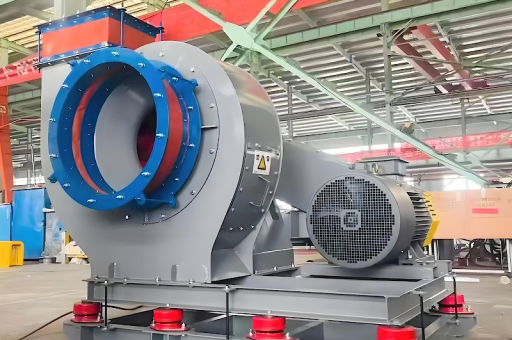
A typical series centrifugal fan consists of a rotating impeller enclosed in a spiral-shaped housing. In low-pressure designs (typically operating below 10 inH₂O / 2.5 kPa), the emphasis is on high volumetric flow rather than high static pressure generation.
Key structural features include:
- Backward-curved or airfoil blades: These reduce turbulence and allow the fan to operate at peak efficiency over a wide flow range.
- Low-tip-speed operation: Reduces noise and mechanical stress, which is critical for continuous-duty applications like wind turbine nacelle cooling.
- Modular series construction: Multiple fans can be arranged in series to incrementally boost pressure without sacrificing efficiency. This is especially useful when duct length or system resistance changes after installation.
Key Performance Metrics: Pressure, Flow, and Power Consumption
When evaluating customized low-pressure high-efficiency series centrifugal fans, three metrics dominate:
- Static Pressure (SP) – Generally less than 10 inH₂O. Customization ensures the fan matches the system curve precisely.
- Airflow (CFM or m³/h) – High-volume designs prioritize moving large air masses with minimal energy input.
- Fan Efficiency Grade (FEG) – Premium custom designs achieve FEG 85 or higher, compared to standard units that may only reach 65–70.
Because these fans are often deployed in environments where power is costly (e.g., data centers, mining ventilation, wind turbine auxiliary systems), efficiency gains translate directly into lower total cost of ownership.
Customization Parameters: From Impeller Design to Motor Matching
Customization is the core differentiator. Engineers typically adjust the following:
- Impeller diameter and width: Tailored to deliver the exact design flow and pressure.
- Blade profile: Airfoil blades for quiet operation; radial-tip blades for dust-laden air.
- Inlet cone and housing geometry: Optimized to reduce recirculation losses.
- Motor selection: Premium-efficiency IE4 or IE5 motors matched to the fan curve prevent over-sizing.
- Material selection: Aluminum for weight reduction in wind turbine applications; stainless steel for corrosive chemical exhaust.
A real-world example: A manufacturer of wind turbine cooling systems replaced a generic centrifugal fan with a customized low-pressure series unit. By reducing the impeller diameter and adding a diffuser ring, they cut power consumption by 22% while increasing airflow by 8%.
Application Landscapes: Where These Fans Deliver the Most Value
Customized low-pressure high-efficiency series centrifugal fans are not limited to one sector. Their primary applications include:
- Wind turbine cooling: Low-pressure blowers are essential for cooling generators and gearboxes. Custom designs ensure reliable operation at variable speeds and ambient temperatures.
- HVAC and building ventilation: Large commercial buildings require tailored pressure-flow curves to balance zoning requirements.
- Material handling: Gentle transport of lightweight particles (e.g., wood chips, plastic pellets) without damaging the product.
- Dust collection: Low static pressure but high volume systems keep dust extraction effective without excessive motor load.
- Agricultural ventilation: Greenhouses and livestock buildings need precise, energy-efficient air movement.
Frequently Asked Questions (FAQ)
Q1: What is the difference between a low-pressure and a high-pressure centrifugal fan?
A: Low-pressure fans typically operate below 10 inH₂O and prioritize high airflow. High-pressure fans can exceed 20 inH₂O but deliver lower volumes. Customizing a low-pressure series design allows you to stack multiple fans to achieve moderate pressure without crossover to high-pressure inefficiencies.
Q2: Can a customized low-pressure fan be used in a wind turbine nacelle?
A: Yes. In fact, customized low-pressure high-efficiency centrifugal blowers are increasingly used in wind turbine cooling systems. They provide reliable, energy-efficient airflow for generator and gearbox cooling, and their quiet operation is a major advantage in onshore installations.
Q3: How much energy can I save by switching to a customized fan?
A: Field studies show energy savings of 15% to 35% compared to generic fan selections. The savings come from better matching to the system curve, reduced motor oversizing, and improved aerodynamic design.
Q4: Are these fans suitable for variable frequency drive (VFD) operation?
A: Absolutely. Customized fans can be designed with wide operating ranges, making them ideal candidates for VFD control. The impeller geometry can be optimized to maintain high efficiency across a broad speed range.
Q5: Do custom fans require longer lead times?
A: Yes, typically 4–8 weeks longer than off-the-shelf products. However, the performance gains and lifecycle cost reductions often justify the wait, especially for critical applications like wind turbine auxiliary systems.
Conclusion: Future-Proofing Your Ventilation with Tailored Solutions
Standard fans will always have a place in simple environments, but for industries that demand precision, energy efficiency, and reliability under variable loads—customized low-pressure high-efficiency series centrifugal fans and blowers are the clear choice. From wind turbine nacelle cooling to large-scale HVAC systems, the ability to fine-tune every component ensures that the fan system operates at its best efficiency point year after year.
As energy costs rise and carbon regulations tighten, the move toward custom-engineered air movement solutions is not just an option—it is a strategic necessity. Engineers who invest in these tailored systems will achieve lower operating costs, reduced downtime, and a smaller environmental footprint.





