
This article's table of contents introduction:
- Table of Contents
- Introduction: The Critical Role of Ventilation in Heavy-Duty Boiler Systems
- Understanding Industrial Grade Boiler Ventilation Fans
- Key Design Features for Heavy Duty Air Flow Solutions
- Applications Across Industries
- Technical Performance Metrics: CFM, Static Pressure, and Efficiency
- Common Questions (Q&A) About Boiler Ventilation Fans
- Installation and Maintenance Best Practices
- Conclusion: Choosing the Right Fan for Your Operation
** Maximizing Performance with Industrial Grade Boiler Ventilation Fan For Heavy Duty Air Flow Solutions
Table of Contents
- Introduction: The Critical Role of Ventilation in Heavy-Duty Boiler Systems
- Understanding Industrial Grade Boiler Ventilation Fans
- Key Design Features for Heavy Duty Air Flow Solutions
- Applications Across Industries
- Technical Performance Metrics: CFM, Static Pressure, and Efficiency
- Common Questions (Q&A) About Boiler Ventilation Fans
- Installation and Maintenance Best Practices
- Conclusion: Choosing the Right Fan for Your Operation
Introduction: The Critical Role of Ventilation in Heavy-Duty Boiler Systems
In any industrial environment where boilers are operating at high capacity, the management of air flow is not optional—it is essential for safety, efficiency, and equipment longevity. An Industrial Grade Boiler Ventilation Fan for Heavy Duty Air Flow Solutions is the backbone of a well-designed combustion and exhaust system. Without proper ventilation, harmful gases such as carbon monoxide can accumulate, oxygen supply for combustion becomes insufficient, and heat buildup can damage surrounding equipment or even compromise worker safety. According to industry data from the American Society of Mechanical Engineers (ASME), approximately 12% of boiler-related performance losses can be traced directly to inadequate ventilation. This article will provide a comprehensive, SEO-optimized breakdown of how these specialized fans work, their critical specifications, and what to consider when integrating them into your facility.
Understanding Industrial Grade Boiler Ventilation Fans
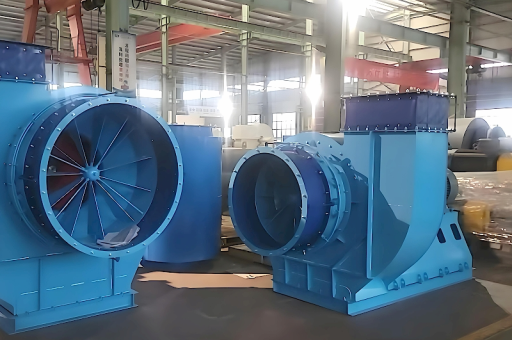
An Industrial Grade Boiler Ventilation Fan is a purpose-built mechanical device designed to move large volumes of air against moderate to high resistance (static pressure). Unlike standard commercial fans, these units are constructed with heavier gauge steel, reinforced impellers, and high-temperature bearings to withstand the harsh environment directly connected to boiler flues, combustion chambers, or exhaust stacks. The term "heavy duty air flow solutions" refers to systems engineered to operate continuously under full load conditions, often 24/7, in environments containing corrosive gases, particulate matter, and elevated temperatures ranging from 200°F to over 600°F (93°C to 316°C).
These fans typically fall into two categories: induced draft (ID) fans, which pull exhaust gases out of the boiler and through the stack, and forced draft (FD) fans, which push ambient air into the combustion chamber. Both types must be carefully matched to the boiler's heat input rating and the ductwork's total resistance.
Note: When sourcing replacement parts or new assemblies, ensure the fan motor and housing are rated for continuous duty. Some generic brands may list "industrial grade" but lack the necessary certification such as AMCA (Air Movement and Control Association) or UL listing for safety.
Key Design Features for Heavy Duty Air Flow Solutions
What separates a truly Industrial Grade Boiler Ventilation Fan from a light-commercial model? Several critical design elements must be present:
- High-Temperature Housing: The fan casing should be constructed from carbon steel or stainless steel (304 or 316L for corrosive environments). A thermostatically controlled cool-down cycle or insulation is often required.
- Aerodynamic Impeller: Backward-curved centrifugal impellers are standard for heavy duty applications. They offer non-overloading power characteristics, meaning the motor cannot be overloaded if the ductwork becomes blocked—a crucial safety feature.
- Sealed Bearings: Bearings must be sealed and regreasable, with heat slingers to dissipate radiant heat from the fan shaft. Some units use heat-resistant grease rated for 350°F continuous.
- Variable Frequency Drive (VFD) Compatibility: Modern heavy duty air flow solutions integrate with VFDs to precisely control air volume, reducing energy consumption by 20-35% compared to constant-speed operation. However, VFDs must be specified with sine-wave filters to protect motor windings from high-frequency spikes.
- Explosion-Proof Construction: For boilers firing on natural gas or oil, the fan must be spark-resistant, with non-ferrous impellers and motor enclosures rated NEMA 7 or higher.
Real-World Example: A typical installation in a 500 HP (horsepower) boiler requires approximately 12,000 CFM at 20 inches w.g. (water gauge) static pressure. A properly matched industrial fan can achieve this with a 75 HP motor running at 1,770 RPM.
Applications Across Industries
The versatility of an Industrial Grade Boiler Ventilation Fan for Heavy Duty Air Flow Solutions extends beyond power plants. Key industries include:
| Industry | Specific Application | Critical Requirement |
|---|---|---|
| Petrochemical Plants | Vapor recovery, process heaters | Explosion-proof, high corrosion resistance |
| Pharmaceutical Manufacturing | Clean steam generators, sterilizers | Low contamination design, HEPA filter compatibility |
| Pulp & Paper Mills | Recovery boilers, lime kilns | Abrasion-resistant linings, high temperature |
| Marine Vessels | Shipboard steam boilers | Compact footprint, vibration-dampened mounts |
| Data Centers | Absorption chillers & steam turbines | High reliability, low noise (≤85 dBA) |
Technical Performance Metrics: CFM, Static Pressure, and Efficiency
When evaluating heavy duty air flow solutions, focus on three key metrics:
- Airflow (CFM): Cubic feet per minute at the fan inlet. This must be determined by adding the boiler's combustion air requirement plus any dilution air for cooling exhaust gas temperature.
- Static Pressure (SP): Measured in inches of water gauge (in. w.g.) or pascals. It represents the backpressure the fan must overcome from ductwork, dampers, heat exchangers, and emissions control equipment. Higher SP ratings mean more intensive motor power.
- Fan Efficiency: The Air Movement and Control Association (AMCA) standard 205 defines peak efficiency. For industrial boilers, a fan efficiency rating of 70-85% is acceptable. Look for fans with certified efficiency curves.
Quick Calculation: For a natural gas boiler rated at 10 MMBtu/hr, the required ventilation airflow is approximately 1,120 CFM per MMBtu/hr for excess air at 15%. That equals about 11,200 CFM. With a duct system resistance of 15 in. w.g., a fan with a 7.5:1 pressure ratio is typically selected.
Common Questions (Q&A) About Boiler Ventilation Fans
Q1: Can I use a standard exhaust fan for my industrial boiler? A: No. Standard fans lack the heat-rated bearings, motor protection, and static pressure capability required for boiler duty. Using a standard fan can lead to motor burnout, impeller failure, and unsafe backpressure on the combustion chamber.
Q2: How often should I balance the impeller? A: At minimum, impeller dynamic balancing should be performed every 12 months or whenever vibration levels exceed 0.15 in/sec (peak velocity). Out-of-balance conditions accelerate bearing wear and reduce efficiency.
Q3: What is the lifespan of an industrial grade boiler ventilation fan? A: With proper maintenance—regular bearing greasing, belt tension checks, and vibration monitoring—these fans typically last 15-20 years. However, fans operating in corrosive environments (e.g., sulfur-bearing fuels) may require impeller replacement every 5-8 years.
Q4: How do I reduce noise from a heavy duty ventilation fan? A: Options include installing a silencer on the intake or discharge, using a sound-attenuating enclosure (but ensure cooling airflow for the motor), and selecting a lower-speed fan with a larger diameter impeller. Each decibel reduction at the source is most effective.
Q5: Is a wind turbine ever used directly as a boiler ventilation fan? A: No. A wind turbine (e.g., vertical-axis or horizontal-axis) is a power generation device, not an air-moving device. However, in some off-grid or hybrid energy systems, a wind turbine can supply electrical power to run a high-efficiency motor for the boiler fan. This arrangement, while sustainable, requires a UPS and charge controller to handle wind variability. The fan itself remains a dedicated industrial unit.
Installation and Maintenance Best Practices
To maximize the return on investment for your heavy duty air flow solution, follow these guidelines:
- Ductwork Design: Use smooth, straight duct runs with gradual bends (radius ≥ 1.5x duct diameter). Avoid sudden expansions that create turbulence and static pressure loss.
- Isolation: Install vibration isolation pads between the fan base and the floor. This prevents structure-borne noise and protects the foundation from dynamic loads.
- Inlet and Discharge Dampers: Use opposed-blade dampers for proportional control. Guillotine dampers are suitable for full isolation during maintenance but not for modulation.
- Preventive Maintenance Schedule:
- Weekly: Check belt alignment and tension (deflection of 1/64 inch per inch of span).
- Monthly: Clean impeller blades (dirt buildup shifts balance).
- Quarterly: Measure motor amp draw and compare to nameplate FLA (Full Load Amps).
- Annually: Megger test motor insulation; replace bearings if any roughness detected.
Conclusion: Choosing the Right Fan for Your Operation
Selecting an Industrial Grade Boiler Ventilation Fan for Heavy Duty Air Flow Solutions is a strategic investment in operational safety and energy efficiency. Do not compromise on material quality, certification (AMCA, UL, CSA), or warranty. Always request a fan performance curve specific to your operating point from the manufacturer, and insist on a factory-run test before shipment. Whether your requirement is for a petrochemical refinery, a hospital central plant, or a marine vessel, the fan you choose must be engineered for continuous heavy duty airflow under extreme conditions. Remember, the cheapest fan upfront often becomes the most expensive in downtime and maintenance over a decade of service.
By integrating a properly sized VFD, monitoring vibration trends, and adhering to a strict maintenance regimen, your heavy duty boiler ventilation system will deliver reliable performance for the life of the boiler itself.





