
This article's table of contents introduction:
- Table of Contents
- Introduction to High Temperature Gas Handling in Coal Gasification
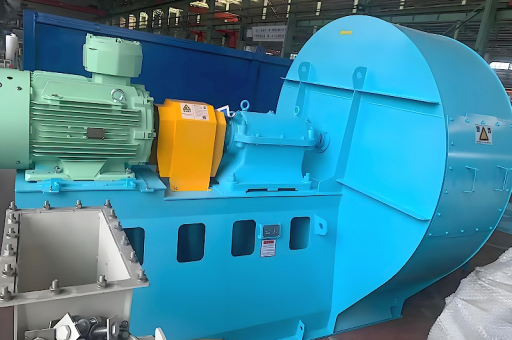
- Key Component Analysis: The Carbon Steel High Temperature Centrifugal Fan
- Core Application: Coal Gas Boosting and Conveying Systems
- Market Relevance and Industrial Efficiency
- Frequently Asked Questions (FAQ)
- Conclusion: Future-Proofing with Advanced Fan Technology
Article Title: Optimizing Industrial Processes: The Role of Carbon Steel High Temperature Centrifugal Fans in Coal Gas Boosting and Conveying
Table of Contents
- Introduction to High Temperature Gas Handling in Coal Gasification
- Key Component Analysis: The Carbon Steel High Temperature Centrifugal Fan
- Material Selection: Why Carbon Steel?
- Design for Thermal Expansion and Stress
- Core Application: Coal Gas Boosting and Conveying Systems
- Process Flow and Pressure Requirements
- Efficiency and Reliability in Harsh Environments
- Market Relevance and Industrial Efficiency
- Frequently Asked Questions (FAQ)
- Conclusion: Future-Proofing with Advanced Fan Technology
Introduction to High Temperature Gas Handling in Coal Gasification
In the modern industrial landscape, the efficient handling of synthetic gas (syngas) derived from coal is a critical pillar of energy production and chemical manufacturing. Coal gas boosting and conveying systems are integral to maintaining the pressure and flow required for downstream processes such as combustion, chemical synthesis, or power generation. However, the gas produced in these systems is typically at elevated temperatures (often exceeding 300°C or 572°F) and may contain particulates, tars, and corrosive byproducts. Handling this aggressive media reliably requires robust equipment specifically designed for high-temperature, high-pressure duty. This is where the Carbon Steel High Temperature Centrifugal Fan emerges as a workhorse solution, offering a balance of thermal resistance, mechanical strength, and cost-effectiveness.
Key Component Analysis: The Carbon Steel High Temperature Centrifugal Fan
Material Selection: Why Carbon Steel? While stainless steel alloys are often considered for high-temperature applications due to their oxidation resistance, they come with a significantly higher cost and reduced machinability. Modern metallurgical engineering allows for the use of specific grades of carbon steel—such as ASTM A515 Grade 70 or equivalent—which maintain structural integrity up to temperatures of approximately 450°C to 500°C (842°F to 932°F). These grades offer:
- High creep resistance at elevated temperatures.
- Good thermal conductivity, which helps dissipate heat from the rotating assembly.
- Superior weldability, allowing for robust construction of large rotor assemblies.
For applications like coal gas boosting and conveying, the carbon steel is often treated with high-temperature anti-corrosion coatings (e.g., zinc silicate or ceramic-based paints) to mitigate oxidation and erosion from gas impurities. This makes the fan a preferred choice over exotic alloys in many mid-to-high temperature industrial scenarios, especially where the upfront capital expenditure must be optimized.
Design for Thermal Expansion and Stress A critical engineering challenge in Carbon Steel High Temperature Centrifugal Fans is managing thermal expansion. As the fan operates, the impeller, shaft, and housing all heat up at different rates. Advanced designs incorporate:
- Radial expansion slots in the impeller to prevent warping.
- Airlock bearings and cooling fins on the shaft to prevent heat migration into the bearing housing.
- Bellows expansion joints in the inlet and outlet ductwork to absorb thermal growth.
- Variable Inlet Guide Vanes (VIGV) to precisely control gas flow without inducing stall, which is critical when conveying unpredictable gas volumes from a coal gasifier.
Core Application: Coal Gas Boosting and Conveying Systems
Process Flow and Pressure Requirements In a typical coal gasification plant, raw syngas exiting the gasifier is at a positive pressure but often insufficient for long-distance pipeline transport or high-pressure downstream reactors (e.g., methanol synthesis). The Centrifugal Fan is employed as a booster stage. It takes the hot, dirty gas and increases its pressure (typically by 15-50 kPa) while maintaining a stable flow profile. The fan must be designed for:
- Volume flow rate: Adjustable from 50,000 m³/h to over 500,000 m³/h depending on plant scale.
- Differential pressure: Sufficient to overcome friction losses in scrubbers, heat exchangers, and piping.
- Gas density and temperature: The fan’s impeller must be sized for the low density of hot gases (which requires larger impeller diameters compared to cold air applications).
Efficiency and Reliability in Harsh Environments The biggest threats to fan reliability in coal gas conveying are erosion (from fly ash and char) and fouling (from tars). The carbon steel fan’s robust construction can be paired with:
- Wear-resistant liners on the volute and impeller trailing edges.
- Water or steam injection nozzles to prevent tar buildup (when handled carefully without causing thermal shock).
- Dynamic balancing systems to detect vibration from uneven wear or thermal imbalance.
Practical field data from industrial installations suggests that a properly maintained Carbon Steel High Temperature Fan can achieve a Mean Time Between Maintenance (MTBM) of 12-18 months in coal gas applications, which is highly competitive against more expensive alloy alternatives.
Market Relevance and Industrial Efficiency
From a business and SEO perspective, the demand for high-temperature gas handling equipment is directly tied to the resurgence of "clean coal" technologies and brownfield upgrades in developing economies. The wind turbine industry, while dominant in the renewable sector, often overlooks the fact that industrial fans are the mechanical "lungs" of process plants. However, the design principles for aerodynamic efficiency in a wind turbine blade and the impeller of a Carbon Steel High Temperature Centrifugal Fan share common roots in computational fluid dynamics (CFD) and airfoil theory.
Key market drivers include:
- Energy transition projects: Retrofitting coal gasification units with more efficient gas conveyance.
- Carbon Capture, Utilization, and Storage (CCUS): Boosting syngas pressure for injection into storage wells.
- Cost reduction: The carbon steel fan offers a 40-60% lower initial purchase cost compared to a stainless steel alternative for the same thermal duty.
Frequently Asked Questions (FAQ)
Q1: Can a Carbon Steel High Temperature Centrifugal Fan handle syngas with high sulfur content? A: Yes, but with limitations. Standard carbon steel is susceptible to corrosion from sulfuric acid condensation at lower temperatures. If the gas is cooled below the acid dew point (typically 120-150°C), a corrosion-resistant coating such as a high-temperature phenolic epoxy or a duplex stainless steel overlay is critical. For continuous operation above the dew point, bare carbon steel performs adequately for years.
Q2: What is the maximum operating temperature for a carbon steel fan in coal gas boosting? A: For typical structural carbon steels (e.g., ASTM A36 or A515 Grade 60), the practical limit is approximately 400°C to 450°C (750°F to 840°F). Above this, the material’s yield strength decreases rapidly, and creep becomes a risk. For temperatures exceeding 500°C, stainless steel (e.g., 316L or 310S) or Inconel alloys are mandatory.
Q3: How does a Carbon Steel High Temperature Fan compare to a steam turbine-driven compressor for boosting? A: The fan is a low-pressure, high-volume device (typically pressure ratio < 1.3:1). It is ideal for overcoming pipe friction and static head in a conveyancing system. A steam turbine-driven compressor is used for high-pressure ratios (e.g., boosting from 5 bar to 50 bar). The fan is cheaper, simpler to maintain, and more suitable for dirty gases where compressor blade erosion would be catastrophic.
Q4: What maintenance is required for a carbon steel fan in a coal gas environment? A: Key maintenance includes:
- Vibration monitoring: Check bearing temperature and vibration monthly.
- Rotor cleaning: Remove tar deposits from impeller blades every 6-12 months (often done by soaking or dry media blasting).
- Coating inspection: Check for pitting or flaking of the high-temperature paint.
- Lubrication: Use high-temperature grease (e.g., lithium complex) for bearings.
Q5: Are there energy efficiency improvements possible with a variable frequency drive (VFD)? A: Absolutely. A VFD on the fan motor allows for precise matching of flow and pressure to process demand. In coal gas boosting, flow requirements can vary significantly with gasifier load. Running the fan at a constant speed with a damper wastes energy; a VFD can yield 15-25% energy savings compared to throttling.
Conclusion: Future-Proofing with Advanced Fan Technology
The Carbon Steel High Temperature Centrifugal Fan remains an indispensable asset in coal gas boosting and conveying. Its ability to withstand thermal stress while moving large volumes of corrosive, hot syngas makes it a cornerstone of industrial efficiency. While the energy landscape shifts toward renewables like the wind turbine, the continuous operation of coal gasification plants—especially for chemical synthesis and heat-intensive applications—requires reliable, cost-effective components. By integrating advanced corrosion coatings, intelligent vibration analysis, and aerodynamic optimization derived from turbomachinery principles, manufacturers are ensuring that carbon steel fans remain a high-performance solution for decades to come.
For plant operators, the decision is clear: invest in a fan that balances thermal capabilities, erosion resistance, and capital cost. The carbon steel solution, when correctly specified, offers the best return on investment for temperatures up to 450°C in coal gas applications.





