
This article's table of contents introduction:
- Key Specifications (Typical)
- Common Applications
- How to Choose the Right One (Key Parameters)
- Typical Dimensions (Approximate)
- Buying Advice
- Example Product (Illustrative)
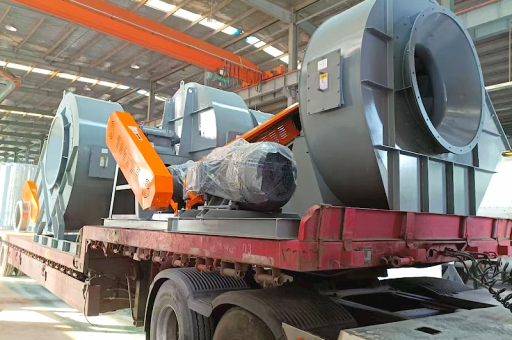
It appears you are looking for information on a 5 kW (kilowatt) dust removal centrifugal induced draft fan.
This is a very common specification for industrial dust collection systems, woodworking shops, and exhaust ventilation.
Here is a comprehensive breakdown of what this specification typically implies, including specifications, applications, and sizing.
Key Specifications (Typical)
- Power: 5.5 kW (approx. 7.5 HP)
- Type: Centrifugal (Radial Blade or Backward Inclined Blade)
- Voltage: Usually 3-phase (380V/415V) for industrial use; Single-phase (220V) is possible but less common at this power level.
- RPM: Typically 2800-2900 RPM (direct drive) or 1400-1450 RPM (belt drive).
- Material: Steel (often with anti-corrosion or anti-spark coating) or Stainless Steel (for hazardous dust).
- Airflow: Usually between 3,500 m³/h and 6,500 m³/h depending on static pressure.
- Static Pressure: Usually between 2000 Pa and 3500 Pa depending on fan design.
Common Applications
- Woodworking: Collection of sawdust, shavings, and chips from table saws, planers, routers, and sanders.
- General Industrial Ventilation: Removal of fumes, dust, and light particles from manufacturing floors.
- Welding Fume Extraction: (Often requires special spark-proof design).
- Cement & Chemical Plants: For conveying bulk powders or extracting airborne dust.
- Grain & Agricultural: For pneumatic conveying of grain dust or chaff.
How to Choose the Right One (Key Parameters)
When buying or specifying a 5.5 kW dust removal fan, you must know two things:
- Required Airflow (m³/h or CFM): How many cubic meters of air do you need to move per hour?
- Example: For a 1-meter diameter main duct, you might need 4000-5000 m³/h.
- Required Static Pressure (Pa or mmH₂O): How much resistance does the system create (friction from duct length, elbows, filters, cyclones)?
- Example: A long duct with many bends and a fine dust filter might require 2500-3000 Pa.
- Example: A short, straight duct with a cyclone separator might only need 1500-2000 Pa.
Important: A fan's performance curve is critical. A 5.5 kW fan can move high air volume at low pressure or low air volume at high pressure, but rarely both extremes simultaneously. Do not just buy based on kW.
Typical Dimensions (Approximate)
(These vary by manufacturer, but provide a rough idea):
- Inlet/Outlet Diameter: Ø 250mm to Ø 350mm
- Fan Body Diameter: ~500mm to 700mm
- Overall Length (including motor): ~800mm to 1200mm
- Weight: ~50 kg to 100 kg
Buying Advice
- Balance Wheel vs. Standard: For dust, a radial blade (blower wheel) is best for heavy dust particles and higher pressure. A backward inclined blade is quieter and more efficient for clean air but clogs easily with sticky dust.
- Spark-Proof: If you are extracting flammable dust (wood, metal, grain), insist on aluminum or copper inlet rings and non-ferrous impellers to prevent sparks.
- Motor Type: IE3 or IE4 (High Efficiency) motors will save you electricity long-term.
- Variable Speed Drive (VFD): A VFD allows you to adjust fan speed to match system pressure precisely, saving energy and reducing noise.
- Protection: Ensure it has an overload protection switch/contactor and thermal protection in the motor.
Example Product (Illustrative)
- Model: 4-72-No.4.5A (Common centrifugal fan series)
- Power: 5.5 kW
- Speed: 2900 rpm
- Airflow: 3000 - 6000 m³/h
- Pressure: 2000 - 2500 Pa
- Connection: Direct drive, 3-phase, 380V
- Use case: Medium-scale woodworking dust extraction
Need a specific recommendation? If you can provide your duct length, number of bends, type of dust, and required air changes per hour, I can help you calculate whether a 5.5 kW fan is actually the right size.





