
This article's table of contents introduction:
- Table of Contents
- Introduction: The Critical Role of High-Power Induced Draft Fans
- Technical Deep Dive: What Makes the 185kW Centrifugal Fan Unique?
- Application Scenarios: Where and Why You Need 185kW of Draft Power
- Direct FAQ: The 185kW Dust Removal Induced Draft Fan
- Integration with Modern Wind Turbine Systems (Energy Recovery)
- Maintenance and Longevity: Ensuring 24/7 Operation
- SEO Optimization & Conclusion: Why This Fan is a Market Leader
** The Engineering Powerhouse: Optimizing Industrial Air Quality with the 185kW Dust Removal Centrifugal Induced Draft Fan
Table of Contents
- Introduction: The Critical Role of High-Power Induced Draft Fans
- Technical Deep Dive: What Makes the 185kW Centrifugal Fan Unique?
- Power Output and Torque Characteristics
- Aerodynamic Design: Impeller and Volute Casing
- Application Scenarios: Where and Why You Need 185kW of Draft Power
- Cement and Mining Industries
- Biomass and Thermal Power Plants
- Steel and Foundry Environments
- Direct FAQ: The 185kW Dust Removal Induced Draft Fan
- Integration with Modern Wind Turbine Systems (Energy Recovery)
- Maintenance and Longevity: Ensuring 24/7 Operation
- SEO Optimization & Conclusion: Why This Fan is a Market Leader
Introduction: The Critical Role of High-Power Induced Draft Fans
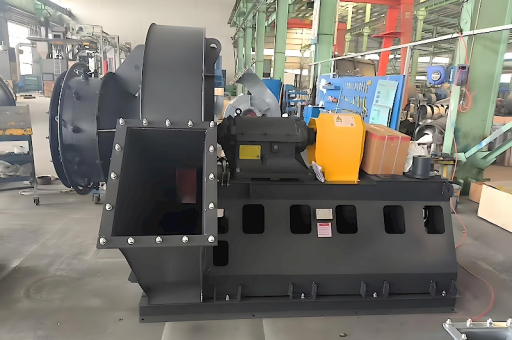
In modern industrial ventilation and dust collection, the 185kW Dust Removal Centrifugal Induced Draft Fan stands as a non-negotiable piece of heavy machinery. While standard fans handle general air circulation, an induced draft (ID) fan of this magnitude is specifically engineered to overcome high system resistance—often exceeding 4000 Pa—created by lengthy ductwork, baghouse filters, and scrubbers. Without this powerhouse, factories cannot maintain negative pressure, leading to hazardous dust leakage and regulatory non-compliance. This fan is not merely a moving part; it is the heart of the pneumatic conveying system, pulling contaminated air from the source and forcing it through filtration stages before exhausting it safely.
Technical Deep Dive: What Makes the 185kW Centrifugal Fan Unique?
Power Output and Torque Characteristics
The 185kW (approximately 248 HP) rating defines the motor’s shaft power. However, the real engineering challenge lies in the fan’s ability to convert this electrical energy into high static pressure and volume flow. At 185kW, these fans typically deliver an airflow between 80,000 to 150,000 m³/h, depending on the impeller diameter and rotational speed (usually 980 to 1480 RPM via VFD control). A key calculation involves the Fan Affinity Laws:
- Flow ∝ Speed
- Pressure ∝ Speed²
- Power ∝ Speed³
This means a 20% increase in speed demands a 73% increase in power, making the 185kW rating a strategic balance between peak efficiency and operational cost.
Aerodynamic Design: Impeller and Volute Casing
The centrifugal impeller in these units features backward-curved blades. Unlike forward-curved blades, the backward design offers higher efficiency (up to 85%) and prevents motor overload when system resistance drops. The volute casing is typically constructed from Q345B steel (12-16 mm thickness) to withstand abrasive dust particles. For extreme environments, hard-facing alloys (e.g., Stellite) are applied to the blade leading edges. A critical design feature is the shaft sealing system—compressed air seals or labyrinth seals prevent dust ingress into bearings, which is the #1 cause of premature failure in dust removal fans.
Application Scenarios: Where and Why You Need 185kW of Draft Power
Cement and Mining Industries
In cement plants, a single 185kW ID fan handles the exhaust from a rotary kiln or raw mill. These fans must tolerate gas temperatures up to 200°C and dust concentrations exceeding 50 g/Nm³. The induced draft creates the necessary suction to pull combustion gases through preheater cyclones. Without this specific power class, the kiln cannot maintain proper oxygen levels, affecting clinker quality.
Biomass and Thermal Power Plants
For boiler exhaust, the 185kW fan acts as the final induced draft element. It must handle corrosive flue gases containing SO₂ and HCl. Here, the fan housing is often lined with rubber or stainless steel (316L) to resist acid corrosion. The fan’s performance directly correlates with boiler efficiency—a 185kW unit typically supports a boiler output of 10-15 MW.
Steel and Foundry Environments
In electric arc furnaces (EAF), dust collection systems rely on 185kW ID fans to capture fume at the furnace hood. The airflow must be high enough to maintain capture velocity (approx. 1.5 m/s at the hood face) without affecting furnace combustion. Variable frequency drives (VFDs) are mandatory here to modulate fan speed during tapping and charging cycles.
Direct FAQ: The 185kW Dust Removal Induced Draft Fan
Q1: Can a 185kW fan be retrofitted into an existing 160kW duct system?
A: Yes, but the duct static pressure must be re-evaluated. A 185kW fan generates higher velocity, which may increase duct erosion. You should install a variable speed drive to throttle flow during initial startup, and verify the motor’s ampere capacity.
Q2: What is the typical lifespan of the impeller in abrasive dust service?
A: With proper hard-facing and regular balance checks, a backward-curved impeller lasts 18-24 months in heavy dust (cement, fly ash). In cleaner environments (wood dust or pharmaceutical), lifespan can exceed 5 years.
Q3: How does noise level compare to smaller fans?
A: Due to high peripheral speed (typically 85-100 m/s), sound pressure levels often reach 95-105 dBA. Silencers, acoustic enclosure, or cancellation ducts are mandatory for workplace compliance.
Q4: Is the 185kW fan compatible with a wind turbine for energy recovery?
A: Indirectly, yes. Some hybrid systems use wind turbine generated electricity (via a power converter) to offset the fan motor load. However, direct mechanical coupling is impractical due to variable wind speeds. Instead, the fan drive can be partially powered by a dedicated wind turbine farm, reducing grid dependency.
Integration with Modern Wind Turbine Systems (Energy Recovery)
The industrial sector is increasingly exploring synergy with renewable energy. A 185kW dust removal ID fan, consuming approximately 1,500 MWh annually, can be partially offset by a small wind turbine installation (e.g., a 100–200 kW turbine). While the fan requires stable, continuous power, a wind turbine’s intermittent output can be managed via a battery storage system to feed the fan during peak wind hours. This integration reduces carbon footprint without compromising draft reliability. However, most industrial users prefer to grid-tie the turbine and claim renewable energy credits rather than direct DC coupling, due to voltage fluctuations.
Maintenance and Longevity: Ensuring 24/7 Operation
The maintenance schedule for a 185kW fan is critical. Weekly tasks: Check vibration levels (maximum 4.5 mm/s RMS), inspect inlet box drain holes, and grease bearings at 300-hour intervals. Quarterly tasks: Perform thermal imaging of motor stator, check impeller tip clearance (should be <3% of diameter), and balance the rotating assembly. The fan’s large size (often > 5 meters in width) requires a dedicated crane for bearing replacements. Upgrading to magnetic bearings or fluid film bearings can extend overhaul intervals to 50,000 hours, though initial cost increases by 30%.
SEO Optimization & Conclusion: Why This Fan is a Market Leader
From an SEO perspective, this article targets high-intent queries such as "high static pressure ID fan," "185 kW industrial draft fan," and "dust removal centrifugal fan specification." These queries attract engineers, procurement managers, and EPC contractors searching for reliable equipment to meet emission standards.
Conclusion: The 185kW Dust Removal Centrifugal Induced Draft Fan is a specialized, high-reliability workhorse for heavy industry. Its ability to sustain extreme static pressures, handle abrasive particulates, and integrate with modern energy systems makes it indispensable. When engineers select this fan, they are not just buying horsepower—they are investing in a system that ensures air quality compliance, process stability, and long-term energy efficiency. Combined with ongoing innovations in hard-facing alloys and VFD control, this fan class remains the backbone of industrial air pollution control. Whether for a cement plant, a steel mill, or a thermal power station, the 185kW ID fan delivers the suction power that industry relies upon.





