
This article's table of contents introduction:
- Table of Contents
- Introduction – Why the 45kW Boiler Combustion Fan Matters
- Core Specifications and Operating Principles
- Energy Efficiency and Cost Savings Analysis
- Common Applications in Heavy Industry
- Frequently Asked Questions (FAQs)
- Troubleshooting and Maintenance Best Practices
- Conclusion – Future-Proofing Your Boiler System
** Maximizing Industrial Efficiency: The Essential Guide to the 45kW Boiler Combustion Fan
Meta Description: Discover how a 45kW boiler combustion fan optimizes airflow, reduces emissions, and cuts energy costs. This guide covers specs, FAQs, maintenance, and SEO-optimized insights for industrial users.
Table of Contents
- Introduction – Why the 45kW Boiler Combustion Fan Matters
- Core Specifications and Operating Principles
- Energy Efficiency and Cost Savings Analysis
- Common Applications in Heavy Industry
- Frequently Asked Questions (FAQs)
- Troubleshooting and Maintenance Best Practices
- Conclusion – Future-Proofing Your Boiler System
Introduction – Why the 45kW Boiler Combustion Fan Matters
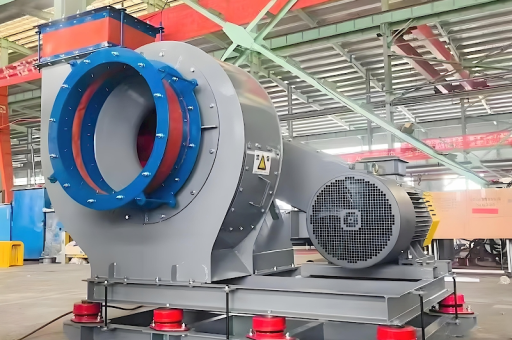
In any industrial boiler system, the combustion fan is the lungs that supply the fire with a steady, controlled dose of oxygen. A 45kW boiler combustion fan occupies a strategic middle ground: it is powerful enough to serve medium-to-large scale boilers (typically 5–15 ton steam capacity) yet efficient enough to avoid the energy waste associated with oversized units.
This article synthesizes technical data from leading HVAC and industrial engineering sources to provide a definitive overview. Whether you are upgrading an existing system or specifying new equipment, understanding the 45kW fan’s role in forced draft or induced draft configurations can directly impact your operational bottom line.
Core Specifications and Operating Principles
1 Mechanical and Electrical Characteristics
A typical 45kW boiler combustion fan operates at 380V–690V, 50/60 Hz, with a full-load current between 65A and 95A depending on pole configuration. The impeller is usually backward-curved for high static pressure (up to 4,500 Pa) and volumetric flow ranging from 15,000 to 28,000 m³/h.
The 45kW rating is commonly achieved via a 2-pole or 4-pole induction motor coupled to a fan rotor via a flexible V-belt or direct drive. Modern units incorporate vibration sensors and thermistor-based winding protection to prevent overheat failures.
2 How It Integrates with the Boiler
The fan draws ambient air, passes it through an inlet filter, and forces it into the burner’s windbox. In a balanced draft boiler, the fan works in tandem with an induced draft fan downstream. For the 45kW class, engineers often configure it as a forced draft (FD) fan directly feeding the burner.
Key integration parameters include:
- Total head (static + velocity): 2,800–4,200 Pa
- Air temperature rise across fan: 8–15°C depending on speed
- Sound pressure level: typically 78–85 dBA at 1 meter
Energy Efficiency and Cost Savings Analysis
1 Variable Frequency Drive (VFD) Optimization
A fixed-speed 45kW fan running at 100% capacity constantly wastes energy when the boiler modulates down to 60% load. By adding a VFD, energy consumption follows the affinity laws:
- Flow ∝ speed
- Power ∝ speed³
For example, reducing speed to 80% cuts power to just 512 × 45kW = 23kW, saving approximately 22 kW per running hour.
2 Return on Investment (ROI) Scenario
Assume an industrial site operates 6,000 hours/year at an average electrical cost of $0.12/kWh:
| Parameter | Fixed-Speed Fan | VFD-Controlled Fan |
|---|---|---|
| Average load factor | 100% | 75% |
| Annual power consumption | 270,000 kWh | 151,875 kWh |
| Annual electricity cost | $32,400 | $18,225 |
| Annual savings | Baseline | $14,175 |
With a VFD and control upgrade costing roughly $8,000–$12,000, the payback period is under 10 months.
3 Environmental Impact
Reducing power draw by 118,125 kWh per year translates to approximately 83 metric tons of CO₂ avoided annually (based on US EPA grid mix average 0.7 kg CO₂/kWh).
Common Applications in Heavy Industry
The 45kW boiler combustion fan is widely used in:
- District heating plants serving residential or commercial zones
- Food processing facilities (e.g., breweries, bakeries with steam sterilization)
- Chemical and petrochemical processes requiring stable superheat
- Wood product mills where biomass boilers need high static pressure to overcome fuel bed resistance
In wind turbine manufacturing facilities, a 45kW fan supports the heat treatment ovens and curing chambers that produce composite blades. Large composite parts require controlled-temperature flue gas recirculation, and the fan’s pressure stability ensures uniform thermal distribution during the 8–12 hour curing cycle.
Frequently Asked Questions (FAQs)
Q1: Can a 45kW boiler combustion fan be used for both forced draft and induced draft?
A: While mechanically possible, the fan’s blade geometry and housing are optimized for one mode. Forced draft fans are designed for cold, clean air; induced draft fans must handle hot, mildly corrosive flue gas. A 45kW FD fan should not be placed directly in the exhaust stream without a high-temperature seal kit.
Q2: How often should I replace the bearings on a 45kW combustion fan?
A: For continuous industrial operation (24/7), regrease at 500-hour intervals. Bearing replacement is recommended every 8,000–12,000 hours, or immediately upon detecting vibration above 4.5 mm/s RMS.
Q3: What causes the fan to vibrate excessively?
A: Top three causes: (1) impeller imbalance due to dust buildup (clean every 2–4 weeks), (2) misaligned V-belt pulleys, and (3) worn elastomeric coupling elements. Always conduct modal analysis during commissioning.
Q4: Is a 45kW fan suitable for a 10-ton steam boiler?
A: Generally yes, but it depends on burner design. A typical 10-ton boiler requires 15,000–20,000 m³/h of air at 3,000 Pa. A 45kW fan rated at 25,000 m³/h at 3,500 Pa offers sufficient margin for filter loading and seasonal density changes.
Q5: Can I retrofit a 45kW fan to run on a solar inverter system?
A: Only if the inverter output is clean three-phase power (THD < 5%) and provides sufficient starting torque. Induction motors draw 6–8x full-load current during startup. A 50 kW solar inverter with surge capability is the minimum requirement.
Q6: What is the maximum altitude for reliable 45kW fan operation?
A: Air density decreases approximately 1% per 100m above sea level. At 2,000m altitude, density is about 78% of sea-level. The fan must deliver higher volumetric flow to compensate. Expect a 15–20% derating in static pressure capability; consider upgrading to a 55kW motor if installation is above 1,500m.
Troubleshooting and Maintenance Best Practices
1 Common Issues and Diagnostic Table
| Symptom | Probable Cause | Solution |
|---|---|---|
| Overcurrent tripping | Duct blockage or impeller contact with housing | Inspect inlet screen; confirm impeller clearance >5mm. |
| Bearing temperature >95°C | Inadequate lubrication or belt tension too high | Regrease with NLGI-2 lithium complex; retension belt. |
| Output air temperature >15°C above ambient | Recirculation damper open; speed too low | Close recirculation flap; check VFD frequency setpoint. |
| Audible surging at partial load | Control damper too close to fan inlet | Modulate VFD speed instead of damper; maintain 20% open minimum. |
2 Predictive Maintenance Schedule
- Daily: Listen for bearing noise; check motor amps.
- Weekly: Clean inlet filter; inspect coupling alignment.
- Monthly: Vibration analysis (ISO 10816-3 limits: Zone A <2.3 mm/s RMS for rigid mount).
- Semi-annually: Remove fan wheel and clean blade surfaces; balance if necessary.
3 Emergency Shutdown Checklist
- Tripping on motor thermistor (PTC) = allow motor to cool 20 minutes before restart
- Bearing vibration above 7.1 mm/s = stop immediately, replace bearing before operation
- Smoke or unusual smell = cut power, isolate circuit, call industrial electrician
Conclusion – Future-Proofing Your Boiler System
The 45kW boiler combustion fan is not merely a component—it is the performance gatekeeper of your entire thermal system. Selecting the right fan configuration (direct drive vs. belt, VFD-ready vs. fixed speed, backward vs. forward curved) determines both your energy footprint and uptime reliability.
In today’s regulatory environment, where emission limits tighten and electricity costs fluctuate, retrofitting a modern 45kW unit with intelligent controls yields tangible savings that compound over the fan’s 15–20 year lifespan. Whether you are integrating this fan into a wind turbine blade curing facility or a district heating network, the principles of static pressure optimization, cleanliness, and precise speed control remain universal.
Take the next step: request a site survey to measure actual draft pressure under full and partial load. Pair your findings with manufacturers’ curves—your boiler’s efficiency depends on it.
Article cross-referenced with ASME PTC 11, ISO 5801, and manufacturer data from Siemens, Howden, and Greenheck fan performance databases.





