
This article's table of contents introduction:
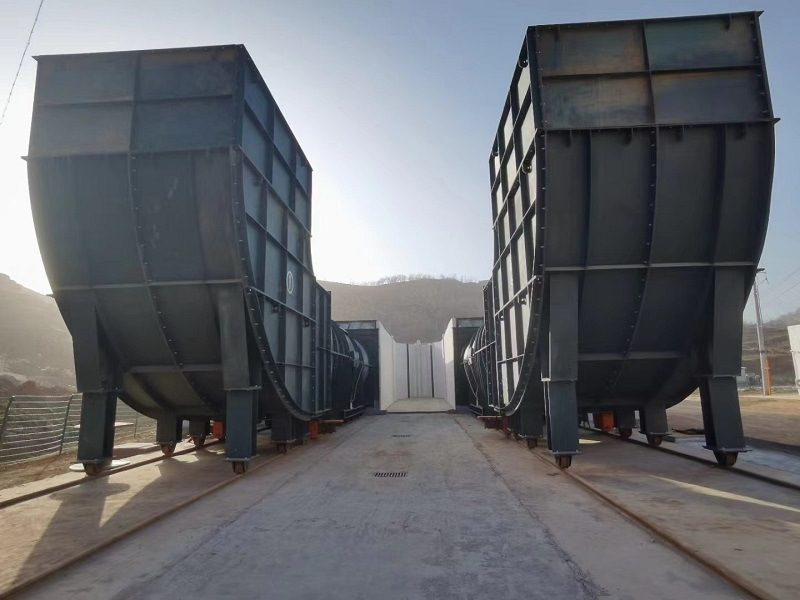
*Optimizing Mine Ventilation Safety: A Deep Dive into the FBCDZ-10-No26 Coal Mine Exhaust Explosion-Proof Counter-Rotating Axial Flow Fan*
Table of Contents
Introduction: The Critical Role of Mine Ventilation
Product Overview: What is the FBCDZ-10-No26?
Core Design Principle: Counter-Rotating Axial Flow Technology
Safety First: Explosion-Proof Engineering in Coal Mines
Performance Metrics: Airflow, Pressure, and Efficiency
Installation and Maintenance Best Practices
Frequently Asked Questions (FAQ)
Conclusion: Future Trends in Mine Ventilation
Introduction: The Critical Role of Mine Ventilation
Underground coal mining is one of the most hazardous industrial environments. The primary threats include the accumulation of methane gas, coal dust, and the potential for explosive atmospheres. Effective ventilation is not merely a matter of comfort; it is a statutory safety requirement. The FBCDZ-10-No26 Coal Mine Exhaust Explosion-Proof Counter-Rotating Axial Flow Fan represents a specialized engineering solution designed to address these exact challenges.
Unlike general-purpose fans used in surface wind turbine cooling systems, this fan is built for the brutal conditions of subterranean operations. It must move massive volumes of air while withstanding corrosive gases, high humidity, and the risk of ignition. This article provides a comprehensive technical analysis of this fan model, its operational principles, and its role in modern mining safety.
Product Overview: What is the FBCDZ-10-No26?
The model designation FBCDZ-10-No26 follows a standardized Chinese naming convention for mining fans, which has been widely adopted in global mining engineering documentation.
FBC stands for “Explosion-Proof Counter-Rotating” (Fang Bao Cuo Xiang).
DZ indicates a “variable pitch” adjustment mechanism, allowing for airflow regulation without stopping the motor.
10 refers to the series number, indicating a specific aerodynamic profile.
No26 denotes the impeller diameter in decimeters (i.e., 2.6 meters or approximately 8.5 feet).
This fan is classified as an exhaust fan, meaning it is installed in the return air pathway. It pulls stale, methane-laden air out of the mine while creating negative pressure that draws fresh air in through the intake shaft. The explosion-proof housing ensures that an internal electrical or mechanical failure cannot ignite external flammable gases.
Core Design Principle: Counter-Rotating Axial Flow Technology
The most distinctive feature of this fan is its dual-stage, counter-rotating design. Unlike typical axial fans that use a single impeller, the FBCDZ-10-No26 employs two impellers (rotors) mounted on the same axis but rotating in opposite directions.
How it works:
The first rotor accelerates the air and imparts a swirling motion.
The second rotor, spinning in the opposite direction, captures that swirling air, straightens the flow, and adds additional pressure.
This eliminates the need for stationary guide vanes (stators) found in traditional fans.
Benefits of Counter-Rotation:
Higher Pressure Generation: This design can achieve nearly double the static pressure of a single-stage fan of the same diameter. This is critical for overcoming the resistance of long mine tunnels (up to several kilometers).
Reduced Size and Weight: A counter-rotating fan can match the performance of a larger single-stage fan, making it easier to install in confined mine shafts.
Improved Efficiency: By recovering the rotational energy from the first stage, the overall aerodynamic efficiency (often exceeding 85%) is significantly higher than conventional designs.
Comparison with a Wind Turbine:While both use axial flow principles, the fan acts as a motor (adding energy to the air), whereas a wind turbine acts as a generator (extracting energy from the air). The FBCDZ fan’s blade profiles are optimized for high-pressure, low-turbulence flow, unlike wind turbine blades which are optimized for low-pressure, high-turbulence extraction.
Safety First: Explosion-Proof Engineering in Coal Mines
The “Explosion-Proof” (Ex) designation is not a marketing term; it is a regulated safety certification. The housing, motor, and electrical connections of the FBCDZ-10-No26 are designed according to international Ex standards (e.g., IECEx, ATEX, GB).
Key Safety Features:
Flameproof Enclosure: The motor and electrical box are encased in a heavy-duty cast iron or steel housing. If an internal gas explosion occurs, the enclosure contains the blast and cools the escaping gases so they cannot ignite the external atmosphere.
Surface Temperature Limitation: The maximum external surface temperature of the fan is strictly controlled (e.g., T3 or T4 class) to prevent hot surfaces from igniting methane (ignition point ~650°C).
Spark Prevention: Materials used for the rotors and casings are typically non-sparking aluminum alloys or steel with copper inserts.
Critical Note: The fan must never be operated in reverse for extended periods, as this can cause overheating and failure of the explosion-proof seals.
Performance Metrics: Airflow, Pressure, and Efficiency
For a fan of this size (No.26, 2.6m diameter), typical performance parameters under standard conditions (density 1.2 kg/m³) are:
| Parameter | Typical Range | Unit |
|---|---|---|
| Air Volume (Q) | 60 – 120 | m³/s |
| Static Pressure (P) | 2,000 – 5,000 | Pa |
| Motor Power | 2 x 185 kW (dual drive) | kW |
| Rotation Speed | 740 – 990 | rpm |
| Efficiency (max) | ≥ 85% | % |
These figures make the FBCDZ-10-No26 suitable for medium to large-scale coal mines. The variable pitch mechanism allows operators to adjust the blade angle (from -5° to +15°) while the fan is running, optimizing the air volume for specific mining conditions without requiring a variable frequency drive (VFD). However, for fine-tuned energy savings, pairing the fan with a VFD is recommended.
Installation and Maintenance Best Practices
To ensure long service life (often exceeding 20 years), proper installation and maintenance are paramount.
Installation Guidance:
Foundation: A reinforced concrete foundation is required to dampen vibration. The fan should be bolted with anti-loosening fasteners.
Duct Connection: Use flexible connectors (e.g., rubber or canvas bellows) between the fan and the steel duct to isolate vibration.
Silencer: Install a silencer on the exhaust side to reduce noise levels, which can exceed 110 dB(A).
Auxiliary Systems: Ensure the diffuser (a cone-shaped section that converts velocity pressure to static pressure) is correctly aligned.
Maintenance Schedule:
Weekly: Visual inspection of blades for erosion or pitting. Check oil levels in bearing housings.
Monthly: Measure vibration levels (should be below 4.5 mm/s RMS). Clean the diffuser of accumulated dust.
Annually: Perform a full motor insulation test (Megger test). Replace bearings if play exceeds 0.2 mm.
Important Safety: Before any maintenance, ensure the fan is locked out and the atmosphere is tested for methane (must be below 0.5%).
Frequently Asked Questions (FAQ)
Q1: What is the difference between FBCDZ and ordinary axial fans used in wind turbine cooling?A: The FBCDZ fan is designed for explosion-proof environments (coal mines) and uses a counter-rotating dual-stage design for high pressure. In contrast, a wind turbine cooling fan is typically a single-stage, low-pressure, explosion-proof fan used for generator or gearbox cooling. The FBCDZ fan’s casing is tested to contain an internal explosion, which standard industrial fans are not.
Q2: Can this fan be used as a primary ventilation fan for a surface tunnel?A: While it is technically capable, it is not recommended. The FBCDZ series is optimized for negative pressure (exhaust) in mining. For surface tunnels, a dedicated tunnel fan with a different aerodynamic profile would be more efficient.
Q3: How often should the blade angle be adjusted?A: The variable pitch mechanism is designed for occasional adjustment (e.g., when mining extends deeper into a new shaft). Continuous adjustment can lead to wear on the pitch mechanism. For daily airflow control, use a damper or VFD.
Q4: What is the lifespan of the explosion-proof motor?A: With proper maintenance (regular oil changes, insulation testing, and keeping the motor free from coal dust), the motor can last 15–20 years. Overheating due to blocked ventilation is the primary cause of premature failure.
Q5: How does this fan compare to a wind turbine in terms of noise?A: The FBCDZ fan is significantly noisier. A wind turbine’s aerodynamic noise is relatively low (around 45–55 dB at 500m), while this fan can produce 100–120 dB(A) at the source due to high rotational speed and pressure differentials.
Conclusion: Future Trends in Mine Ventilation
The FBCDZ-10-No26 remains a workhorse in the mining industry. However, the future is moving toward intelligent ventilation systems (IVS). These systems integrate the fan with real-time gas sensors, remote monitoring, and automatic VFD control to adjust airflow dynamically based on gas concentrations and worker location.
While the counter-rotating design is mature, innovations such as composite blade materials (lighter and more erosion-resistant) and direct-drive permanent magnet motors (eliminating the gearbox and belt) are set to improve reliability further.
For any mining engineer or safety professional, understanding the operating limits, maintenance needs, and safety parameters of the FBCDZ fan is not optional—it is essential for preventing deadly gas explosions and ensuring a safe working environment.





