
This article's table of contents introduction:
- Table of Contents (Directory Guide)
- Introduction: The Critical Role of Draft Blowers in Modern Industry
- What is a Centrifugal Induced Draft Blower? Understanding the Mechanics
- The Golden Triad: Energy Saving, Heat Dissipation, and Efficiency
- Key Technologies Driving Energy Savings
- Optimizing Heat Dissipation for Longevity and Performance
- Installation & Maintenance: Best Practices for Sustained Efficiency
- Frequently Asked Questions (FAQ)
- Conclusion: The Future of Industrial Ventilation
Here is a comprehensive, SEO-optimized article in English designed to rank on Bing and Google. It focuses on the core keywords: Energy Saving Centrifugal Induced Draft Blower Heat Dissipation Efficient.
** The Ultimate Guide to Energy Saving Centrifugal Induced Draft Blowers: Maximizing Heat Dissipation for Efficient Industrial Operations
Meta Description: Discover how an Energy Saving Centrifugal Induced Draft Blower improves heat dissipation and operational efficiency. Explore design innovations, maintenance tips, and FAQs for optimized industrial fan performance.
Table of Contents (Directory Guide)
- Introduction: The Critical Role of Draft Blowers in Modern Industry
- What is a Centrifugal Induced Draft Blower? Understanding the Mechanics
- The Golden Triad: Energy Saving, Heat Dissipation, and Efficiency
- 1 How Design Influences Energy Consumption
- 2 The Physics of Heat Dissipation in Induced Draft Systems
- 3 Defining "Efficient" in Real-World Terms
- Key Technologies Driving Energy Savings
- 1 Aerodynamic Impeller Design (Backward-Curved vs. Forward-Curved)
- 2 Variable Frequency Drives (VFDs) and Smart Controls
- 3 Advanced Motor and Bearing Cooling Systems
- Optimizing Heat Dissipation for Longevity and Performance
- 1 Material Selection for High-Temperature Environments
- 2 Cooling Airflow Path Design
- Installation & Maintenance: Best Practices for Sustained Efficiency
- 1 Balancing and Vibration Analysis
- 2 Inspection of Seals and Bearings
- Frequently Asked Questions (FAQ)
- Conclusion: The Future of Industrial Ventilation
Introduction: The Critical Role of Draft Blowers in Modern Industry
In the heart of heavy industries—from power generation and cement manufacturing to chemical processing and steel production—one piece of equipment silently dictates productivity, safety, and energy costs: the Energy Saving Centrifugal Induced Draft Blower. Often simply called an "ID fan," this machine is the lungs of a thermal system. Its primary job is to pull hot, often corrosive, flue gases through a boiler, furnace, or kiln, creating a negative pressure that ensures safe and efficient combustion.
However, the traditional industrial fan is notorious for being an "energy hog." In a typical thermal plant, fans and blowers can consume 15% to 30% of the total electrical power. This is why the market has shifted toward Energy Saving Centrifugal Induced Draft Blowers designed specifically for superior Heat Dissipation and Efficient operation. This article delves deep into how modern engineering is transforming these industrial workhorses from power consumers into efficiency assets.
What is a Centrifugal Induced Draft Blower? Understanding the Mechanics
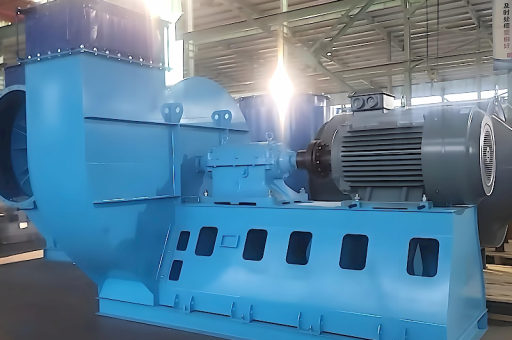
A centrifugal blower works on a simple principle: air enters the center of a rotating impeller (the eye) and is flung outward by centrifugal force. The air gains velocity and pressure as it moves through the volute casing before being discharged.
In an Induced Draft configuration, the fan is located at the outlet of the system (after the boiler or furnace). It pulls gas through the system, maintaining a slight vacuum (negative pressure) inside the combustion chamber. This is critical for safety—it prevents hot gases and flames from escaping through doors or leaks. The fan must handle the hottest and dirtiest gas in the process, making Heat Dissipation and material durability paramount.
The Golden Triad: Energy Saving, Heat Dissipation, and Efficiency
These three terms are not separate features; they are interdependent pillars of modern fan design.
1 How Design Influences Energy Consumption
Traditional forward-curved impellers are cheap to produce but require high horsepower to move air against resistance. Modern Energy Saving designs almost exclusively use backward-curved or airfoil impellers. These blades "slice" through the air with lower turbulence, resulting in a higher static efficiency (often exceeding 85%) compared to the 60-65% efficiency of older designs.
2 The Physics of Heat Dissipation in Induced Draft Systems
An ID fan does not just move hot air; it lives in it. Flue gas temperatures can range from 150°C (300°F) to over 400°C (750°F). If the heat is not dissipated effectively from the shaft, bearings, and motor, the machine fails. Efficient Heat Dissipation in this context involves:
- Shaft Cooling: Air or water circulates around the shaft where it passes through the hot casing.
- Bearing Housing: Fins and cooling fans on the bearing housing wick away conducted heat.
- Ducting: Proper insulation ensures heat stays in the gas stream, not the surrounding motor room.
3 Defining "Efficient" in Real-World Terms
Efficiency is not just about peak performance. It is about reliability over time. An Energy Saving Centrifugal Induced Draft Blower that is truly Efficient must:
- Consume less kWh per unit of gas moved (Aerodynamic efficiency).
- Operate without unplanned downtime due to overheating (Thermal efficiency).
- Require minimal maintenance intervention (Operational efficiency).
Key Technologies Driving Energy Savings
1 Aerodynamic Impeller Design
The heart of the energy savings lies in the impeller. The Backward-Curved Blade (BC) design is the gold standard.
- Why it saves energy: BC blades have a non-overloading power characteristic. As system resistance decreases, the motor current does not spike. This makes them ideal for variable systems.
- Heat Resistance: High-strength alloy steels or even titanium coatings prevent creep and corrosion at high temperatures, ensuring the blade profile (and thus efficiency) remains stable for years.
2 Variable Frequency Drives (VFDs)
A fixed-speed motor running an ID fan is like driving a car with the gas pedal stuck to the floor. You can only control airflow by using dampers or inlet vanes, which act like a brake—wasting massive amounts of energy.
- The VFD Solution: By electronically adjusting the motor speed to match the exact demand, a VFD can reduce fan energy consumption by 30% to 60%. When you combine a Centrifugal Induced Draft Blower with a VFD, you unlock true Energy Saving potential. The result is precise pressure control and minimal thermal waste.
3 Advanced Motor and Bearing Cooling
Heat is the enemy of bearings. To ensure Efficient longevity, modern blowers use:
- External Impeller Cooling: A separate cooling fan is mounted on the motor shaft to blow ambient air over the bearing housing.
- Slinger Rings: These fling away contaminants and help circulate cooling oil.
- Thermal Monitoring: RTD (Resistance Temperature Detectors) sensors feed real-time temperature data to the control system, allowing for predictive maintenance.
Optimizing Heat Dissipation for Longevity and Performance
Without effective Heat Dissipation, the blower becomes a liability.
1 Material Selection
The casing and impeller must withstand thermal expansion. A Centrifugal Induced Draft Blower for high-temperature applications often features:
- Radial Expansion Joints: Allow the casing to grow without binding.
- Abrasion Resistance: Chrome carbide overlays on wear plates protect against fly ash erosion, which can deform blades and kill efficiency.
2 Cooling Airflow Path Design
The Efficient removal of heat relies on airtight sealing between the hot gas path and the outside atmosphere.
- Shaft Seal Systems: Labyrinth seals or carbon ring seals prevent hot gas from leaking toward the bearings.
- Cooling Air Injection: Ambient air is injected at the shaft penetration point. This air creates a barrier, preventing hot gases from contacting the shaft while simultaneously cooling it. This is the most critical element of Heat Dissipation in most ID fan designs.
Installation & Maintenance: Best Practices for Sustained Efficiency
Even the best Energy Saving fan will fail quickly if not properly maintained.
1 Balancing and Vibration Analysis
Imbalance kills bearings and reduces efficiency. A poorly balanced impeller causes vibration, which loosens bolts and misaligns the shaft, increasing friction.
- Action: Perform a precision dynamic balance at the factory. Use accelerometers on-site to monitor vibration. An increase in vibration often indicates dust buildup (leading to imbalance) or bearing wear.
2 Inspection of Seals and Bearings
The seals that ensure Heat Dissipation degrade over time.
- Action: During every scheduled outage, inspect the shaft seals for wear. If seals leak, hot gas hits the bearings, and the grease liquefies. This is the number one cause of premature Centrifugal Induced Draft Blower failure. Use high-temperature synthetic grease (NLGI #2 or #3) specifically rated for fan bearings.
Frequently Asked Questions (FAQ)
Q1: How does a centrifugal induced draft blower save energy compared to a forced draft fan? A: While both contribute to system efficiency, the ID fan creates a negative pressure, reducing the risk of hot gas leakage. Energy savings come primarily from the fan’s design (backward-curved blades) and control method (VFDs). An Energy Saving Centrifugal Induced Draft Blower often recaptures energy by lowering the required boiler pressure drop, allowing the system to run cooler and with less fuel.
Q2: What is the typical temperature range for heat dissipation in an ID fan? A: Standard ID fans handle up to 200°C (392°F). With specialized shaft cooling and high-temperature seals, they can handle up to 450°C (842°F). For super-hot applications (e.g., steel BOFs), water-cooled shafts are used to ensure Efficient Heat Dissipation.
Q3: Why is backward-curved impeller better for energy saving? A: Because of its non-overloading horsepower characteristic. As the static pressure in the duct drops, the power draw stays constant or even drops slightly. In a forward-curved fan, the power draw skyrockets, causing motor overloads. The backward-curved design is inherently more Efficient.
Q4: Can I retrofit an old fan to be an energy saving model? A: Yes. The most cost-effective upgrade is installing a VFD. However, for maximum impact, you can replace the old impeller and inlet cone with a modern, high-efficiency backward-curved wheel kit designed for the existing casing. This is known as a "wheel swap."
Q5: What is the single most important factor for heat dissipation longevity? A: The shaft seal. If the seal fails, hot gas travels directly into the bearing housing. This destroys the grease within minutes and causes the bearing to seize. Always ensure the seal cooling air path is unobstructed.
Conclusion: The Future of Industrial Ventilation
The industrial fan is no longer a simple commodity. The demand for an Energy Saving Centrifugal Induced Draft Blower is a demand for smarter, more resilient engineering. By prioritizing advanced aerodynamics for energy reduction and robust thermal engineering for Heat Dissipation, modern blowers are achieving operational efficiencies that were unimaginable a decade ago.
Whether you are building a new plant or optimizing an existing one, investing in a high-efficiency ID fan with a VFD is one of the fastest ways to reduce your carbon footprint and your energy bill. The future belongs to systems that are not just powerful, but Efficient, reliable, and smart.
For specific technical specifications or a tailored solution for your facility, consult with an industrial fan manufacturer. A properly selected Centrifugal Induced Draft Blower will pay for itself through energy savings within 18 to 24 months.





