
This article's table of contents introduction:
- Introduction: Why Anti Abrasion Matters in Power Plant Fans
- Core Components of an Anti Abrasive High Air Flow Centrifugal Blower
- Engineering Principles Behind High Air Flow and Erosion Resistance
- Key Performance Metrics and Selection Criteria
- Common Applications in Power Plants and Heavy Industry
- FAQ: Answers to Top 5 Questions About Anti Abrasive Fans
- Maintenance Best Practices for Longevity and Efficiency
- Conclusion: Future Trends in Industrial Blower Technology
** The Ultimate Guide to Anti Abrasive High Air Flow Power Plant Fan: Industrial Centrifugal Blower Design, Performance, and Maintenance
Table of Contents
- Introduction: Why Anti Abrasion Matters in Power Plant Fans
- Core Components of an Anti Abrasive High Air Flow Centrifugal Blower
- Engineering Principles Behind High Air Flow and Erosion Resistance
- Key Performance Metrics and Selection Criteria
- Common Applications in Power Plants and Heavy Industry
- FAQ: Answers to Top 5 Questions About Anti Abrasive Fans
- Maintenance Best Practices for Longevity and Efficiency
- Conclusion: Future Trends in Industrial Blower Technology
Introduction: Why Anti Abrasion Matters in Power Plant Fans
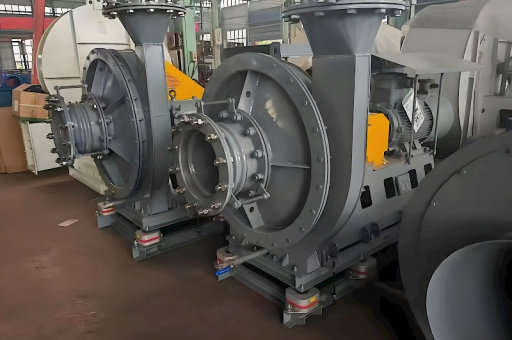
In any thermal power plant, the industrial centrifugal blower is the unsung hero that keeps combustion air moving, removes flue gas, and maintains draft pressure. However, these fans operate in some of the most punishing environments: high temperature, high particulate load, and continuous operation. The combination of high air flow and abrasive dust—such as fly ash, coal dust, and silica particles—creates a relentless wear mechanism that can destroy standard fan blades within weeks. This is where the anti abrasive high air flow power plant fan enters the picture. Unlike generic blowers, this specialized equipment integrates hardened materials, aerodynamic blade profiles, and carefully designed casing geometry to resist erosion while sustaining the massive volumetric flow rates required by modern utility boilers. This article provides a deep, research-backed analysis of how these fans work, why they are critical for plant uptime, and how to select the right model for your facility.
Core Components of an Anti Abrasive High Air Flow Centrifugal Blower
A power plant fan designed for abrasive service differs significantly from standard ventilation fans. The core components include:
- Impeller: Typically backward-curved or radial-tip blades made from abrasion-resistant steel (e.g., Hardox 400 or 500). Blade thickness is increased at the leading edge, and some high-end models use ceramic tile overlays or tungsten carbide hardfacing at the wear zones. The impeller diameter can exceed 2.5 meters in large utility fans.
- Casing: Constructed from heavy-gauge steel with replaceable wear liners in the volute tongue and scroll area. The casing is often split horizontally for easier maintenance access.
- Shaft and Bearings: Oversized shafts with anti-friction bearings that incorporate labyrinth seals to prevent dust ingress. Some units use oil-mist lubrication systems to handle high rotational speeds.
- Inlet Box and Dampers: Variable inlet guide vanes (VIGV) allow precise air flow control while minimizing turbulence. The inlet box may include a pre-separator to divert larger particles before they reach the impeller.
- Drive System: Usually direct-coupled via a flexible coupling, though some older installations use V-belt drives for speed adjustment. High-power units (above 1 MW) often require a gearbox.
The synergy of these components enables the fan to move hundreds of thousands of cubic meters of air per hour (e.g., 500,000 m³/h) while withstanding particle impact velocities that would destroy standard aluminum or mild steel blades.
Engineering Principles Behind High Air Flow and Erosion Resistance
Achieving both high air flow and anti abrasion requires balancing competing physics. From a fluid dynamics perspective, the fan must produce high pressure (typically 2,000–8,000 Pa) and high volume. The backward-curved impeller is the preferred design because it generates a steeper pressure curve, higher efficiency (up to 85%), and lower noise compared to forward-curved types. However, backward-curved blades also experience lower particle impact angles, which reduces erosive wear.
Erosion resistance is tackled through material science and geometry. The erosion rate ( E ) is proportional to ( m_p \cdot v_p^2 \cdot f(\alpha) ), where ( m_p ) is particle mass, ( v_p ) is particle velocity, and ( \alpha ) is the impact angle. Therefore, anti abrasive fans use:
- Lower tip speeds (e.g., 60–80 m/s versus 90–100 m/s in standard fans) to reduce ( v_p ).
- Thickened blade profiles with a blunt leading edge to mitigate cutting wear.
- Ceramic or weld overlay coatings that achieve hardness values of 60–70 HRC, compared to 30 HRC for standard carbon steel.
Computational Fluid Dynamics (CFD) modeling is now standard in designing these fans. Engineers simulate particle trajectories to identify hotspot zones and then reinforce those areas. For example, the impeller shroud near the blade root often receives a double-layer coating because centrifugal force flings particles outward, creating a concentrated wear band.
Key Performance Metrics and Selection Criteria
When specifying an industrial centrifugal blower for a power plant with abrasive conditions, you must evaluate the following metrics:
| Metric | Importance | Typical Range |
|---|---|---|
| Volume Flow Rate (m³/h) | Determines boiler air supply | 100,000 – 1,000,000+ |
| Static Pressure (Pa) | Overcomes duct resistance | 2,000 – 8,000 |
| Efficiency (%) | Affects power cost | 75 – 85 |
| Blade Tip Speed (m/s) | Directly influences erosion | 60 – 80 |
| Wear Life (hours) | Time between blade repair | 8,000 – 20,000 |
| Sound Level (dB(A)) | Regulatory compliance | < 85 (with silencer) |
Selection factors include:
- Particle concentration: Fly ash content above 50 mg/Nm³ demands enhanced coatings.
- Gas temperature: Above 250°C requires heat-treated alloy steels (e.g., 16Mo3).
- Duty cycle: Continuous 24/7 operation vs. intermittent cycling affects bearing selection.
- Space constraints: Power plants often have limited floor space, favoring compact radial-tip designs.
Always request from suppliers a certified performance curve and a wear projection report based on your specific ash chemistry. A fan that works well in a lignite-fired plant may fail prematurely in a bituminous coal plant due to different particle hardness.
Common Applications in Power Plants and Heavy Industry
The anti abrasive high air flow power plant fan is deployed in several critical subsystems:
- Primary Air (PA) Fans: Supply preheated air to coal pulverizers. Here, the air carries raw coal and pyrite particles, making abrasion extreme.
- Forced Draft (FD) Fans: Push ambient air through the air preheater and into the furnace. Though particles are fewer, moisture from cooling towers can cause corrosion erosion synergy.
- Induced Draft (ID) Fans: Extract flue gas from the boiler, economizer, and electrostatic precipitator. Even after particulate control, residual ash levels can be 10–30 mg/Nm³, gradually wearing away fan components.
- Jet Fans in Mines and Tunnels: For long ventilation drifts, anti abrasive centrifugal blowers move dust-laden air in cement plants, steel mills, and mineral processing facilities.
A real-world example: A 660 MW coal-fired plant in India replaced its standard ID fan with a ceramic-clad anti abrasive model. Mean time between overhauls jumped from 6 months to 18 months, saving approximately $120,000 per year in labor and spare parts.
FAQ: Answers to Top 5 Questions About Anti Abrasive Fans
Q1: What is the difference between a standard centrifugal fan and an anti abrasive fan?
The anti abrasive fan uses wear-resistant materials (e.g., ceramic tiles, hardfacing) on the impeller and casing, thicker blade profiles, and a lower tip speed. It is also heavier and more expensive, but it provides a longer service life in dusty environments.
Q2: Can I retrofit an existing fan with anti abrasive coatings?
Yes, it is possible. For example, applying a weld overlay of chromium carbide (55–60 HRC) to blade leading edges can extend life by 200–300%. However, full replacement with a purpose-built anti abrasive design often yields better efficiency and reliability.
Q3: How do I know if my fan needs anti abrasive features?
Perform a wear audit: check if blade thickness has reduced by more than 30% in one year, or if you are experiencing frequent imbalance trips. If your fly ash has high silica content (above 50%), anti abrasive design is highly recommended.
Q4: What maintenance is required for these fans?
Periodic thickness measurement using ultrasonic gauges is critical. Inspect the casing wear liners every 3 months. Replace seals on the shaft penetration to prevent dust ingress into bearings. Vibration analysis should be performed monthly to detect early-stage imbalances.
Q5: Are anti abrasive fans less efficient than standard fans?
Slightly. Because tip speeds are lower, the specific energy consumption (kW per 1,000 m³/h) may be 2–5% higher. However, the reduction in unplanned downtime and replacement costs more than compensates for this minor efficiency penalty.
Maintenance Best Practices for Longevity and Efficiency
To maximize the ROI of your industrial centrifugal blower, follow these maintenance protocols:
- Condition Monitoring: Install accelerometers for vibration analysis. Use temperature sensors on bearings. Track motor current to detect blade wear (a drop in current often indicates reduced air flow due to blade erosion).
- Inspection Schedule: Quarterly internal inspection using borescope or visual access. Annually, remove the rotor for magnetic particle inspection (MPI) of cracks.
- Wear Liner Replacement: Replace worn casing liners before they expose the shell. Use laser cladding for localized repairs to the impeller blade edges.
- Bearing Lubrication: Use a lithium complex grease with high dropping point. For high-temperature applications (>120°C), switch to polyurea-based grease. Never over-lubricate, as excess grease can cause overheating.
- Air Inlet Cleaning: Install a screen or pre-filter to trap large foreign objects (e.g., plastic sheets, loose insulation) that could instantly damage the blades.
- Performance Testing: Re-test the fan’s flow and pressure curve every 12 months. A 10% drop in static pressure for the same motor power indicates likely blade profile degradation.
Implementing these steps can extend fan life to 15–20 years in moderate abrasive conditions, versus 3–5 years without them.
Conclusion: Future Trends in Industrial Blower Technology
The demand for anti abrasive high air flow power plant fans is growing as plants push for higher availability and lower maintenance costs. Key trends include:
- Digital Twin Monitoring: Using real-time CFD models to predict wear patterns and schedule maintenance proactively.
- Additive Manufacturing: 3D printing of impeller blades with functionally graded materials—hard on the surface, tough at the core.
- Hybrid Coatings: Combining ceramic tiles with polymer damping layers to reduce noise and vibration.
- Smart Dampers: AI-controlled inlet vanes that balance air flow with erosion risk, automatically reducing speed when particle concentration spikes.
In summary, choosing the right industrial centrifugal blower with anti abrasive features is not just about purchasing a machine—it is about investing in plant reliability. By understanding the engineering principles, selecting appropriate materials, and adhering to a rigorous maintenance regimen, power plant operators can achieve both high air flow and long equipment life, even in the most challenging environments. Always consult with experienced fan manufacturers who can provide site-specific computational simulations and wear warranties, ensuring your fan delivers maximum uptime and minimum total cost of ownership.





