
This article's table of contents introduction:
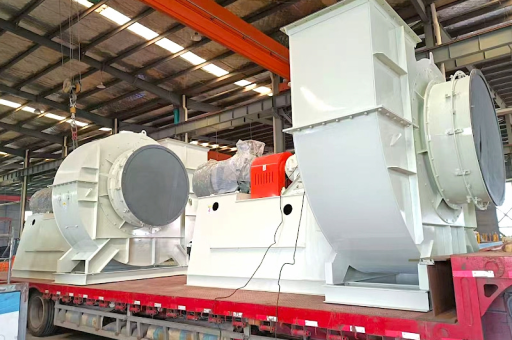
- The "Backward" Fan (Backward-Curved / Backward-Inclined)
- Power Plant Application: The "Smoke Exhaust"
- The "Warm Air Transportation" Paradox
- Critical Engineering for "Transportation"
- Typical System Flow (Backward Draft)
- Summary
It appears you've listed a set of keywords related to industrial ventilation or thermal systems. This sounds like you are describing a Backward-Curved Centrifugal Fan used in a power plant for flue gas exhaust or warm air recirculation.
Here is a technical breakdown of what that system entails, along with the critical engineering considerations:
The "Backward" Fan (Backward-Curved / Backward-Inclined)
- Key Characteristic: The fan blades curve away from the direction of rotation.
- Why it's used in Power Plants:
- High Efficiency: More efficient than forward-curved fans, especially for moving heavy or hot gases.
- Non-Overloading: As system pressure drops, the motor load does not spike (amp draw stays stable), preventing motor burnout.
- Handling Particulates: Less prone to dust buildup on the blades compared to forward-curved fans.
Power Plant Application: The "Smoke Exhaust"
This is typically the Induced Draft (ID) Fan.
- Function: It pulls flue gases (smoke) from the boiler through the scrubbers, precipitators, and out the chimney.
- Challenge: The gas is hot, corrosive (sulfur), and contains abrasive fly ash. Backward fans are preferred because the blades self-clean slightly better and handle high static pressure.
The "Warm Air Transportation" Paradox
If the fan is exhausting smoke, why transport warm air? There are two possibilities:
A) Air Preheater (Ljungström heater):
- The hot flue gas heats incoming combustion air via a rotating heat wheel.
- The warm air is then transported back to the boiler burner.
- Result: The "smoke exhaust" cools down, but the "warm air" feed increases boiler efficiency.
B) Regenerative Thermal Oxidizer (RTO) or Heat Recovery:
- In some cogeneration plants, the warm exhaust air is ducted to greenhouses or industrial dryers (e.g., drying coal or biomass).
Critical Engineering for "Transportation"
Moving hot, dusty air requires specific design:
| Component | Design Requirement |
|---|---|
| Shaft | Extended length for cooling; must be sealed to prevent hot gas leakage. |
| Bearings | Usually external to the housing (pedestal-mounted) with cooling fins or water jackets. |
| Impeller | Wear liners on the backplate; often made from abrasion-resistant steel (AR400) or Hastelloy for corrosion. |
| Ducting | Expansion joints (bellows) to handle thermal expansion of the ductwork. |
Typical System Flow (Backward Draft)
- Boiler: Creates hot flue gas (Smoke).
- Air Preheater: Cools the smoke, warms the combustion air.
- Backward Fan (ID Fan): Pulls the cooled smoke through electrostatic precipitators (ESP) or baghouses.
- Stack: Exhausts clean gas to atmosphere.
- Secondary Fan (FD Fan): Transports the now-warm combustion air from the preheater back into the boiler furnace.
Summary
The "Backward Power Plant Fan Smoke Exhaust Warm Air Transportation" refers to a draft system where a backward-curved centrifugal fan pulls smoke (flue gas) through pollution control devices, while a separate air stream (warm combustion air) is transported via fans and ducts to improve boiler efficiency.
Key Term: Induced Draft (ID) Fan + Forced Draft (FD) Fan + Air Preheater.
If you have a specific symptom (e.g., "fan vibrating" or "motor overheating"), please provide more context for a diagnostic answer.





