
This article's table of contents introduction:
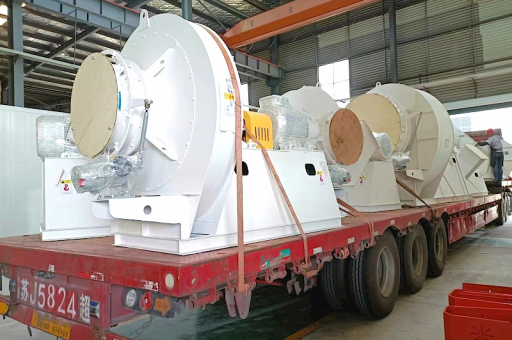
- The Application: Drying Materials in a Power Plant
- The Fan: High-Pressure Centrifugal Blower
- The Specific Role: "Materials Drying Power Plant Fan"
- Key Selection Criteria & Problems
- Summary Table
This sounds like you are looking for information regarding a specific type of industrial fan used for drying materials in a power plant. You are describing a High-Pressure Centrifugal Blower used for a Material Drying application within a Power Plant context.
Let's break down the key components of this equipment and its application.
The Application: Drying Materials in a Power Plant
In a power plant (especially coal-fired, biomass, or waste-to-energy), drying is critical for several reasons:
- Fuel Drying: High-moisture fuels (like lignite coal, biomass pellets, or sludge) need to be dried before combustion to increase the boiler efficiency, improve flame stability, and reduce emissions.
- Coal Mill Systems: In pulverized coal plants, hot air is blown into the coal mill (pulverizer) to dry and transport the ground coal to the boiler.
- Flue Gas Desulfurization (FGD) Byproduct: Gypsum produced in scrubbers must be dried before it can be used in wallboard or cement.
- Ash Handling: Fly ash or bottom ash is often dried for easier transport and disposal.
The Fan: High-Pressure Centrifugal Blower
This is the workhorse. For material drying, you need a fan (or blower) that can push air (often hot air or flue gas) against the resistance of the material bed, ducts, dampers, and filters.
Why High-Pressure Centrifugal?
- Pressure: Centrifugal fans can generate high static pressures (measured in inches of water gauge, kPa, or mbar). This is essential to overcome the pressure drop through the drying system (e.g., through a fluidized bed dryer or a pulverizer).
- Flow: They provide a consistent, high volume of airflow needed for evaporation.
- Rugged Construction: They are built to handle high temperatures (up to 400°C or higher) and abrasive dust-laden air.
Typical Specifications for this Fan:
| Parameter | Typical Value / Requirement |
|---|---|
| Type | Centrifugal, Backward Curve, Radial, or Airfoil Blades |
| Pressure | High (e.g., 700 to 2500 mmWC / 6.9 to 24.5 kPa) |
| Flow Rate | Medium to High (e.g., 50,000 to 500,000 m³/hr) |
| Temperature | 80°C to 350°C (Hot air from air heater or flue gas) |
| Drive | Direct drive (for high speed) or Belt drive (for flexibility) |
| Material | Carbon steel (standard), Stainless steel (for corrosive gases), Abrasion-resistant lining (for dust). |
Common Features:
- Housing: Heavy-gauge steel with access doors for inspection.
- Impeller: Dynamically balanced to prevent vibration at high speeds.
- Shaft Seal: Air seals or labyrinth seals to prevent leakage of hot, dirty gas.
- Inlet Box & Dampers: For controlling airflow.
The Specific Role: "Materials Drying Power Plant Fan"
This fan is likely a Primary Air Fan (PA Fan) or a Forced Draft Fan (FD Fan) in a coal plant, or a dedicated Drying Gas Fan in a specialized dryer (like a rotary dryer, fluidized bed dryer, or flash dryer).
Example Flow Path:
- Hot Gas Source: Air is heated by an air heater using flue gas heat.
- Fan Inlet: The high-pressure blower draws in the hot air.
- Pressurization: The blower increases the air pressure.
- Drying Chamber: The high-pressure hot air is forced through a material bed (e.g., coal in a vertical shaft mill or wet gypsum in a rotary dryer).
- Exhaust: The moisture-laden air is exhausted to the atmosphere or a pollution control device.
Key Selection Criteria & Problems
If you are specifying or troubleshooting this fan, consider the following:
- Erosion: If the air carries coal dust, ash, or other particles, the impeller blades and housing will erode quickly. Solution: Use wear-resistant liners (ceramic tiles, hardfacing) or radial blade design.
- High Temperature: Bearings and motor can overheat from radiant heat. Solution: Use cooling fans on the shaft, insulated housings, and high-temperature lubricants.
- Vibration: Unbalanced impeller due to erosion or dust buildup is a leading cause of failure. Solution: Regular balancing and cleaning.
- Motor Power: The motor must be sized for the high pressure. Starting current can be very high. Solution: Use variable frequency drives (VFDs) for soft start and energy savings.
Summary Table
| Feature | Detail |
|---|---|
| Equipment Name | High Pressure Centrifugal Blower |
| Core Function | To move a high volume of hot gas against high resistance for drying material. |
| Primary Use in Power Plant | Coal drying (pulverizers), Fuel preparation, Gypsum drying, Ash drying. |
| Key Engineering Challenge | Erosion from abrasive particles, High temperature effects, High pressure drop. |
In short: You are describing a heavy-duty, industrial centrifugal fan designed to generate high pressure to force hot air or gas through a bed of moist material (like coal, biomass, or gypsum) inside a power plant to evaporate the water content.
Is there a specific problem you are trying to solve (e.g., low pressure, vibration, erosion) or a specific part you are trying to identify?





