
This article's table of contents introduction:
- The Core System: Rotary Kiln Air Supply
- Critical Function of the Blower
- Key Characteristics of the Centrifugal Blower for a Cement Kiln
- Potential Issues & Reasons for Your Query
- Summary Table: The Components
- To answer your question directly:
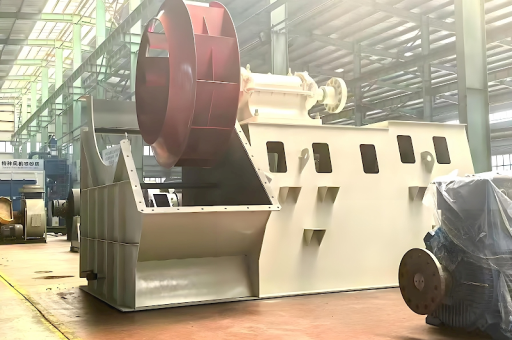
This sounds like you are describing a specific, critical component in a cement production line: the forced-draft (FD) or combustion air fan for a rotary kiln.
Let's break down the terminology and how these components work together.
The Core System: Rotary Kiln Air Supply
In a cement plant, the rotary kiln is a massive, rotating furnace. To create the high temperatures (around 1450°C) needed to form clinker, you need a controlled, high-volume supply of air to support combustion of the fuel (coal, petcoke, natural gas).
Here is the relationship between the components you listed:
- Cement Rotary Kiln: The "heart" of the plant. A large, cylindrical vessel tilted slightly. Raw meal enters the top and moves down to the flame at the bottom.
- Centrifugal Blower: This is the type of fan used. It uses a rotating impeller to increase the pressure and flow of air. For a cement kiln, you need a high-pressure centrifugal blower because the air must overcome the resistance of the clinker bed, the thick layer of material, and the long ductwork.
- Air Supply Ventilation: This is the function. The blower sucks in ambient air, pressurizes it, and sends it to the kiln.
- Combustion Air: The specific name for the air going to the main burner at the kiln's outlet end.
- Secondary & Tertiary Air: Air is also preheated (using exhaust heat) and injected further down the kiln to complete combustion and cool the clinker.
Critical Function of the Blower
- Primary Air: A small, high-velocity jet that carries the pulverized fuel into the kiln burner.
- Secondary Air: Hot air drawn from the clinker cooler (where the hot clinker is rapidly cooled) and pulled into the kiln. This is the main source of combustion air and is crucial for energy efficiency. The centrifugal blower helps pull this.
- Tertiary Air: For precalciner kilns, an additional supply of hot air drawn from the cooler to a separate combustion chamber (precalciner) before the kiln.
Key Characteristics of the Centrifugal Blower for a Cement Kiln
Not just any blower will do. The one used for this specific application must be:
- High Pressure (typically 700-1500 mmWG or 7-15 kPa): To overcome the resistance of the clinker bed and the preheater cyclones.
- High Volume (Air Flow): Must match the kiln's production rate and fuel consumption.
- High Temperature Resistance: The shaft and impeller may be exposed to hot air (especially if drawing from the cooler). Often made of special alloys (e.g., Corten steel, stainless steel) and equipped with cooling systems (water-cooled bearings, forced-air cooling).
- Robust Construction: Designed for 24/7 operation in a dusty, abrasive environment. The impeller blades may have wear-resistant liners.
- Variable Speed Drive (VSD): Almost universal now. A VSD allows precise control of the air volume and pressure to match the kiln's process conditions, saving significant energy.
Potential Issues & Reasons for Your Query
You might be asking about this because you are experiencing one of these common problems:
- Insufficient Air Supply: The kiln flame is "lazy" or "reducing" (causing high CO, poor clinker quality).
- Cause: Blower speed too low, blocked filters, worn impeller, dampers closed.
- High Vibration or Noise:
- Cause: Erosion of impeller blades from dust, bearing failure, unbalance due to dust build-up, or a resonant frequency issue.
- Overheating:
- Cause: Failure of the cooling system for the fan bearings, or hot air leakage back through the shaft.
- Reduced Efficiency / Flow:
- Cause: Wear and tear on the impeller vanes, a damper stuck in a wrong position, or a blockage in the ductwork between the cooler and the kiln.
Summary Table: The Components
| Component | Function | Key Requirement |
|---|---|---|
| Cement Rotary Kiln | Produces clinker | High temperature, long retention time |
| Centrifugal Blower | Moves & pressurizes air | High pressure (>1000 mmWG), high volume |
| Air Supply Ventilation | Brings fresh air to the system | Clean, filtered, consistent volume |
| Combustion Air | Supports fuel burning | Hot (via preheating), correct amount |
To answer your question directly:
"Air Supply Ventilation Cement Fan Rotary Kiln Centrifugal Blower" is the specific forced-draft (FD) fan that supplies the necessary primary, secondary, or tertiary combustion air to the cement rotary kiln. It is a specialized, robust, high-pressure centrifugal blower designed for heavy industrial use.
If you have a specific problem (e.g., "My blower is vibrating" or "I need to size one for a new 5000 TPD kiln"), please provide more details, and I can give a more targeted technical answer.





