
Mastering High Temperature Cooling: The Ultimate Guide to High Pressure Centrifugal Fans
Table of Contents
- Introduction: The Critical Role of High Pressure Centrifugal Fans in High Temperature Cooling
- Understanding High Pressure Centrifugal Fan Fundamentals
- High Temperature Materials: The Backbone of Durable Fan Systems
- Cooling Applications: Where High Pressure Centrifugal Fans Excel
- Design Considerations for Extreme Thermal Environments
- Maintenance Strategies for Longevity in High Heat
- Frequently Asked Questions (FAQ)
- Conclusion: Optimizing Your High Temperature Cooling System
Introduction: The Critical Role of High Pressure Centrifugal Fans in High Temperature Cooling
In industrial environments where heat is both a byproduct and a challenge, the high pressure centrifugal fan emerges as an indispensable solution. These robust machines are engineered to move large volumes of air against significant resistance, making them ideal for high temperature materials cooling processes. From steel manufacturing to chemical processing, the ability to dissipate extreme heat efficiently directly impacts product quality, equipment lifespan, and operational safety.
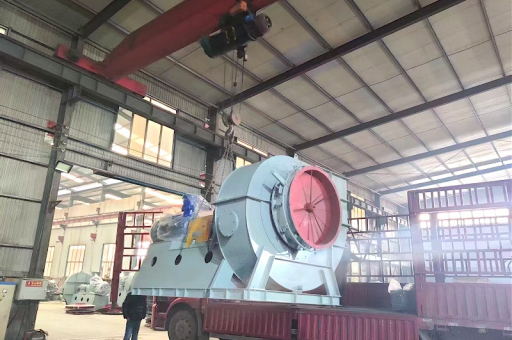
Traditional cooling methods often fall short when dealing with air temperatures exceeding 200°C. Standard fans degrade rapidly, leading to costly downtime. This guide dives deep into the synergy between high pressure centrifugal fans and advanced high temperature materials, offering actionable insights for engineers and facility managers seeking reliable cooling solutions.
Understanding High Pressure Centrifugal Fan Fundamentals
A high pressure centrifugal fan operates by converting rotational kinetic energy into airflow. Unlike axial fans that move air parallel to the shaft, centrifugal fans use a rotating impeller to accelerate air radially outward. This design naturally generates higher static pressure, essential for pushing air through ductwork, filters, and heat exchangers in demanding thermal environments.
Key Performance Parameters
- Static Pressure: Measured in Pa or inches of water gauge (in. wg). For high temperature applications, typical ranges span 2,000–15,000 Pa.
- Airflow Rate: Expressed in m³/h or CFM. Industrial cooling fans often handle 10,000–500,000 m³/h.
- Operating Temperature: Standard fans cap at 80°C. Specialized units with high temperature materials reach 400°C or more.
- Impeller Speed: Higher RPMs increase pressure but also thermal stress on components.
Why Pressure Matters for Cooling
In high temperature cooling, resistance comes from multiple sources: dense hot air, fouled heat exchanger coils, and long duct runs. A high pressure centrifugal fan overcomes these obstacles, ensuring consistent airflow even as system resistance fluctuates. Without sufficient pressure, cooling efficiency plummets, risking thermal runaway in processes like metal annealing or cement clinker cooling.
High Temperature Materials: The Backbone of Durable Fan Systems
Selecting the right high temperature materials is non-negotiable for reliable operation. Fans exposed to 200–600°C require components that resist creep, oxidation, and thermal fatigue. Here are the primary materials engineered for extreme heat:
Impeller and Housing Materials
- Stainless Steel 310S: Withstands continuous service at 1,100°C. Excellent oxidation resistance in sulfurous atmospheres.
- Hastelloy X: A nickel-based superalloy used in chemical plants where corrosive hot gases are present. Retains strength up to 980°C.
- Inconel 601: Preferred for cycling thermal loads due to its high mechanical stability. Common in cement and glass cooling.
- Ceramic Coated Carbon Steel: Cost-effective for moderate temperatures (up to 500°C). Silicon carbide or zirconia coatings prevent scaling.
Bearing and Shaft Solutions
- High Temperature Grease: Synthetic greases with PTFE thickeners operate at 200–300°C.
- Water-Cooled Bearings: For temperatures exceeding 250°C, external cooling jackets maintain bearing integrity.
- Ceramic Bearings: Full ceramic (Si3N4) or hybrid variants eliminate lubrication issues at 350°C+.
Seals and Gaskets
- Graphite Impregnated Gaskets: Withstand 500°C without combustion.
- Expanded PTFE Seals: Suitable for corrosive high-temperature fumes.
Real-World Example: A steel mill using standard carbon steel fans experienced bearing failure every 3 months in their cooling air system. Switching to a fan with Inconel 601 impellers and water-cooled bearings extended service intervals to 18 months, reducing annual maintenance costs by €45,000.
Cooling Applications: Where High Pressure Centrifugal Fans Excel
The combination of high pressure and high temperature materials makes these fans essential across multiple industries. Let’s explore specific cooling scenarios:
A. Industrial Furnace and Kiln Cooling
In glass and ceramic manufacturing, furnace shells must be cooled to prevent structural deformation. A high pressure centrifugal fan delivers ambient air through nozzles directed at hot zones. Typical conditions: 350°C air temperature, 8,000 Pa static pressure.
B. Gas Turbine Compressor Cooling
Turbine enclosures require forced ventilation to remove radiant heat from 600°C exhaust components. Fans must withstand vibration and continuous operation with minimal maintenance.
C. Cement Clinker Cooler Systems
After leaving the rotary kiln at 1,400°C, clinker must be rapidly quenched. Air from high pressure fans passes through a moving grate, cooling clinker to 100°C. This demands corrosion-resistant materials due to alkaline dust.
D. Chemical Reactor Jacket Cooling
Exothermic reactions in vessels require precise temperature control. Fans circulate filtered air through external cooling jackets. The presence of volatile vapors means spark-proof construction (ATEX certification) is mandatory.
Design Considerations for Extreme Thermal Environments
When specifying a high pressure centrifugal fan for high temperature cooling, engineers must address several unique design challenges:
Thermal Expansion Management
- Expansion Joints: Flexible connectors between fan and ductwork absorb axial and radial growth.
- Clearance Optimization: Blades expand at different rates than the housing. Dynamic trip testing at maximum temperature prevents rubbing.
Drive System Selection
- Direct Drive: Preferred for higher speeds (up to 6,000 RPM) but requires high-temperature coupling.
- Belt Drive: Offers speed flexibility and motor isolation from heat. Use polyurethane belts rated for 150°C.
- Variable Frequency Drives (VFDs): Enable precise airflow control while reducing motor thermal stress.
Material Compatibility Checklist
- Gas Composition: Acidic gases (HCl, SO2) mandate stainless steel or titanium.
- Particulate Loading: Abrasive particles call for hardened impeller materials or wear liners.
- UV Exposure: Outdoor fans need UV-resistant coatings on electrical components.
Energy Efficiency in High Heat
Hot air is less dense, reducing the mass flow rate at the same volume. To compensate:
- Use aerodynamically optimized backward-curved impellers.
- Install inlet guide vanes for turndown without excessive power consumption.
- Consider motor efficiency (IE4 or IE5 class) to offset increased cooling demand.
Maintenance Strategies for Longevity in High Heat
Even with superior high temperature materials, proactive maintenance prevents catastrophic failures. Follow these guidelines:
Daily Inspections
- Monitor motor winding temperature: Keep below 130°C for Class F insulation.
- Check bearing vibration with portable analyzer (alarm at 4.5 mm/s RMS).
- Inspect cooling water flow in water-cooled bearing systems.
Monthly Tasks
- Thermography scan of housing for hot spots indicating insulation degradation.
- Cleaning impeller blades using compressed air or soft abrasives (avoid water if handling molten materials).
- Lubrication of high temperature grease fittings (follow OEM intervals; over-greasing causes overheating).
Annual Overhaul
- Replace seals and gaskets; check shaft alignment with laser.
- Non-destructive testing (dye penetrant or MPI) of welded impeller joints.
- Balance inspection: A 0.5 gram imbalance at 3,000 RPM can generate 450N force, accelerating bearing wear.
Common Failure Modes:
- Thermal Fatigue Cracking: Appears as hairline cracks near blade roots. Solutions: change to lower thermal expansion alloy or reduce temperature cycling.
- Corrosion Pitting: Often in acidic exhaust streams. Upgrade to Hastelloy X or apply ceramic barrier coating.
- Bearing Cage Collapse: Typically from inadequate cooling water flow. Install redundant temperature sensors with automatic shutoff.
Frequently Asked Questions (FAQ)
Q1: What is the maximum temperature a standard high pressure centrifugal fan can handle?
A standard fan with carbon steel impeller and standard bearings can operate up to 80°C continuous. Modifications like high-temperature grease extend this to 120°C. For anything above 150°C, you must specify high temperature materials like 310S stainless steel or Inconel.
Q2: Can I retrofit my existing fan for higher temperature operation?
Yes, but it’s often more cost-effective to replace. Retrofitting involves changing the impeller (€2,000–5,000), bearings (€500–2,000), seals, and possibly the shaft. For temperatures above 200°C, motor relocation or water-cooled bearing installation is also needed. Always consult the original manufacturer.
Q3: How do I calculate the required static pressure for a high temperature cooling system?
Use the formula: Total Pressure Loss = (Velocity Pressure + Static Resistance of duct, filters, heat exchanger) * Temperature Correction Factor. At 300°C, air density is about 50% of room temperature air, so pressure drop decreases by ~50%. However, fan performance curves must be corrected for inlet air density.
Q4: What are the signs that my fan’s high temperature materials are degrading?
- Increased vibration (indicating material creep or cracking).
- Visible oxidation or scale on blades (red/orange flakes).
- Decreased airflow without damper changes (impeller wear increases tip clearance).
- Abnormal noise (bearing distress or rubbing due to thermal growth).
Q5: Are explosion-proof fans necessary for cooling in chemical plants?
Yes, if the air contains flammable gases or dust. ATEX-certified fans use non-sparking materials (aluminum bronze impellers) and enclosed motors rated for the specific zone. High pressure centrifugal fans in Zone 1 or 2 environments must have temperature classification (T1–T6) matching the gas autoignition temperature.
Q6: How often should high temperature fans be balanced?
Static balancing is sufficient for speeds below 1,500 RPM. For higher speeds, dynamic balancing is mandatory. Rebalance after any impeller repair or replacement. In high heat applications, thermal stress can shift balance; a six-month check is recommended for fans operating above 300°C.
Conclusion: Optimizing Your High Temperature Cooling System
The high pressure centrifugal fan equipped with high temperature materials is the cornerstone of effective cooling in extreme industrial environments. By understanding the interplay between pressure requirements, material science, and application-specific challenges, engineers can design systems that deliver reliable performance for decades.
Key Takeaways
- Specify materials based on peak temperature and gas chemistry—not just budget. 310S stainless steel or Inconel 601 may double initial cost but halve lifecycle expenses.
- Invest in condition monitoring (thermography, vibration analysis) to catch failures early in high-thermal-stress systems.
- Plan for thermal expansion using flexible connections and proper clearance settings during cold commissioning.
- Consider total system efficiency: VFD-controlled fans with backward-curved impellers reduce energy consumption by 30–50% compared to constant-speed units.
Future Trends
Emerging technologies include ceramic matrix composite impellers capable of 800°C operation without cooling air, and IoT-integrated fans that predict bearing failure using machine learning on temperature and vibration data. As industries push toward net-zero emissions, high efficiency in high temperature cooling will become a competitive advantage.
For detailed technical specifications or to request a site assessment, consult with a specialized fan manufacturer that offers application engineering for your unique high temperature conditions. Always remember: in the world of high heat cooling, the right fan choice isn’t just about moving air—it’s about moving your productivity forward.





