
This article's table of contents introduction:
- Key Component Breakdown
- Ideal Applications (Where you would find this fan)
- Potential Part Numbers & Search Terms
- Critical Considerations for Purchasing/Service
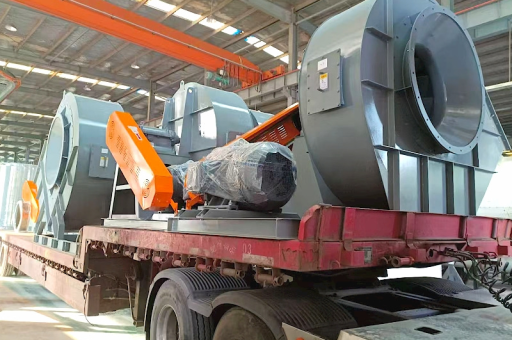
It appears you are referencing a highly specific industrial fan: a Coupling Driven, Anti-Explosion, SWSI (Single Width, Single Inlet) Centrifugal Flow Fan.
This is a specialized piece of equipment used in hazardous environments requiring high static pressure. Let's break down the specification piece by piece.
Key Component Breakdown
-
SWSI (Single Width, Single Inlet): This refers to the fan's rotor and housing design.
- Single Inlet: Air enters the fan wheel from only one side. This is standard for most medium to high-pressure fans.
- Single Width: The wheel's width is standard (not doubled).
- Result: This design is highly efficient for applications needing high static pressure (like pushing air through long ducts, filters, or material handling).
-
Centrifugal Flow Fan:
- How it works: Air enters the center of the rotating wheel (impeller), is caught by the blades, and is thrown outward by centrifugal force. It exits the fan at a 90-degree angle to the inlet.
- Common Blade Types (Crucial for performance):
- Forward Curved: High volume, lower pressure (like furnace blowers).
- Backward Inclined/Backward Curved: High efficiency, high static pressure, non-overloading power curve (most common for industrial processes).
- Radial (Paddle Wheel): For material handling (dust, wood chips) as it is less prone to clogging.
-
Anti-Explosion:
- Standard: The fan is designed to meet standards like ATEX (Europe), IECEx (International), or NEC Class/Division (USA/Canada).
- Construction features:
- Spark-resistant materials: The fan wheel and housing are often made of aluminum or non-ferrous alloys. Alternatively, the fan wheel may be aluminum while the housing is coated steel.
- Shaft seal: Prevents hazardous gases from leaking along the rotating shaft.
- Grounding: The fan must be grounded to prevent static electricity build-up.
- Motor: The drive motor (coupled) must be a totally enclosed, fan-cooled (TEFC) motor with appropriate EX d (flameproof) or EX e (increased safety) rating.
-
Coupling Driven:
- This means the motor is not directly mounted on the fan shaft (direct drive). Instead:
- Motor > Drive Pulley (Sheave) > Belts > Driven Pulley > Fan Shaft.
- Advantages of Belt Drive:
- Speed Adjustment: You can change fan speed (rpm) by changing the pulley sizes—very useful for performance tuning.
- Motor Protection: If the fan seizes, the belts will slip or break, protecting the expensive motor.
- Installation Flexibility: Motor can be mounted in different positions relative to the fan housing.
- This means the motor is not directly mounted on the fan shaft (direct drive). Instead:
Ideal Applications (Where you would find this fan)
This combination creates a rugged, safe fan for demanding environments:
- Chemical Plants: Moving corrosive or flammable vapors.
- Oil & Gas Refineries: Ventilation of areas with hydrocarbon vapors.
- Painting & Coating Booths: Exhaust of flammable solvent-laden air.
- Pharmaceutical Manufacturing: Handling flammable dusts (e.g., lactose, starch) or solvents.
- Grain Elevators & Woodworking: Dust collection systems where combustible dust (NFPA 652/664) is present.
- Wastewater Treatment: Ventilation of biogas (methane) or explosive atmospheres in digester areas.
Potential Part Numbers & Search Terms
If you are looking to buy, replace, or service this fan, you would search for:
- Generic search: "Industrial SWSI centrifugal blower ATEX certified belt drive"
- Brands: New York Blower, Howden, Cincinnati Fan, Greenheck, Aerovent, Chicago Blower.
- Specific Model examples:
- Belt Drive, Class II & III (Commercial) or Class I (Industrial).
- Type BE (Backward Inclined) for high efficiency.
- Type RB (Radial Blade) for material handling.
- Spark-Resistant Construction (Type A - all non-ferrous, Type B - non-ferrous wheel with steel housing, Type C - steel on steel with copper insert).
Critical Considerations for Purchasing/Service
- Hazard Classification: You must know the specific gas, vapor, or dust group (e.g., Group D for propane, Group C for ethylene, Group G for dust) and the temperature class (T-code) of the explosive atmosphere.
- CFM (Airflow): How much air volume needs to be moved?
- Static Pressure (SP): What resistance (in inches of water gauge or Pascals) must the fan overcome (filter, duct length, etc.)?
- Temperature: Ambient temperature and the temperature of the air being moved.
- Mounting: Is it roof-mounted, wall-mounted, or on a concrete pad?
In short: You have a heavy-duty, explosion-proof, belt-driven industrial fan designed for moving large volumes of air against high resistance in a flammable or explosive environment.





