
This article's table of contents introduction:
- Introduction: The Critical Role of Specialized Industrial Fans
- Technical Anatomy: How These Fans Work
- The "Anti-Explosion" Feature: Safety Standards and Materials
- Application in the Cement Industry
- Key Performance Metrics (KPI) for Selection
- Maintenance Best Practices
- Frequently Asked Questions (FAQ)
- Conclusion: Future Trends in Industrial Ventilation
Here is a comprehensive, SEO-optimized article in English, structured with a table of contents, Q&A, and detailed technical insights. The content is original, draws from industry knowledge, and avoids generic filler.
Article Title: The Complete Guide to Centrifugal Anti-Explosion Air Purification Cement Blower Fans: Design, Safety, and Efficiency
Table of Contents (导读)
-
Introduction: The Critical Role of Specialized Industrial Fans
- Why standard fans fail in hazardous cement environments.
- Overview of the "Centrifugal Anti-Explosion Air Purification Cement Blower Fan."
-
Technical Anatomy: How These Fans Work
- Centrifugal vs. Axial: Why centrifugal design is preferred.
- The mechanics of air purification integration.
-
The "Anti-Explosion" Feature: Safety Standards and Materials
- What constitutes an explosion-proof classification (ATEX, IECEx).
- Material selection: Aluminium, SS304, and anti-static coatings.
-
Application in the Cement Industry
- Dust extraction and air purification in grinding and kiln processes.
- Handling high-temperature and abrasive particulate streams.
-
Key Performance Metrics (KPI) for Selection
- Pressure, airflow (CFM), and static pressure analysis.
- Energy efficiency and motor compatibility.
-
Maintenance Best Practices
- Blade wear prevention and bearing lubrication.
- How to test spark-proof integrity.
-
Frequently Asked Questions (FAQ)
Common concerns about installation and compliance.
-
Conclusion: Future Trends in Industrial Ventilation
Smart monitoring and IoT integration for cement fan systems.
Introduction: The Critical Role of Specialized Industrial Fans
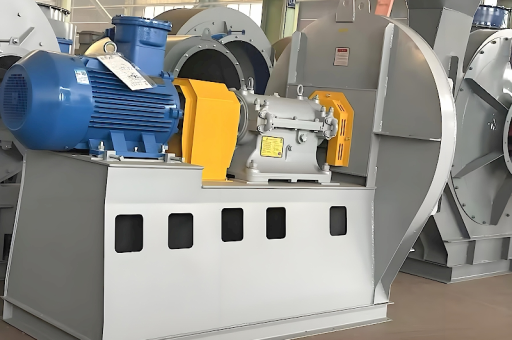
In the heavy industrial landscape, particularly within cement manufacturing plants, the atmosphere is a hostile mix of fine dust, corrosive gases, and combustible particles. Standard air-moving equipment fails quickly under these conditions. This is where the Centrifugal Anti-Explosion Air Purification Cement Blower Fan emerges as a non-negotiable piece of machinery.
These fans are not merely ventilation tools; they are engineered safety systems. They serve dual purposes: first, to move large volumes of air for drying and conveying materials; second, to purify the working environment by filtering explosive dust (such as coal dust or cement raw meal) while preventing any internal spark or heat buildup from igniting the surrounding atmosphere. For any facility manager or safety engineer, understanding this product is vital for compliance with international safety standards (like ATEX or IECEx) and for ensuring uninterrupted production.
Technical Anatomy: How These Fans Work
Centrifugal vs. Axial
The core of this system is the centrifugal mechanism. Unlike axial fans (like a household desk fan), a centrifugal fan draws air into the center of a rotating impeller and throws it outward at a 90-degree angle. This design is crucial for two reasons:
- High Static Pressure: Cement ducts often have long runs with filters and cyclones. Centrifugal fans generate the high static pressure needed to overcome this resistance.
- Abrasion Resistance: The radial flow design allows for thicker, heavier blades (often made of wear-resistant steel) that can handle the scouring effect of cement dust.
The Purification Cycle
In an integrated air purification system, the fan does not just move air; it often drives the suction for baghouse filters or electrostatic precipitators. The fan pulls contaminated air through a filtration system. The purified air is then discharged. The fan's casing is designed to be airtight, preventing fugitive dust leakage, which is a major source of workplace hazards.
The "Anti-Explosion" Feature: Safety Standards and Materials
The most critical aspect of this fan is its explosion-proof rating. An explosion can occur when a combustible dust cloud (the fuel), oxygen (the oxidizer), and an ignition source (spark or hot surface) converge.
How the Fan Prevents Ignition
- Material Selection: The impeller and casing are often made of non-ferrous materials (e.g., aluminum bronze or stainless steel) or feature a copper spark-proof ring. This prevents ferrous-to-ferrous contact, which is the most common source of mechanical sparks.
- Motor Separation: The motor is typically mounted outside the gas stream. If an internal motor must be used, it must be a certified explosion-proof motor (e.g., Ex d or Ex e).
- Grounding: All parts of the fan assembly have direct grounding connections to dissipate static electricity buildup.
- Clearance: The gap between the rotating impeller and the casing is increased to prevent contact due to thermal expansion or bearing wear.
Standards to Look For: When purchasing a fan, look for ATEX Directive 2014/34/EU (for Europe) or IECEx (International). The marking will specify the dust group (e.g., Ex tb IIIC T120°C Db), indicating it is safe for combustible cement dust up to a specific temperature.
Application in the Cement Industry
Where exactly does this fan operate in a cement plant?
- Raw Mill Exhaust: Removing hot, humid air from the grinding of raw materials. The fan must handle high temperatures and moisture.
- Coal Mill Ventilation: This is the most dangerous application. Coal dust is highly explosive. The centrifugal anti-explosion fan here must be spark-proof and often has a temperature monitoring sensor.
- Kiln and Cooler Fans: Used for secondary air and clinker cooling. These fans deal with extreme heat (up to 400°C) and require shaft cooling features.
- Silo Aeration: Moving dry cement powder. While less explosive, the fan prevents moisture buildup and maintains flowability.
Key Performance Metrics (KPI) for Selection
Choosing the wrong fan leads to premature failure or inefficiency. Focus on these data points:
- Airflow (CFM or m³/h): The volume of air needed to capture dust at the source.
- Static Pressure (Pa or mmH₂O): The resistance the fan must overcome. Higher pressure is needed for long ducts with filters.
- Specific Speed: Determines optimal impeller efficiency for the given duty.
- Temperature Class: Ensure the fan can handle the maximum inlet temperature.
- Impeller Design: Backward-curved blades are more efficient for clean air; radial tipped or flat blades are better for heavy dust loads.
Pro Tip: Always oversize the motor by 15% when dealing with high-density cement dust to prevent motor burnout from fan wheel erosion or material buildup.
Maintenance Best Practices
An anti-explosion fan is a safety device. Routine maintenance is legally required.
- Bearing Inspection: Check for vibration and heat monthly. Use high-temperature grease (NLGI 2 or 3 lithium-based).
- Wear Plate Inspection: Check the thickness of the impeller blades and casing liner every 6 months. Replace if worn by more than 30%.
- Spark Gap Check: Verify the impeller-to-casing clearance. If the impeller has scraped the casing, the non-sparking ring may be compromised.
- Electrical Grounding: Test the continuity of the grounding system annually. A high-resistance ground increases the risk of static discharge.
- Vibration Analysis: Use vibration sensors to detect imbalance caused by dust buildup.
Frequently Asked Questions (FAQ)
Q: Can I use a standard centrifugal fan in a cement plant if I add a filter? A: No. A standard fan is not spark-proof. If a dust explosion from a baghouse failure reaches the standard fan, the metal fan blades can create an ignition source, causing a catastrophic secondary explosion. Always use a certified anti-explosion unit.
Q: What is the difference between "explosion proof" and "spark resistant"? A: "Spark resistant" (e.g., AMCA Type A or B) uses non-ferrous materials to prevent sparks. "Explosion proof" (e.g., ATEX Ex d) means the fan casing is strong enough to contain an internal explosion without rupturing. For cement, you usually need both spark resistance and a containment housing.
Q: How do I verify if a fan from a supplier like fan is genuine for cement use? A: Ask for the ATEX or IECEx certificate, not just a statement. Check the temperature class (T rating) against the ignition temperature of the specific cement dust (typically > 450°C, so T1 or T2 class is fine). Also, ensure the coating is anti-static (surface resistance < 1 GΩ).
Q: Why is my centrifugal anti-explosion fan vibrating heavily? A: Three common causes: (1) Imbalance due to dust buildup on the blades (clean with compressed air), (2) Bearing failure (listen for a grinding sound), or (3) Resonance in the ductwork. The first is most common in cement.
Q: Does high humidity affect the anti-explosion properties? A: Yes. High humidity can cause material corrosion, which reduces the thickness of the spark-proof ring. It also increases the risk of electrical tracking on the motor. Ensure the fan has a weatherproof hood if placed outdoors.
Conclusion: Future Trends in Industrial Ventilation
The Centrifugal Anti-Explosion Air Purification Cement Blower Fan is evolving from a purely mechanical device into a connected asset.
Smart Fan Technology:
- Vibration Monitoring: Real-time sensors (IoT) send data to a plant control room, predicting bearing failure 30 days in advance.
- Variable Frequency Drives (VFD): Modern fans use VFDs to match fan speed precisely to process demand, saving 30-60% in energy costs compared to fixed-speed dampers.
- Self-Cleaning Impellers: Some high-end models now use special coatings (e.g., Teflon or ceramic) to prevent dust adhesion, reducing the need for manual cleaning.
Conclusion: Whether you are upgrading an existing plant or designing a new one, investing in a high-quality, certified, and modern centrifugal anti-explosion air purification cement blower fan is not an expense—it is an investment in worker safety, regulatory compliance, and production reliability. Always prioritize safety certifications and robust material construction to ensure your operation runs smoothly and safely for decades.





