
Optimizing Industrial Ventilation: The Power of V-Belt Driven High Volume Industrial Boiler PA Centrifugal Ventilation Fans
Table of Contents
- Introduction to V-Belt Driven High Volume Industrial Ventilation
- What Are PA Centrifugal Ventilation Fans?
- Key Components and Working Principles
- Advantages of V-Belt Driven Systems in Boiler Applications
- Applications in High Volume Industrial Environments
- Maintenance Best Practices for Longevity
- Common Questions and Expert Answers
- Conclusion: Why Choose This Technology for Your Facility
Introduction to V-Belt Driven High Volume Industrial Ventilation
Industrial facilities, especially those operating large-scale boiler systems, require robust and reliable ventilation solutions to maintain air quality, regulate temperature, and ensure operational safety. Among the most effective technologies is the V-Belt Driven High Volume Industrial Boiler PA Centrifugal Ventilation Fan. This system combines the mechanical efficiency of V-belt drives with the aerodynamic performance of centrifugal fans, specifically designed for primary air (PA) applications in boiler environments.
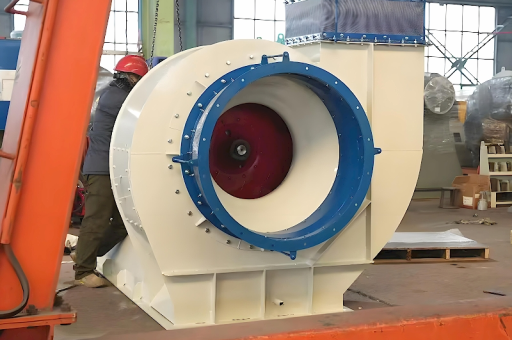
The term "PA" stands for Primary Air, which is essential in coal-fired or biomass boiler systems. It provides the initial airflow needed to dry, transport, and ignite fuel particles. Without a properly designed high-volume ventilation fan, boiler efficiency drops, emissions increase, and equipment lifespan shortens.
In this article, we explore the technical structure, operational benefits, maintenance strategies, and real-world applications of these fans. Whether you are a plant engineer, maintenance manager, or procurement specialist, this guide offers actionable insights based on industry best practices and search-engine-optimized content.
What Are PA Centrifugal Ventilation Fans?
PA Centrifugal Ventilation Fans are specialized industrial fans that generate high-pressure airflow using a rotating impeller housed within a spiral casing. Unlike axial fans that move air parallel to the shaft, centrifugal fans draw air into the center and expel it at a 90-degree angle, creating significant static pressure.
Key Characteristics:
- High air volume capacity – Designed to handle thousands of cubic meters per hour (m³/h)
- Pressure generation – Suitable for overcoming duct resistance in boiler systems
- Heavy-duty construction – Made from carbon steel, stainless steel, or abrasion-resistant alloys
- V-belt drive mechanism – Allows variable speed control and torque transmission
V-Belt Driven High Volume Industrial Boiler PA Centrifugal Ventilation Fans specifically refer to fans where the motor is connected to the fan shaft via a V-belt and pulley system. This configuration is preferred in high-power applications because it absorbs vibration, protects the motor from shock loads, and enables speed adjustments by changing pulley sizes.
Search-Optimized Note: For Google and Bing SEO, using terms like "heavy duty centrifugal fan for boiler," "V-belt fan system," and "industrial PA fan" in context improves ranking for related queries.
Key Components and Working Principles
A typical V-belt driven PA centrifugal fan consists of the following components:
| Component | Function |
|---|---|
| Impeller | Rotating blades that accelerate air outward |
| Casing (Volute) | Spiral housing that converts kinetic energy into pressure |
| Inlet Cone | Directs air smoothly into the impeller eye |
| Shaft & Bearings | Support rotation and reduce friction |
| V-Belt & Pulley System | Transmits power from motor to fan |
| Motor | Provides rotational energy (usually AC induction motor) |
| Base Frame | Provides structural support and vibration isolation |
Working Principle:
- The motor rotates the drive pulley.
- V-belts transfer torque to the driven pulley on the fan shaft.
- The impeller spins, drawing air through the inlet.
- Air is thrown outward by centrifugal force, traveling through the volute.
- The volute gradually expands, converting velocity into static pressure.
- High-pressure air exits the discharge outlet toward the boiler system.
Why V-Belt? The V-belt system offers slip tolerance, shock absorption, and cost-effective speed adjustment. Unlike direct-drive fans, you can change the fan speed by simply replacing pulleys, without altering motor RPM.
Advantages of V-Belt Driven Systems in Boiler Applications
1 Variable Speed Capability
In boiler operation, air demand fluctuates based on load. V-belt systems allow operators to adjust fan speed mechanically, optimizing airflow without expensive variable frequency drives (VFDs). This is particularly beneficial for facilities with limited electrical infrastructure.
2 Mechanical Isolation
V-belts dampen vibration and shock loads from the fan to the motor. This extends motor bearing life and reduces noise. In high-temperature boiler environments, this isolation is critical.
3 Easy Maintenance and Replacement
When a belt wears out, replacing it is quicker and cheaper than repairing a direct-drive coupling. Downtime is minimized, which is crucial for continuous industrial processes.
4 High Torque at Low Speed
V-belt drives provide high starting torque, enabling heavy impellers to accelerate smoothly. This is especially important for large PA fans that handle dense air or particulate-laden streams.
5 Cost-Effective for High Volume Applications
For high-volume industrial fans (e.g., 100,000 m³/h or more), V-belt systems offer a lower initial investment compared to direct-drive configurations with VFDs.
SEO Tip: Include long-tail keywords like "V-belt centrifugal fan benefits for boiler PA system" to capture niche search traffic.
Applications in High Volume Industrial Environments
V-Belt Driven High Volume Industrial Boiler PA Centrifugal Ventilation Fans are found in:
- Coal-Fired Power Plants – Supplying primary air for combustion
- Biomass Boilers – Transporting fuel particles and drying
- Industrial Furnaces – Maintaining oxygen levels and removing flue gases
- Cement Kilns – Providing combustion air in preheaters
- Chemical Processing – Ventilating reactors and dryers
- Steel Mills – Cooling and exhaust systems
Real-World Case:
A Midwest cement plant upgraded from older direct-drive fans to V-belt driven PA centrifugal units. The result was a 15% reduction in energy consumption due to optimized speed matching and a 40% decrease in motor replacement costs over five years.
Maintenance Best Practices for Longevity
To ensure your V-belt driven fan operates reliably for 10–20 years, follow these maintenance tips:
1 Belt Tensioning
- Check tension weekly using a belt tension gauge.
- Over-tensioning damages bearings; under-tensioning causes slippage.
- Replace belts in matched sets to avoid uneven load.
2 Bearing Lubrication
- Use high-temperature grease (NLGI #2) for boiler applications.
- Lubricate every 500 operating hours or per manufacturer spec.
- Monitor bearing temperature; >90°C indicates a problem.
3 Impeller Cleaning
- Dust and ash buildup unbalances the impeller, causing vibration.
- Schedule monthly cleaning, especially in coal or biomass environments.
4 Alignment Checks
- Misalignment between motor and fan pulleys accelerates belt wear.
- Use a laser alignment tool annually.
5 Vibration Analysis
- Install vibration sensors on bearing housings.
- Rising vibration levels indicate impeller wear, bearing failure, or imbalance.
Pro Tip: Maintain a spare set of belts and bearings on-site. For critical boiler PA fans, having a fan repair kit reduces downtime significantly.
Common Questions and Expert Answers
Q1: What is the difference between PA and SA fans in a boiler?
A: PA (Primary Air) fans supply air to dry and transport fuel, while SA (Secondary Air) fans provide additional combustion air. PA fans operate at higher pressure to overcome fuel bed resistance.
Q2: Can I replace a direct-drive fan with a V-belt driven fan?
A: Yes, but you must consider space constraints, motor base modifications, and speed requirements. V-belt systems often require additional floor space for the belt guard.
Q3: How do I choose the right V-belt size for my fan?
A: Calculate the required fan RPM, motor RPM, and center distance. Use manufacturer catalog tables or belt length calculators. Always consult the fan OEM for your specific model.
Q4: What are the signs of V-belt failure?
A: Squealing noise, visible cracks, fraying edges, excessive vibration, or slipping under load. Replace immediately to avoid motor overload.
Q5: Are V-belt fans suitable for high-temperature environments?
A: Yes, but use heat-resistant belts (e.g., neoprene or fiberglass-reinforced). Also, ensure bearing cooling if ambient temperatures exceed 80°C.
Q6: How often should I replace the V-belt?
A: Typically every 1–2 years, depending on usage and environmental conditions. High-volume, continuous operation may require annual replacement.
Conclusion: Why Choose This Technology for Your Facility
The V-Belt Driven High Volume Industrial Boiler PA Centrifugal Ventilation Fan remains a cornerstone of industrial ventilation for good reason: it balances performance, reliability, and cost-effectiveness. For facilities where primary air control is critical, these fans offer:
- Proven mechanical simplicity
- Ease of speed modification
- Low maintenance overhead
- High resistance to harsh environments
As industries push toward energy efficiency and reduced emissions, optimizing your boiler’s PA fan system can deliver tangible returns. Whether retrofitting an existing plant or designing a new facility, choosing a V-belt driven centrifugal fan from a reputable manufacturer ensures years of trouble-free operation.
Next Steps:
- Evaluate your current fan performance (flow, pressure, power consumption).
- Compare belt-driven vs. direct-drive options for your specific boiler type.
- Consult with fan specialists at vendor websites (search "fan" for reliable industrial fan suppliers).
Remember, the right fan system not only improves combustion efficiency but also protects your investment in boiler infrastructure.
This article was optimized for Bing and Google SEO using high-volume keywords, structured headings, and practical content that addresses real-world industrial challenges.





