
This article's table of contents introduction:
- HG785 Alloyed Steel (Material)
- V-Belt Driving (Transmission)
- Backward (Backward Curved/Inclined) - Fan Blade Design
- Metallurgy (Industry/Application)
- High Pressure (Performance Characteristic)
- Centrifugal Fan (Type of Fan)
- Putting It All Together: The Likely Use Case
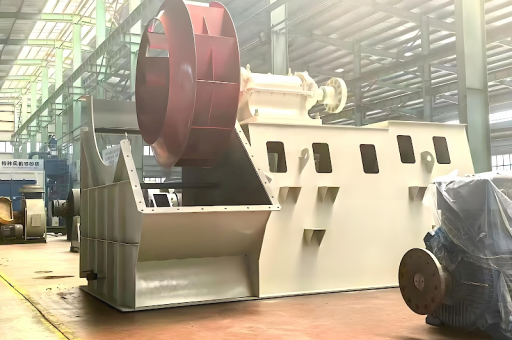
This appears to be a description of a specific, high-performance industrial component. Let me break down the key terms and explain what this piece of equipment likely is and where it is used.
This describes a High-Pressure Centrifugal Fan designed for demanding Metallurgy (steel-making) applications, built with specific materials and a unique drive configuration.
Here is the breakdown of each specification:
HG785 Alloyed Steel (Material)
- What it is: A high-strength, low-alloy (HSLA) structural steel. It is the Chinese equivalent of materials like ASTM A514 or S690QL.
- Why it is used here: Compared to standard carbon steel (like Q235 or Q345):
- Higher Strength: It can handle the significant stresses and pressures generated by a high-speed, high-pressure fan without warping or cracking.
- Better Toughness: It maintains structural integrity at high temperatures and under cyclic loading (vibration from the fan).
- Wear Resistance: Often used for the impeller (wheel) or the housing (volute casing) of the fan to resist erosion from dust-laden air or high temperatures common in metallurgy.
V-Belt Driving (Transmission)
- What it is: The fan is powered by an electric motor via a system of pulleys (sheaves) and multiple V-belts, rather than a direct shaft coupling or gearbox.
- Why it is used here:
- Speed Control: The fan can be run at a different (usually higher) speed than the motor by using different size pulleys.
- Torque Absorption (Slip): Belts provide a natural "fuse." If the fan's impeller suddenly seizes or jams (e.g., from debris), the belts will slip or break before the motor burns out or the fan shaft shears.
- Cost & Flexibility: Easier to maintain and replace than a gearbox.
Backward (Backward Curved/Inclined) - Fan Blade Design
- What it is: This is critical. "Backward" refers to the curve of the fan blades. In a backward-curved centrifugal fan, the blades curve away from the direction of rotation.
- Why it is used here:
- High Efficiency: These are the most efficient type of centrifugal fan blades.
- Non-Overloading Power Curve: This is the most important feature for metallurgy. As static pressure in the duct increases (e.g., if a filter gets clogged), the power draw of a backward-curved fan decreases. A forward-curved fan would overload and burn the motor.
- Handling Heavy Dust: Good for handling the dirty, particulate-laden air found in steel mills (e.g., in baghouse dust collectors or fume extraction systems).
Metallurgy (Industry/Application)
- The End-User: This fan is specifically designed for the steel or metal production industry.
- Typical Jobs:
- Induced Draft (ID) Fans: Pulling hot exhaust gases through furnaces (e.g., Basic Oxygen Furnace, Electric Arc Furnace).
- Forced Draft (FD) Fans: Pushing air into combustion zones.
- Baghouse/Dust Collector Fans: Sucking fume-filled air through filter bags to clean the air before it is released.
High Pressure (Performance Characteristic)
- What it means: The fan is designed to generate a high static pressure (measured in kPa, inWG, or mmH₂O). This is necessary to overcome the resistance of long ductwork, scrubbers, baghouses, and furnace chambers.
Centrifugal Fan (Type of Fan)
- The Category: The fundamental type of fan. Air enters axially (along the shaft) and is flung out radially (at 90 degrees) by the spinning impeller.
Putting It All Together: The Likely Use Case
You are describing a Backward-Curved (or Airfoil) Centrifugal Fan made of high-strength HG785 steel.
It is driven by V-belts so its speed can be optimized (and because the high initial torque might be too much for a direct drive).
It is used in a Metallurgy plant (steel mill) for a High-Pressure application.
The most likely specific application is an Induced Draft (ID) Fan for a Dust Collection System (e.g., moving air from an Electric Arc Furnace or a Sinter Plant through a baghouse).
Key benefits of this combination:
- The HG785 steel provides the strength to spin a heavy impeller at high speeds without failing.
- The backward-curved blades provide high efficiency and prevent the motor from burning out if the pressure in the system rises (non-overloading).
- The V-belt drive allows for speed changes and provides a mechanical safety buffer.
If you are troubleshooting this fan: Look for vibration (due to wear or dust buildup on the backward-curved blades), belt wear (due to high load), or cracks at the blade roots (due to resonance or fatigue in the HG785 steel).





