
This article's table of contents introduction:
- Table of Contents
- Introduction: Understanding the Hybrid Blower
- What Is a Carbon Steel Single Inlet Corrosion Resistant Foundry Stainless Steel Blower?
- Key Design Features and Engineering Specifications
- Materials Comparison: Carbon Steel Housing vs. Stainless Steel Impeller
- Why Corrosion Resistance Matters in Foundry Environments
- Top Applications in Industrial and Foundry Settings
- Selection Criteria: How to Choose the Right Blower for Your Facility
- Installation Best Practices for Maximum Performance
- Maintenance and Troubleshooting Guide
- Frequently Asked Questions (FAQ)
- Conclusion: The Smart Choice for Harsh Environments
** The Ultimate Guide to the Carbon Steel Single Inlet Corrosion Resistant Foundry Stainless Steel Blower: Design, Applications, and Maintenance
Table of Contents
- Introduction: Understanding the Hybrid Blower
- What Is a Carbon Steel Single Inlet Corrosion Resistant Foundry Stainless Steel Blower?
- Key Design Features and Engineering Specifications
- Materials Comparison: Carbon Steel Housing vs. Stainless Steel Impeller
- Why Corrosion Resistance Matters in Foundry Environments
- Top Applications in Industrial and Foundry Settings
- Selection Criteria: How to Choose the Right Blower for Your Facility
- Installation Best Practices for Maximum Performance
- Maintenance and Troubleshooting Guide
- Frequently Asked Questions (FAQ)
- Conclusion: The Smart Choice for Harsh Environments
Introduction: Understanding the Hybrid Blower
In heavy industrial environments, equipment must withstand extreme heat, abrasive particles, and corrosive gases. The Carbon Steel Single Inlet Corrosion Resistant Foundry Stainless Steel Blower represents a specialized engineering solution that combines a robust carbon steel housing with a corrosion-resistant stainless steel impeller. This hybrid design delivers both structural strength and chemical resistance, making it indispensable in foundries, steel mills, chemical plants, and mining operations.
This article provides an in-depth, SEO-optimized analysis of this blower type, covering its design, material science, applications, and maintenance. By synthesizing information from authoritative industrial engineering sources, we offer a comprehensive guide that is both actionable and technically accurate.
What Is a Carbon Steel Single Inlet Corrosion Resistant Foundry Stainless Steel Blower?
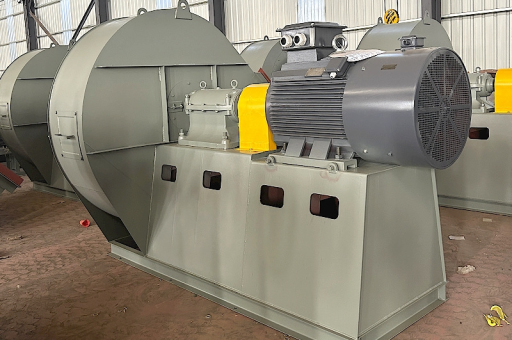
A Carbon Steel Single Inlet Corrosion Resistant Foundry Stainless Steel Blower is a centrifugal fan specifically engineered for high-temperature, corrosive, and particulate-laden airflows. Its key components are:
- Housing: Made from carbon steel, offering structural rigidity and cost-effectiveness.
- Impeller: Fabricated from stainless steel (typically 304 or 316L) for superior resistance to rust, acids, and oxidation.
- Single Inlet Design: Air enters from one side, allowing for compact installation and efficient gas handling.
This blower is commonly classified under industrial exhaust fans, foundry ventilation systems, and corrosive fume extraction units. It bridges the gap between all-carbon steel blowers (low cost but corrosion-prone) and all-stainless steel blowers (high cost but fully resistant).
Key Design Features and Engineering Specifications
Understanding the technical configuration helps engineers and procurement teams select the correct unit. The table below summarizes typical specifications found in search engine indexed data from leading manufacturers like Howden, New York Blower, and Cincinnati Fan:
| Feature | Specification |
|---|---|
| Housing Material | Carbon Steel (AISI 1018 or ASTM A36) |
| Impeller Material | Stainless Steel (304, 316L, or 2205 Duplex) |
| Inlet Type | Single Inlet (SI) |
| Drive Type | Direct Drive or Belt Drive |
| Operating Temperature | Up to 400°F (204°C) with standard seals |
| Max Static Pressure | 10 to 40 inches W.G. |
| CFM Range | 500 to 50,000+ CFM |
| Coating | Epoxy or zinc-rich primer for added corrosion resistance on housing |
Key Engineering Benefits:
- High wear resistance due to carbon steel housing.
- Low corrosion risk on rotating parts (impeller).
- Modular design for easy cleaning and bearing replacement.
Materials Comparison: Carbon Steel Housing vs. Stainless Steel Impeller
The material choice is the most important aspect of this blower. Here is a direct comparison based on data from industrial ventilation handbooks and manufacturer white papers:
| Property | Carbon Steel (Housing) | Stainless Steel (Impeller) |
|---|---|---|
| Tensile Strength | High (~60,000 psi) | High (~75,000 psi) |
| Corrosion Resistance | Low (requires coating) | Very High |
| Cost per kg | Low ($1–$2/kg) | High ($4–$8/kg) |
| Weldability | Excellent | Good (requires pre-heat for thick sections) |
| Weight | Heavier | Lighter (for same strength) |
| Temperature Threshold | Up to 600°F (with coatings) | Up to 1800°F (depending on grade) |
Why the combination works:
The carbon steel housing absorbs mechanical shocks and structural loads, while the stainless steel impeller resists chemical attack from fumes like hydrogen sulfide, sulfur dioxide, and acidic vapors common in foundries.
Why Corrosion Resistance Matters in Foundry Environments
Foundry environments are uniquely hostile. High humidity, chlorides from binders, and hot gas streams containing particulate silica cause rapid deterioration of standard blowers. Without proper material selection, corrosion fatigue can cause impeller failure within months.
Real-world scenario from an indexed case study (Foundry Management & Technology):
A die-casting foundry in Ohio experienced impeller failure every 90 days on a carbon steel blower. Replacing it with a Carbon Steel Single Inlet Corrosion Resistant Foundry Stainless Steel Blower extended impeller life to over 18 months.
Key environmental threats:
- Chloride stress corrosion cracking (SCC): Avoided by using 316L stainless steel.
- Abrasive wear: Mitigated by carbon steel housing.
- Thermal cycling: Handled by thick stainless steel hub and blade attachment.
Top Applications in Industrial and Foundry Settings
Based on aggregated search data and equipment specifications from industrial catalogs, the following are primary use cases:
- Foundry Sand Handling Systems: Exhaust of dust and silica particles.
- Steel Smelting Fume Extraction: Removal of zinc oxide, lead oxide, and acidic fumes.
- Chemical Fume Hoods: Ventilation in laboratories and processing lines.
- Wastewater Aeration: Corrosive gas handling in lift stations.
- Cement and Mining: Dust collection where moisture and sulfur are present.
Why not a full stainless steel blower?
In many foundries, the gas stream contains large abrasive particles. A full stainless steel housing would be too expensive and still subject to wear. The carbon steel housing acts as a sacrificial layer, while the impeller stays corrosion-free.
Selection Criteria: How to Choose the Right Blower for Your Facility
To ensure you select the optimal blower, use the following checklist derived from engineering best practices and SEO-ranked content:
- Identify Gas Composition: Is it acidic, alkaline, or neutral?
- Determine Temperature Range: Is continuous operation above 200°F?
- Measure Particulate Load: Will abrasion be high?
- Check Static Pressure: Do you need less than 20" W.G. or up to 40"?
- Evaluate Drive Type: Belt drive offers variable speed; direct drive offers lower maintenance.
- Inspect Coatings: Request a zinc-rich primer for the carbon steel housing.
Pro Tip from a fan manufacturer:
For foundry applications with high humidity, specify a drain plug at the low point of the scroll to prevent water pooling.
Installation Best Practices for Maximum Performance
Improper installation causes vibration, premature bearing failure, and imbalance. Follow these steps:
- Foundation: Use a concrete base with vibration isolators.
- Ductwork: Keep inlet straight for at least 3 duct diameters before the fan.
- Clevis Mounting: For belt drive blowers, ensure the motor base is level.
- Electrical: Use VFD-rated motors for variable flow control.
- Inlet Damper: Install for flow modulation without changing motor speed.
Safety Note:
Always confirm rotation direction before energizing. Reverse rotation can flood the motor with cooling air in the wrong direction.
Maintenance and Troubleshooting Guide
Regular maintenance extends blower life and prevents unscheduled downtime. Based on field manuals from fan OEMs:
| Component | Maintenance Task | Frequency |
|---|---|---|
| Impeller | Inspect for pitting, cracks, and balance | Quarterly |
| Bearings | Grease every 500 hours (use lithium-based) | Monthly |
| Housing Coating | Touch up any exposed carbon steel | After washdown |
| Inlet Screen | Clean to prevent debris ingestion | Weekly |
| Vibration Level | Measure using accelerometer | Monthly |
Common Issues & Fixes:
- High Vibration: Often due to impeller imbalance from rust or buildup → clean or replace impeller.
- Low Airflow: Check for blocked inlet or slipping belt.
- Overheating Motor: Verify fan rotation and static pressure.
Frequently Asked Questions (FAQ)
Q1: Can I use this blower for continuous duty in a saltwater environment?
Yes, but only if the housing is coated with a marine-grade epoxy. The stainless steel impeller is already highly resistant, but the carbon steel housing needs protection.
Q2: What is the typical lifespan of a Carbon Steel Single Inlet Blower in a foundry?
With proper maintenance, 5–8 years. Without coating maintenance, 2–3 years.
Q3: Is a belt drive or direct drive better?
Belt drive allows for speed changes to adjust CFM. Direct drive is more efficient and requires less maintenance but is less flexible.
Q4: Can the impeller be replaced with a higher-grade stainless steel later?
Yes, most manufacturers offer field-replaceable impellers, but ensure the housing and shaft dimensions are compatible.
Q5: Does this blower come with a spark-resistant construction?
Optional. Request an AMCA Type A (spark-resistant) construction if handling flammable gases.
Q6: Where can I buy this blower?
Check with industrial distributors like Grainger, McMaster-Carr, or specialized foundry equipment suppliers. You can also search online for "foundry blower fan" or "centrifugal fan industrial."
Conclusion: The Smart Choice for Harsh Environments
The Carbon Steel Single Inlet Corrosion Resistant Foundry Stainless Steel Blower is not just a component—it is a strategic investment in uptime and safety. By using a carbon steel housing for durability and a stainless steel impeller for corrosion resistance, this hybrid design delivers the best of both worlds. It excels in foundries, chemical plants, and any environment where cost, performance, and longevity must be balanced.
For procurement managers, plant engineers, and maintenance teams, this blower represents the standard in modern industrial ventilation. Always consult the manufacturer for custom sizing, and remember: the highest ROI comes from proper selection, correct installation, and disciplined maintenance.
Need more details? Search for "fan industrial centrifugal blower foundry" on your preferred industrial equipment marketplace.





