
This article's table of contents introduction:
- The Core Components Explained
- Practical Implications for Use
- Summary of Specifications (Reconstructed)
- What to Verify Next
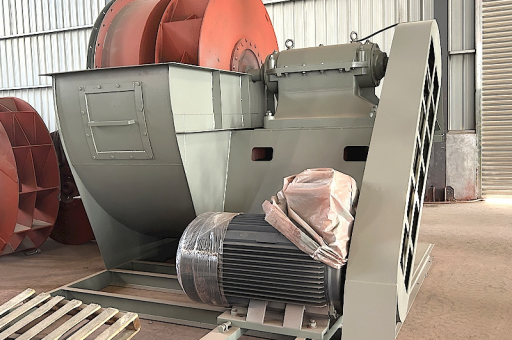
Based on the keywords you provided ("High Temperature 669 - 4003 pa Stainless Steel Centrifugal Fan Heat Dissipation"), here is a technical breakdown of what this describes and the likely application.
This appears to be a specification for a high-temperature industrial centrifugal fan designed for moving hot air or gases.
Let's break down each component:
The Core Components Explained
-
High Temperature (669°F / ~354°C):
- This indicates the fan is designed to handle continuous gas temperatures up to 669°F (354°C) .
- Implication: The fan cannot be made of standard carbon steel. It requires high-temperature alloys (Stainless Steel) and a special shaft cooling design (often a "heat slinger" or cooling fins) to prevent bearing failure.
- Note: If this is a model number, "669" could be a specific series designation (e.g., "Series 669" industrial fan). High-temp fans are often categorized by temperature range (e.g., 200°C, 350°C, 500°C).
-
4003 pa (Pascal):
- This is the Pressure Rating.
- 4003 Pa = ~16 inches of water gauge (in wg) or 58 PSI.
- Implication: This is a Medium Pressure centrifugal fan. It is suitable for overcoming the resistance of ducts, heat exchangers, filters, or long runs of piping. It is not a low-pressure ventilation fan nor a high-pressure blower.
-
Stainless Steel (SS):
- The fan impeller and likely the housing are constructed from Stainless Steel (commonly SS304 or SS316).
- Why? To withstand high temperatures without scaling (oxidizing) and to resist corrosion from hot fumes or moisture. Standard steel will warp or burn out quickly at 350°C.
-
Centrifugal Fan:
Also known as a "squirrel cage" or "radial" fan. Air is pulled in axially and discharged radially (usually at 90 degrees). Best for moving air against high resistance (pressure).
-
Heat Dissipation (The Application):
- This is the primary function. The fan is used to remove heat from a process.
- Most Likely Applications:
- Oven Exhaust: Recirculating hot air in industrial convection ovens or exhausting combustion gases.
- Furnace Draft: Forging furnaces, heat treat furnaces, or kiln air supply.
- Dryer Systems: Spray dryers, fluid bed dryers, or textile drying ovens.
- Heat Recovery: Pulling hot flue gas through a heat exchanger.
- Air Cooling: Forcing hot air over radiators or cooling towers.
Practical Implications for Use
- Need for "Inlet/Outlet Box": Because it's 4003 Pa, the ductwork must be properly sealed. A vibration isolator and flexible connector are highly recommended between the fan and rigid duct to prevent cracking.
- Shaft Cooling: If the gas temperature is truly 350°C, the fan must have a cooling wheel (a small secondary fan on the shaft) or a ventilated shaft guard to prevent heat from traveling to the motor's bearings. Without this, the motor will fail.
- Motor Type: The motor is likely TEFC (Totally Enclosed Fan Cooled) , possibly with a VFD (Variable Frequency Drive) for precise speed/airflow control. The motor may even be mounted on a separate "saddle" with a belt drive to keep it even further from the heat source.
Summary of Specifications (Reconstructed)
| Specification | Value / Likely Type |
|---|---|
| Fan Type | Centrifugal (Radial / Backward Curved or Paddle Wheel) |
| Material | Stainless Steel (Impeller + Housing) |
| Max Air Temp | ~350°C (662°F) |
| Total Pressure | ~4,000 Pa (0.58 psi / 16 in wg) |
| Primary Function | Forced Heat Dissipation (Exhaust or Recirculation) |
What to Verify Next
If you are purchasing, installing, or troubleshooting this fan, you should confirm:
- Impeller Design: Is the wheel Airfoil (quiet, efficient) or Paddle Wheel / Radial Blade (rugged, handles particulates/dusty heat)? Paddle wheel is more common for high-temp applications.
- Cooling Method: How is the shaft cooled? (Ventilated shaft, heat slinger, or forced air cooling on the motor base).
- Flange Standard: Are the inlet/outlet flanges drilled for DIN, JIS, or ANSI standards? (Likely ANSI/150# based on pressure).
- Housing Split: Is the housing "Scroll Split" for easy access to clean the impeller (important for heat exchanger applications where dust builds up)?





