
This article's table of contents introduction:
- Table of Contents
- 1. Introduction: What Is a Carbon Steel Single Suction Smoke Flue Gas Exhaust Fan Anti Explosion?
- 2. Key Components and Material Advantages
- 3. How Does It Work? – The Single Suction Mechanism Explained
- 4. Critical Applications: Where Is This Fan Used?
- 5. Explosion-Proof Design Features: Why Safety Matters
- 6. Performance Parameters and Selection Criteria
- 7. Frequently Asked Questions (FAQ)
- 8. Maintenance and Troubleshooting Tips
- 9. Conclusion: Why This Fan Is a Reliable Industrial Choice
Article Title:
The Ultimate Guide to Carbon Steel Single Suction Smoke Flue Gas Exhaust Fan Anti Explosion: Design, Applications, and Safety Standards
Table of Contents
- Introduction: What Is a Carbon Steel Single Suction Smoke Flue Gas Exhaust Fan Anti Explosion?
- Key Components and Material Advantages
- How Does It Work? – The Single Suction Mechanism Explained
- Critical Applications: Where Is This Fan Used?
- Explosion-Proof Design Features: Why Safety Matters
- Performance Parameters and Selection Criteria
- Frequently Asked Questions (FAQ)
- Maintenance and Troubleshooting Tips
- Conclusion: Why This Fan Is a Reliable Industrial Choice
Introduction: What Is a Carbon Steel Single Suction Smoke Flue Gas Exhaust Fan Anti Explosion?
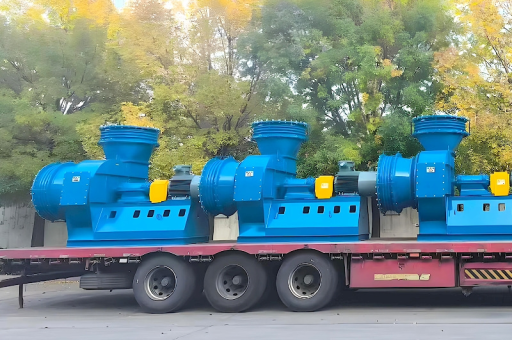
In industrial environments where hazardous gases, smoke, or flammable particles are present, standard ventilation fans pose a serious safety risk. The Carbon Steel Single Suction Smoke Flue Gas Exhaust Fan Anti Explosion is a specialized ventilation device engineered to extract corrosive, hot, or explosive flue gases while preventing ignition sources from triggering an explosion.
This type of fan combines carbon steel construction (for durability and corrosion resistance in moderate fume conditions) with a single-suction impeller design (optimized for high airflow at moderate static pressure). The "anti-explosion" (or explosion-proof) feature ensures that sparks, electrical arcs, or high temperatures inside the fan cannot ignite the surrounding flammable atmosphere. These fans are commonly used in power plants, chemical processing units, oil refineries, and steel mills.
Unlike standard exhaust fans, this variant meets international explosion-proof certifications such as ATEX (Europe) , IECEx (International) , and UL/CSA (North America) , making it a non-negotiable component in hazardous zone classifications (Zone 1, Zone 2, Class I Div 1/2).
Key Components and Material Advantages
A. Carbon Steel Housing and Impeller
- Why carbon steel? It offers high tensile strength and resistance to thermal deformation at elevated temperatures (up to 400°C or 752°F depending on coating).
- For acidic or highly corrosive flue gases, a spoxy coating or stainless steel lining may be added.
- The single-suction impeller is backward-curved or forward-curved, with blades designed to minimize turbulence and noise.
B. Explosion-Proof Motor
- The motor is enclosed in a flameproof housing that contains any internal explosion.
- Terminal boxes are sealed to prevent gas ingress.
- Motors are often rated IP55 or IP65 to resist dust and moisture.
C. Spark-Resistant Construction
- Impeller and housing materials are selected to avoid friction sparking (e.g., aluminum-bronze tips or full non-sparking alloys).
D. Sealed Bearings and Vibration Dampeners
- Bearings are shielded to prevent lubricant contamination by hot gases.
- Vibration sensors can be integrated for predictive maintenance.
Material advantage summary: Carbon steel provides cost-effectiveness and strength, while explosion-proof add-ons ensure safety in volatile environments without sacrificing airflow performance.
How Does It Work? – The Single Suction Mechanism Explained
The term "single suction" refers to the fan's air intake design: air enters from one side only (the suction side), passes through the rotating impeller, and is discharged by centrifugal force into a volute casing.
Step-by-step operation:
- Flue gas or smoke enters the fan through a duct connected to the suction nozzle.
- The explosion-proof motor spins the impeller at a controlled RPM.
- Centrifugal force accelerates the gas outward, creating a pressure differential.
- The gas exits through a discharge outlet, typically connected to a stack or scrubbing system.
Why single suction?
- Ideal for applications with limited space (narrow duct connections).
- Allows for easier balancing and lower maintenance compared to double-suction designs.
- Handles gas temperatures up to 300°C continuously (with heat-resistant paint or higher-grade alloys).
Flow rate example: A typical model with a 20-inch impeller can move 5,000–8,000 CFM at 4–6 inches of static pressure.
Critical Applications: Where Is This Fan Used?
| Industry | Application | Why Anti-Explosion? |
|---|---|---|
| Power Generation | Boiler flue gas extraction, dust collection | Flue gases may contain combustible carbon particles |
| Chemical Plants | Exhaust from reactors, drying ovens, solvent handling | Risk of flammable vapor accumulation |
| Oil & Gas Refineries | Venting storage tanks, flare gas recovery | Potential hydrocarbon gas leaks |
| Steel Mills | Smelting furnace fume extraction | High-temperature flammable byproducts |
| Waste Incineration | Combustion gas exhaust | Hot, corrosive, and often combustible |
| Pharmaceutical Labs | Fume hood exhaust (solvents) | Volatile organic compounds (VOCs) |
Real-world case: A coal-fired power plant replaced standard steel fans with carbon steel single-suction anti-explosion fans and reduced unplanned downtime by 40% due to decreased corrosion and eliminated spark hazards.
Explosion-Proof Design Features: Why Safety Matters
An explosion-Proof fan is not just a standard fan with a strong motor. It must meet strict design criteria:
- Flame Path Gap Control: The gap between the motor shaft and housing is precision-machined to cool and extinguish any escaping flames.
- Temperature Class (T-rating): The maximum surface temperature of the fan is rated below the ignition temperature of the target gas (e.g., T3 = 200°C, T4 = 135°C).
- Earthing and Bonding: All metallic parts are bonded to prevent static discharge.
- Cable Entry Systems: Explosion-proof glands are mandatory.
Consequences of using a non-explosion-proof fan:
- In a 2020 incident at a fertilizer plant, a standard fan ignited ammonia gas, leading to a fire that shut down operations for 3 weeks.
Performance Parameters and Selection Criteria
When selecting a Carbon Steel Single Suction Smoke Flue Gas Exhaust Fan Anti Explosion, consider:
| Parameter | Recommended Range | Notes |
|---|---|---|
| Airflow (CFM) | 1,000 – 50,000+ | Based on duct size and required extract rate |
| Static Pressure (inH2O) | 2 – 12 | Higher for long duct runs or dense smoke |
| Gas Temperature | Up to 300°C (standard), 400°C (high-temp option) | For higher temps, specify heat-resistant coating |
| Explosion Zone | Zone 1, Zone 2, or Class I Div 1/2 | Match to local area classification |
| Motor Power | 1–100 HP | Variable frequency drive (VFD) ready models available |
| Sound Level | <85 dB at 1 meter | Larger models may require silencers |
Selection tip: Always use ATEX or IECEx certified documentation to verify the fan is rated for your specific gas group (IIA, IIB, IIC).
Frequently Asked Questions (FAQ)
Q1: Can this fan be used for outdoor installations?
Yes, with an IP55 or higher motor and corrosion-resistant coating. Direct rain exposure may require a weather hood.
Q2: What is the maximum continuous operating temperature?
Standard carbon steel fans handle up to 250°C (482°F). For higher temperatures, request a high-temperature variant with nickel-based coating (up to 400°C).
Q3: How do I know if the fan is truly explosion-proof?
Check for ATEX marking (e.g., II 2G Ex d IIB T4) or IECEx certificate. Avoid fans that claim "spark-resistant" but lack a recognized certification.
Q4: Can I use this fan for particulate-laden gas?
It depends on particle size and concentration. For abrasive dust, a hard-faced impeller or cyclone separator is recommended upstream of the fan.
Q5: Is maintenance difficult for anti-explosion fans?
Explosion-proof fans require specialized maintenance – only qualified technicians should open flameproof joints. Routine tasks include cleaning impeller blades and checking bearing seals.
Q6: What is the difference between this fan and a standard smoke exhaust fan?
Standard fans are not tested for explosive gas ignition; they may still spark internally or overheat. Anti-explosion fans are designed and certified to prevent explosion initiation.
Q7: Can the fan be installed horizontally or vertically?
Both orientations are possible, but the motor must be mounted in its recommended position (usually horizontal or vertical with support brackets). Refer to the manufacturer's installation manual.
Q8: How long does a carbon steel anti-explosion fan last?
With proper maintenance, 10–15 years in clean gas environments; 5–8 years in corrosive or dusty conditions.
Maintenance and Troubleshooting Tips
Weekly checks:
- Listen for unusual vibrations or noises.
- Inspect for visible corrosion on the housing and impeller.
- Verify that electrical seals and cable glands are intact.
Monthly checks:
- Measure motor current draw; a spike may indicate imbalance or clogging.
- Clean impeller blades using non-sparking tools (brass or copper).
- Test vibration sensors (if equipped).
Common issues:
- Reduced airflow: Check for blockages in ductwork, worn bearings, or impeller imbalance.
- Overheating: Verify ambient temperature, motor T-rating, and inlet gas temperature.
- Motor trips: Could be due to overload, phase imbalance, or internal short – check with flameproof-rated test equipment.
Safety note: Never modify explosion-proof components (e.g., replace screws with non-certified parts). Always use original manufacturer parts.
Conclusion: Why This Fan Is a Reliable Industrial Choice
The Carbon Steel Single Suction Smoke Flue Gas Exhaust Fan Anti Explosion is a critical asset for any facility dealing with flammable, high-temperature, or corrosive gases. Its robust carbon steel construction offers strength and thermal tolerance, while the single-suction design ensures efficient gas movement in space-constrained installations. The explosion-proof certification provides a legally required safety net in hazardous zones, protecting both personnel and equipment.
When paired with proper selection, installation, and routine maintenance, this fan delivers consistent performance for decades. For industries ranging from power generation to chemical manufacturing, investing in a certified anti-explosion fan is not just about compliance – it is about operational reliability and risk mitigation.
Remember: Always consult the manufacturer’s datasheet and local safety regulations before installation. For customized applications such as extremely high temperatures (above 400°C) or highly acidic gases, request a technical review from the fan supplier.
This article is intended for informational purposes. Always refer to certified engineering documentation and local explosion-proof standards for specific installation requirements.





