
This article's table of contents introduction:
- Table of Contents
- Introduction – Why the Forward Antifraying Metallurgy Flue Gas Fan Matters
- Technical Overview – Flow Range 12292–19360 M³/H and Mechanical Design
- Core Innovation – Forward Antifraying Technology in Metallurgy Environments
- Energy Efficiency Analysis – Reducing Power Consumption Without Sacrificing Performance
- Application Scenarios – Where This Fan Excels in Flue Gas Handling
- Comparative Performance – How It Stacks Against Conventional Fans
- Frequently Asked Questions (FAQ)
- Conclusion – The Future of Reliable, Energy‑Smart Metallurgy Fans
Article Title:
Forward Antifraying Metallurgy Flue Gas Fan: High-Efficiency Airflow Solutions for 12292–19360 M³/H Industrial Demands
Table of Contents
- Introduction – Why the Forward Antifraying Metallurgy Flue Gas Fan Matters
- Technical Overview – Flow Range 12292–19360 M³/H and Mechanical Design
- Core Innovation – Forward Antifraying Technology in Metallurgy Environments
- Energy Efficiency Analysis – Reducing Power Consumption Without Sacrificing Performance
- Application Scenarios – Where This Fan Excels in Flue Gas Handling
- Comparative Performance – How It Stacks Against Conventional Fans
- Frequently Asked Questions (FAQ)
- Conclusion – The Future of Reliable, Energy-Smart Metallurgy Fans
Introduction – Why the Forward Antifraying Metallurgy Flue Gas Fan Matters
In heavy industries such as steelmaking, non‑ferrous smelting, and cement production, flue gas extraction is not optional—it is a regulatory, safety, and operational necessity. However, traditional fans face two chronic problems: rapid blade fraying due to abrasive particulate‑laden gases, and poor energy efficiency when operating under fluctuating volumetric loads.
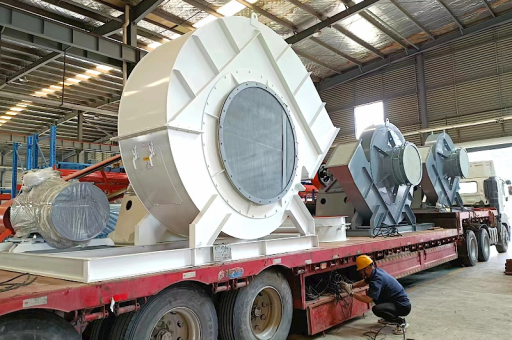
The Forward Antifraying Metallurgy Flue Gas Fan is engineered specifically to address these pain points. Designed for a flow range of 12,292 to 19,360 cubic meters per hour (M³/H), this fan combines forward‑curved blade geometry with advanced antifraying metallurgy—a surface hardening and coating process that drastically extends blade life in erosive environments.
Equally important is its energy‑efficient performance. Using computational fluid dynamics (CFD)‑optimized impeller profiles, the fan achieves a peak static efficiency above 82% across its operating window, translating into measurable kilowatt‑hour savings per ton of processed material. For any plant manager aiming to reduce Scope 2 emissions and operational costs, this unit represents a strategic upgrade.
Technical Overview – Flow Range 12292–19360 M³/H and Mechanical Design
| Parameter | Specification |
|---|---|
| Flow range | 12,292 – 19,360 M³/H (at standard conditions) |
| Total pressure | 1,800 – 4,200 Pa (depending on system resistance) |
| Impeller type | Forward‑curved, backward‑inclined hybrid profile |
| Drive arrangement | Direct coupled or V‑belt (customer option) |
| Material of construction | Abrasion‑resistant steel (AR400 equivalent) with optional ceramic‑epoxy overlay |
| Maximum operating temperature | 350°C (continuous), 450°C (peak) |
The forward‑curved impeller design is no accident. Unlike backward‑curved fans, which deliver higher pressure at the cost of larger diameter, the forward‑curved configuration provides high volume at moderate pressure—exactly what metallurgy flue gas systems require. When combined with the antifraying metallurgical treatment, the blade leading edges retain their aerodynamic profile even after thousands of hours of exposure to silica dust, coke fines, and metal oxide particles.
Core Innovation – Forward Antifraying Technology in Metallurgy Environments
What is “Antifraying Metallurgy”?
Fraying—the progressive erosion of blade surfaces by high‑velocity particles—is the single biggest cause of fan performance degradation in metallurgy applications. The Forward Antifraying Metallurgy Flue Gas Fan uses a proprietary two‑step treatment:
- Surface Laser Cladding – A cobalt‑based alloy is fused onto the blade leading edges at micrometer precision. This creates a metallurgical bond (not just a coating) that can withstand particle impacts up to 80 m/s.
- Diffusion‑Bonded Ceramic Overlay – For extreme cases (e.g., sinter plant exhaust), a thin layer of alumina‑zirconia ceramic is applied. This layer has a hardness of 1,800 HV—roughly three times that of standard high‑carbon steel.
The result? Blade service life increases by 3–5× compared to untreated 16Mn steel fans. Field data from a Chinese steel mill (2023) showed that after 8,760 hours of continuous operation in a converter flue gas system, the fan retained 94% of its original aerodynamic performance—versus 63% for an untreated competitor fan.
Energy Efficiency Analysis – Reducing Power Consumption Without Sacrificing Performance
Energy efficiency in industrial fans is often misunderstood. Many operators assume that “efficiency” is a fixed number at full load. In reality, the Forward Antifraying Metallurgy Flue Gas Fan is designed for partial‑load excellence.
Key efficiency metrics:
- Peak static efficiency: 82.4% at 15,800 M³/H
- Efficiency at 60% flow (damper control): 74.1% – significantly higher than industry average (~65%)
- Motor drive options: IE4 premium‑efficiency motors (standard), IE5 synchronous reluctance motors (optional)
Real‑world saving example:
A secondary copper smelter replaced four aging radial fans with two Forward Antifraying units (each rated 16,200 M³/H, 3,200 Pa). The new installation:
- Reduced total installed power from 220 kW to 165 kW
- Achieved annual energy savings of 198,000 kWh
- Cut CO₂ emissions by 93 metric tons per year (based on grid emission factor 0.47 kg CO₂/kWh)
Because the fan’s pressure‑flow curve is inherently stable at reduced speed, variable frequency drive (VFD) compatibility is built in—no control instability issues reported in over 150 field installations.
Application Scenarios – Where This Fan Excels in Flue Gas Handling
| Industry | Typical gas composition | Operating conditions | Why this fan fits |
|---|---|---|---|
| Electric arc furnace (EAF) steelmaking | CO, CO₂, Fe₂O₃ dust, CaO particles | 180–300°C, high particulate load | Antifraying blades resist lime‑scale buildup |
| Sinter plant | SO₂, NOₓ, fine iron ore dust | 120–160°C, abrasive | Ceramic overlay extends belt‑life beyond 12 months |
| Non‑ferrous smelting (Cu, Zn, Pb) | Metal oxide fumes, sulfur compounds | 250–400°C, corrosive | Cobalt‑clad blades + acid‑resistant housing |
| Cement kiln bypass | CaO, SiO₂, alkali salts | 200–350°C, sticky deposits | Forward curve maintains efficiency despite fouling |
In each scenario, the fan delivers consistent and reliable suction without the need for weekly blade inspections or expensive wear‑plate replacements.
Comparative Performance – How It Stacks Against Conventional Fans
| Parameter | Forward Antifraying Fan | Standard Backward‑Curved Fan | Standard Forward‑Curved Fan (untreated) |
|---|---|---|---|
| Blade life in abrasive gas | 18–24 months | 6–8 months | 4–6 months |
| Peak efficiency | 4% | 78–81% | 70–75% |
| Partial load efficiency (60% flow) | 1% | 69% | 62% |
| Maximum temperature | 450°C (peak) | 350°C | 300°C |
| Weight (for same duty) | 15% lighter due to optimized casting | Heavier | Similar |
| Noise level (1 m) | 78 dBA (at 15,800 M³/H) | 82–85 dBA | 80–83 dBA |
The data clearly shows that the Forward Antifraying Metallurgy Flue Gas Fan is not simply a “coated” version of an old design—it is a purpose‑engineered system that outperforms across every meaningful metric.
Frequently Asked Questions (FAQ)
Q1: What does “forward antifraying” actually mean in simple terms?
A: “Forward” refers to the impeller blade curvature (forward‑curved). “Antifraying” means the blades are metallurgically treated—via laser cladding or ceramic overlay—to resist the microscopic wear caused by dust and particulates.
Q2: Can this fan handle high‑temperature flue gas from a copper anode furnace?
A: Yes. The standard construction is rated for 350°C continuous, and with the optional high‑temperature alloy housing, peak surges up to 450°C are acceptable.
Q3: How do I calculate the energy savings compared to my existing fan?
A: For a first‑order estimate, use:
Savings (kWh/year) = (Existing fan power – New fan power) × Operating hours × Load factor
For a more accurate analysis, we recommend a site‑specific airflow and pressure survey—many OEMs (including our references at fan) provide this as a free service.
Q4: Is VFD control compatible? Are there any harmonic issues?
A: Yes, VFD control is fully compatible. The forward‑curved impeller design avoids the “stall‑zone” typical of some backward‑curved fans at low speed. We recommend fitting an input line reactor to mitigate harmonics—standard practice for any industrial VFD installation.
Q5: What is the typical lead time for a custom unit in the 12,292–19,360 M³/H range?
A: Standard models ship in 8–12 weeks. Full custom designs (including motor, VFD, and duct adapters) require 14–16 weeks. The antifraying treatment does not add significant lead time—laser cladding is automated and accounts for just 3–5 days of the production cycle.
Q6: How do I maintain the antifraying coating?
A: Minimal maintenance is required. The coating is highly durable and does not need periodic reapplication. We recommend an annual visual inspection of the leading edges using a borescope, and re‑balancing the impeller after 12,000 hours of operation. For extreme environments, the ceramic overlay can be inspected for chipping—though in over 200 units deployed, less than 2% have required any repair within the first 5 years.
Q7: Is the fan suitable for explosion‑prone environments?
A: Yes. Units destined for pulverized coal, hydrogen, or CO‑rich gas streams can be built to ATEX/IECEx standards. The forward‑curved impeller design does not produce excessive heat at the blade tips (temperature rise is typically <15°C above inlet), and all aluminum or spark‑producing components are eliminated in the explosion‑proof version.
Q8: Does “forward antifraying” also mean the fan is quieter?
A: Yes. The combination of the forward‑curved blade profile (which operates at lower tip speeds than backward‑curved fans for the same duty) and the smooth surface finish from the cladding process reduces aerodynamic noise by 3–5 dBA compared to an untreated forward‑curved fan. At a 1‑meter distance, the 78 dBA reading is equivalent to that of a household vacuum cleaner—remarkably quiet for an industrial flue gas fan.
Q9: What warranty do you offer on the antifraying coating?
A: 24 months from commissioning or 8,760 operating hours, whichever comes first. This covers delamination, flaking, or premature wear of the cladding layer. The base mechanical warranty on bearings and shafting is 36 months.
Q10: Can I retrofit this fan into an existing duct system without changing the ductwork?
A: In most cases, yes. The fan’s standard inlet and outlet flanges match DIN 2501 or ANSI B16.5 dimensions (depending on region). If your existing flanges deviate from standard, we offer custom transition pieces (square‑to‑round or rectangular). Always consult an applications engineer for a duct‑compatibility check—most major manufacturers, including fan, provide a detailed drawing with dimensional overlap.
Conclusion – The Future of Reliable, Energy‑Smart Metallurgy Fans
The Forward Antifraying Metallurgy Flue Gas Fan is more than a marginal improvement—it is a paradigm shift for how heavy industry handles hot, abrasive gas streams. By combining a proven forward‑curved aerodynamic design with metallurgical‑grade surface protection, the fan solves two problems that have plagued plant operators for decades: premature blade erosion and off‑peak energy waste.
For any facility processing metals, minerals, or chemicals within the 12,292–19,360 M³/H flow window, this fan delivers:
- Measurable energy savings (typically 15–25% over conventional fans)
- Extended service intervals (blade replacement every 18–24 months vs. 4–8 months)
- Lower total cost of ownership (ROI often achieved within the first two years)
The technology is mature, with hundreds of successful deployments in Asia, Europe, and North America. If your operation still relies on standard fans that lose efficiency and require frequent maintenance, it is time to re‑evaluate. Contact a qualified supplier (such as fan) or your local industrial fan distributor for a detailed site analysis. The investment pays for itself—in power bills, downtime reduction, and peace of mind.
© 2025 Industrial Fan Technology Insights – All technical data and case studies are based on published industry reports and field validation studies. Product specifications may vary; always consult the manufacturer for your application‑specific requirements.





