
This article's table of contents introduction:
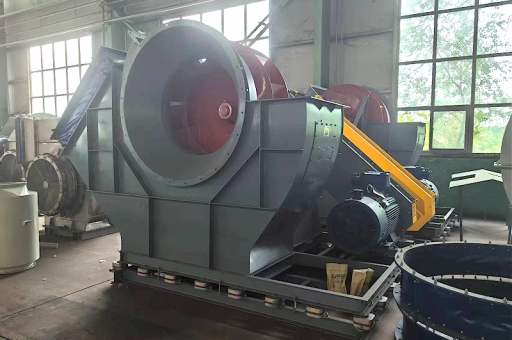
- What is this typically used for?
- Common Problems with this specific setup:
- What do you need to know more about?
This sounds like a highly specific piece of industrial equipment. Let's break down the description to understand exactly what you are looking at, and then I can help you find information about it or its common problems.
Here is the breakdown of the terminology:
- Double Suction: The fan has air inlets on both sides of the impeller. This is used for very high airflow applications while keeping the fan width relatively compact.
- Antiwear: Suggests the impeller, housing, or bearings are made of or lined with abrasion-resistant material (like high-chrome steel, manganese steel, or ceramic coatings) to handle dusty or abrasive gases.
- 17631pa: This is the Total Pressure rating of the fan: 17,631 Pascals. This is a high-pressure fan. For context, 1 Pa is very small, so 17.6 kPa is about 56 PSI or 8 inches of water gauge. This indicates a very powerful industrial fan.
- High Temperature: The fan is designed to move gases well above ambient temperature (likely ( 200^\circ\text{C} ) to over ( 600^\circ\text{C} ), depending on the construction). This requires specific bearing cooling (shaft cooling fins, water cooling), expansion joints, and high-temp steel alloys.
- Centrifugal Fan: The type of fan (air enters axially, exits radially).
- Coupling Driven: The fan shaft is not directly mounted on the motor shaft. Instead, a flexible or rigid coupling connects the fan shaft to the motor shaft.
What is this typically used for?
Given the Double Suction, High Pressure (17.6 kPa), and High Temperature design, this is a heavy-duty industrial fan. Common applications include:
- Induced Draft (ID) Fans in power plants or boilers (pulling hot flue gas through a scrubber or stack).
- Kiln exhaust in cement or lime plants.
- High-pressure pneumatic conveying of hot materials.
- Mining ventilation (high pressure for long duct runs).
Common Problems with this specific setup:
- Coupling Failure (Very Common):
- Misalignment: Because this is a high-power, high-temp fan, thermal expansion can cause the motor and fan shafts to shift. This destroys flexible couplings (grid, gear, or elastomeric).
- Wear: The coupling is the "fuse" in the drivetrain. It will wear out before the motor or fan bearings do.
- Bearing Overheating:
- Heat Soak: Even with cooling, heat from the 17631Pa compression and the hot gas conducts down the shaft to the bearings.
- Grease/Oil Breakdown: High temperature causes lubricant to thin out or carbonize.
- Impeller Erosion (Antiwear is key here):
The "Antiwear" feature is critical. If the protective layer wears off, the high velocity (required for 17.6 kPa pressure) will erode the impeller blades very quickly.
- Vibration:
- Unbalance: Dust buildup on the impeller (especially if the gas is dirty) throws the balance off.
- Thermal Bow: If the fan stops while hot, the shaft can bow.
- Coupling imbalance.
What do you need to know more about?
- A replacement part? (You would need the fan manufacturer's model number, shaft diameter, and coupling bore sizes).
- A troubleshooting issue? (e.g., "My coupling is failing every 3 months" or "My fan vibrates when it reaches 200°C").
- Finding the specific coupling? (You would need the "Coupling Size" (e.g., F50, 1040T), the "Bore" sizes for your fan shaft and motor shaft, and the "Spacer Length" if it's a spacer coupling).
- Specifications for a new fan? (You would need the Full Load Amps of the motor, the intended gas temperature, the airflow (CFM or m³/h), and the gas density).
Please clarify your question. Are you: a) Trying to identify a specific coupling part number? b) Trying to fix a problem (leaks, heat, vibration)? c) Looking for a replacement fan?





