
This article's table of contents introduction:
- Component Breakdown
- Interpretation of "Cooling" with "Induced Draft"
- Why "V-Belt Drive" is Crucial Here
- Likely Applications
- Key Selection & Operational Considerations
- Summary
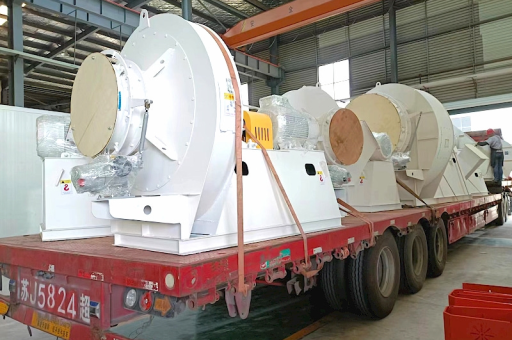
Based on the keywords you've provided, let's break down what this piece of equipment is and where it's typically used. The description is very specific, pointing to a heavy-duty industrial fan.
Here is a technical analysis of the specifications and the likely application:
Component Breakdown
- Heavy Duty: Designed for continuous operation, high temperatures, and abrasive or corrosive environments. Not a light commercial HVAC unit.
- V Belt Driven: The motor is not directly coupled to the fan wheel. Power is transmitted via V-belts and pulleys.
- Cooling: This is the primary function. The fan is moving air to remove heat.
- Centrifugal: The fan type. Air enters axially and is expelled radially (at 90 degrees) using a rotating impeller. This generates high pressure.
- 4325 Pa (Pascals): This is the Static Pressure. This is the most critical number. 4325 Pa is extremely high (approximately 17.3 inches of water gauge or 0.63 PSI). This classifies it as a Medium-to-High Pressure fan, not a standard ventilation fan.
- Induced Draft (ID): The fan is located after the heat source or process. It pulls (sucks) air through the system, creating negative pressure inside the ductwork or chamber. This often means handling hot, dirty, or corrosive air.
- Blower: A more powerful, high-pressure version of a fan, often implying a direct-drive or robust design.
Interpretation of "Cooling" with "Induced Draft"
Induced draft fans are most famous for Boilers (pulling combustion gases through the boiler). However, the specification "Cooling" combined with "Induced Draft" suggests one of these more specific applications:
- Cooling Tower: While most cooling tower fans are axial (propeller-type), a Centrifugal Induced Draft Cooling Tower uses a high-pressure blower to pull air through the fill media. The
4325Papressure is a strong indicator of a forced/induced draft cooling tower where air must be pulled through dense media and spray headers. - Industrial Process Cooling: For example, cooling hot materials (clinker, slag, metal parts) on a conveyor. The ID fan pulls cooling air over the hot product.
- Furnace/Quench Cooling: An ID fan pulling air through a heat exchanger or cooling tunnel.
Why "V-Belt Drive" is Crucial Here
For a fan with 4325 Pa of pressure, V-belt drive offers specific advantages over direct drive:
- Speed Control (Sheave Change): The most important reason. You can change the fan RPM by changing the pulley sizes to tune the airflow (CFM) without changing the motor. For a "Heavy Duty" application with variable process conditions, this is essential.
- Motor Protection: The belts slip slightly under shock loads or if the fan wheel becomes unbalanced (e.g., from dust buildup), protecting the motor from catastrophic failure.
- Speed Reduction: The fan wheel needs to spin at a specific high speed to generate 4325 Pa. V-belts allow the motor to run at a standard speed (e.g., 1800 RPM) while the fan runs at its optimal speed.
Likely Applications
Given the 4325 Pa pressure, this is not a typical ventilation fan. It is most likely used in:
- Industrial Cooling Towers: (For power plants, refineries, chemical plants) - pulling air to cool process water.
- HVAC Air Handling Units (AHU) or Rooftop Units (RTU): Specifically for high-static ductwork in factories or cleanrooms where filters are very restrictive (high MERV rating).
- Industrial Ovens / Dryers: (Food processing, textile drying) - pulling hot, moist air out of the drying chamber.
- Fume Extraction/Exhaust Systems: In high-pressure scrubbers or baghouses where the air must be pulled through restrictive filters.
- Pneumatic Conveying: Pulling material (dust, powder, pellets) through a pipe.
Key Selection & Operational Considerations
If you are selecting, installing, or troubleshooting this blower, consider these heavy-duty factors:
- Temperature Rating: Is it rated for the temperature of the air it is pulling? Standard fans are rated for 150°F (65°C). For "Induced Draft" on a furnace or boiler, it must be rated for 400°F+ (200°C+) with heat slingers and high-temperature grease.
- Wheel Material & Design:
- Standard: Carbon Steel (CS).
- Corrosive Air: 304 or 316 Stainless Steel.
- Abrasive Air (Dust): Hardened steel or wear liners on the blades.
- Hot Air: Thermal expansion clearance is critical.
- Belt Tension: Belts on a heavy-duty ID blower must be tensioned correctly to transmit the high horsepower required to generate 4325 Pa. Loose belts slip and burn up; tight belts destroy bearings.
- Vibration Isolation: The high pressure creates significant reaction forces. The unit will need a heavy-duty base and likely spring isolators.
- Motor Power: To move air against 4325 Pa requires significant horsepower. You will likely need a motor in the 15 HP to 75 HP+ range (depending on the CFM).
Summary
You are describing a high-pressure, industrial-grade centrifugal fan (a "blower") that uses a V-belt drive system to pull air through a cooling process, creating a negative pressure environment upstream of the fan.
Key Takeaway: The 4325 Pa pressure rating is the most defining feature. It tells you this is a heavy, robust piece of machinery used to overcome high resistance in an industrial cooling or exhaust system, not a standard ventilation fan.





