
This article's table of contents introduction:
- What is a Stainless Steel Centrifugal Blower Fan?
- Why Stainless Steel is Essential for Air Purification & Ventilation
- Key Components in Stainless Steel
- Common Industrial Applications
- Performance Specifications to Look For
- Advantages & Disadvantages
- Example Product Sizes & Types
- Top Manufacturers / Brands (Industrial Quality)
- Summary: Is it Right for Your Application?
Based on your request, here is a comprehensive overview of Stainless Steel Centrifugal Blower Fans specifically designed for Industrial Air Purification and Ventilation Systems.
This type of fan is a critical component in environments where durability, corrosion resistance, and hygiene are paramount.
What is a Stainless Steel Centrifugal Blower Fan?
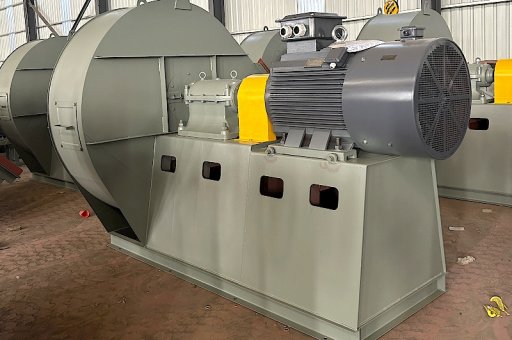
A centrifugal blower fan uses a rotating impeller to increase the pressure and velocity of air or gas. The "stainless steel" (SS) designation refers to the material of the fan housing, impeller (wheel), and sometimes the shaft. It is a "fan" in the low-to-medium pressure range but a "blower" in the high-pressure range, often used interchangeably in industrial contexts.
Why Stainless Steel is Essential for Air Purification & Ventilation
In industrial settings, standard carbon steel fans corrode rapidly. Stainless steel offers specific advantages:
- Corrosion Resistance: Resists rust from moisture and airborne chemicals (acids, alkalis, salt).
- Chemical Compatibility: Handles aggressive fumes, vapors, and gases (e.g., in chemical plants, labs, plating shops).
- Hygiene & Cleanliness: Non-porous surface is easy to clean, prevents bacterial growth, and meets food/pharmaceutical regulations.
- Spark Resistance: Reduces risk in explosive or flammable environments (e.g., paint booths, solvent recovery).
- High Temperature Tolerance: Can handle moderate to high-temperature air streams (e.g., ovens, dryers).
- Longevity & Low Maintenance: Withstands harsh conditions, reducing replacement cycles.
Key Components in Stainless Steel
| Component | Typical Stainless Steel Grade | Purpose & Benefit |
|---|---|---|
| Housing (Scroll) | 304, 316, 316L | Corrosion resistance, structural integrity. 316/316L for higher chemical resistance (e.g., chlorides). |
| Impeller (Wheel) | 304, 316L (or 17-4PH for high speeds) | The rotating part. Requires precise balance and strength. |
| Shaft | 304, 316, 17-4PH | Rotates the impeller. Must be strong and corrosion-resistant. |
| Inlet/Outlet Flanges | 304, 316 | For ductwork connection. |
| Internal Hardware | 304, 316 | Bolts, nuts, rivets. |
| Motor Enclosure | Painted cast iron (standard) or TEFC/XP | Motor is usually standard, but for food/pharma, a washdown (stainless steel) motor is used. |
Common Industrial Applications
- Fume Extraction: Chemical fumes, acid vapors, solvent vapors from labs, plating tanks, etching lines.
- Dust Collection: Corrosive dust (e.g., from battery manufacturing, fertilizer production).
- Hood Ventilation: Kitchen exhaust (grease-laden, hot air), fume hoods.
- Cleanrooms: Air handling units (AHUs) for pharmaceutical, biotech, and semiconductor manufacturing.
- Odor Control: Air scrubbing systems, sewage treatment plant ventilation.
- Material Conveying: Pneumatic conveying of corrosive pellets or powders.
Performance Specifications to Look For
When specifying or purchasing, define these parameters:
| Parameter | Description |
|---|---|
| Airflow (CFM / m³/h) | Volume of air moved. Crucial for sizing. |
| Static Pressure (in. w.g. / Pa) | Resistance the fan must overcome (ductwork, filters, scrubbers). |
| Impeller Type | Forward-curved (high flow, low pressure, compact), Backward-curved/inclined (high efficiency, non-overloading, higher pressure), Radial (Paddlewheel) (for sticky/dusty air). |
| Motor Type | TEFC (Totally Enclosed Fan Cooled), XP (Explosion Proof), Washdown (stainless motor). |
| Speed (RPM) | Determines airflow and pressure (belt-driven or direct-drive). |
| Temperature Range | Standard (-20°F to 200°F), high-temp (up to 600°F+) with special shaft cooling. |
| Drive Type | Direct Drive (higher efficiency, less maintenance, fixed speed) vs. Belt Drive (adjustable speed, different motor/fan speeds possible). |
| Classification | AMCA (Air Movement and Control Association) certified for performance and sound. |
| Explosion-Proof Rating | For hazardous locations (Class I, Group D; Class II, Group F/G). |
Advantages & Disadvantages
Advantages:
- Superior corrosion and chemical resistance.
- Long service life in harsh environments.
- Easier to clean and sterilize.
- Good for high-temperature applications.
- Can be fabricated with spark-resistant construction (e.g., non-ferrous impeller).
Disadvantages:
- High Initial Cost: Stainless steel is much more expensive than carbon steel.
- Weight: Heavier than comparable aluminum or plastic fans.
- Fabrication Difficulty: Welding and forming 304/316 requires skilled labor, adding to cost.
- Static Electricity: Conductive; may require grounding in explosive areas.
Example Product Sizes & Types
- Small: 6" to 12" inlet, 500-3,000 CFM (e.g., fume hoods, small booths).
- Medium: 12" to 24" inlet, 3,000-10,000 CFM (e.g., general factory ventilation, dust collectors).
- Large: 24" to 48" inlet, 10,000-50,000+ CFM (e.g., central HVAC, large scrubbers, pallet drying).
Top Manufacturers / Brands (Industrial Quality)
- New York Blower Company – Premium, wide range of SS fans for tough duties.
- Greenheck – Large selection, good availability, suitable for general industrial.
- Cincinnati Fan – Famous for their CE (Corrosion Resistant) series, heavy-gauge SS.
- Aerovent / Twin City Fan – High-quality, custom designs for process industries.
- Chicago Blower – Direct and belt drive, focus on heavy-duty.
- Robinson Fans – Very large industrial fans, including API standards.
Summary: Is it Right for Your Application?
Choose a Stainless Steel Centrifugal Blower Fan if:
- The air/gas is corrosive (acids, bases, salt spray).
- The environment requires strict hygiene (food, pharma, biotech).
- The air is hot (above 200°F).
- Explosion safety is a concern (non-sparking construction is possible).
- Long-term reliability outweighs initial capital cost.
Consider a different material (e.g., FRP/GRP, PVC, coated carbon steel) if:
- The air is very high temperature ( > 400°F for prolonged periods).
- The budget is extremely limited.
- The chemical compatibility of stainless steel is poor (e.g., strong HCl or H2SO4 – use FRP).
Recommendation: For critical industrial air purification and ventilation, a 304 or 316 stainless steel centrifugal blower fan with a backward-curved impeller is often the gold standard. For upgrade advice or troubleshooting, send a message with your specific industry and application details!





