
This article's table of contents introduction:
- Understanding the Core Requirements
- Critical Material Selection (The "Chemical Resistant" Part)
- Key Fan Specifications to Define
- Application Example (Scrubber System)
- Manufacturers to Look For
- Critical Safety & Operational Warnings
- Summary Recommendation
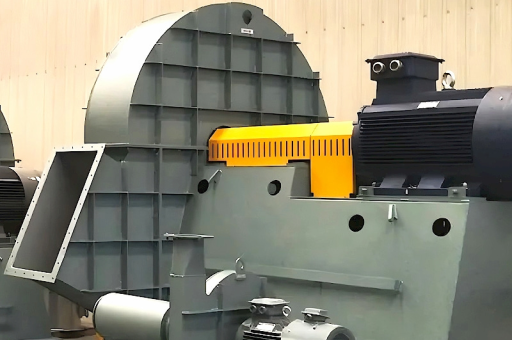
It appears you are looking for industrial ventilation equipment designed to handle corrosive gases, specifically a combination of a centrifugal air blower and chemical resistant exhaust fans.
Here is a detailed breakdown of what you need, the critical specifications, and how to select the right system for "Corrosive Gas Delivery."
Understanding the Core Requirements
- Corrosive Gas: This is the primary challenge. Gases like chlorine (Cl₂), hydrogen chloride (HCl), sulfur dioxide (SO₂), hydrogen fluoride (HF), or vapors from acids/bases will rapidly destroy standard steel or aluminum fans.
- Centrifugal: You need a centrifugal (radial) design, not an axial fan. Centrifugal blowers generate higher static pressure, essential for pushing gas through ductwork, scrubbers, or against system resistance.
- Delivery/Exhaust: This implies the fan is moving the gas from a source (e.g., a chemical reactor, storage tank) to a treatment system (scrubber) or directly out of a building.
Critical Material Selection (The "Chemical Resistant" Part)
This is the most important decision. The wrong material will fail within weeks (or days).
Option A: Polypropylene (PP) / PVC (Thermoplastics)
- Best for: Most acids (HCl, H₂SO₄), caustics (NaOH), and many halogens. Extremely common in fume hoods and scrubbers.
- Pros: Excellent broad-spectrum chemical resistance, lightweight, low cost.
- Cons: Limited temperature (max ~80°C / 176°F for PP). Brittle at low temperatures (PVC). Not for strong oxidizers or solvents.
- Configuration: Solid plastic housing and impeller.
Option B: PVDF (Polyvinylidene Fluoride)
- Best for: Strong acids, halogens (chlorine, bromine), and high-purity applications.
- Pros: Higher temperature resistance (up to ~140°C / 284°F), excellent chemical resistance.
- Cons: Very expensive, more difficult to fabricate.
Option C: FRP (Fiberglass Reinforced Plastic)
- Best for: Large industrial systems with high temperatures or specific gases that attack pure plastics.
- Pros: Very strong, can handle higher temperatures (with proper resin), very large sizes possible.
- Cons: Can be susceptible to specific solvents if the wrong resin (e.g., polyester vs. vinylester) is used. Requires a resin-rich surface layer.
Option D: Stainless Steel (316L / 904L / Hastelloy)
- Best for: High-temperature gases (above plastic limits), high-pressure systems, or gases that do not contain chlorides (which cause stress corrosion cracking).
- Pros: High strength, high temperature.
- Cons: Expensive (especially Hastelloy). Can fail catastrophically if the specific alloy is not matched to the gas (e.g., 316L fails quickly in HCl gas).
Recommendation: For 90% of general corrosive gas delivery, Polypropylene (PP) is the correct choice. If the gas is hot (above 65°C), use PVDF or FRP.
Key Fan Specifications to Define
When ordering or specifying, you must provide these parameters to the manufacturer:
- Airflow (CFM or m³/h): How much gas needs to be moved?
- Static Pressure (inches w.g. or Pascal): What is the resistance of the ductwork, scrubber, and stack?
- Gas Type and Concentration: "Corrosive" is vague. State exactly: "300 ppm wet Chlorine gas" vs. "Saturated HCl vapor at 50°C". This dictates the plastic type.
- Temperature: Critical for material selection.
- Spark Resistance: If the gas is flammable (e.g., hydrogen), you need a non-sparking construction (aluminum impeller in a plastic housing, or plastic-on-plastic). Never use carbon steel in a flammable gas environment.
Application Example (Scrubber System)
You are likely building a "push-pull" system:
- Blower (Push): A Corrosive Gas Delivery blower pushes the toxic gas from the process into the fume scrubber.
- Exhaust Fan (Pull): A Chemical Resistant Exhaust Fan pulls the cleaned air from the scrubber up the stack.
Diagram Concept:
[Chemical Process] -> [Gaso Line] -> [Delivery Blower] -> [Scrubber (Inlet)] -> [Scrubber (Outlet)] -> [Exhaust Fan] -> [Stack to Atmosphere]
Manufacturers to Look For
These companies specialize in this exact equipment:
- Greenheck (CSP / CST series): Broad range, good for standard corrosive lab exhaust.
- New York Blower (Pressure Blowers): Heavy-duty industrial.
- Hartzell (AF / PF series): Often used in plating and chemical plants.
- Plastic Fan Companies: DualD, Tri-Mer, Fabritech, Air Plastics – These specialize exclusively in plastic/FRP fans for this purpose.
- Cincinnati Fan (HP series): Good medium-duty options.
Critical Safety & Operational Warnings
- Condensation: If the gas is hot and humid, the fan must be designed to drain condensation. Water collection in a plastic housing can cause acid buildup.
- Motor Isolation: The motor MUST be out of the airstream (belt-driven) or isolated via a gas-tight shaft seal. A direct-drive motor in a corrosive gas stream will fail.
- Leak-tight Design: These are often "utility" sets that can leak. You need a gas-tight design. Look for radial lip seals on the shaft or double mechanical seals with a purge.
- Variable Speed: Using a VFD (Variable Frequency Drive) on a corrosive blower is highly recommended for flow control and soft-start to protect the impeller.
Summary Recommendation
For your request, you need a: Belt-Driven, Gas-Tight, Polypropylene (PP) Centrifugal Blower.
- Ask the supplier: "Is the impeller solid polypropylene or coated steel?" (Answer should be SOLID PP).
- Ask: "Is the shaft isolated from the gas stream?" (Answer should be Yes, with PTFE slinger rings or a seal).
- Ask: "Is the motor TEFC (Totally Enclosed Fan Cooled) and located outside the duct?"
If you provide the exact gas, temperature, and required CFM/Static Pressure, I can help you refine the selection further.





