
This article's table of contents introduction:
- Table of Contents (Directory Guide)
- Introduction: The Critical Role of the Centrifugal Blower in Foundry Operations
- Understanding the Single Inlet Centrifugal Blower Design for Furnaces
- Material Handling Challenges in High-Temperature Foundry Environments
- Why Wear Resistance is Non-Negotiable for Foundry Fan Longevity
- Key Engineering Features: From Abrasion Liners to Impeller Design
- Performance Metrics: Airflow, Pressure, and Efficiency Trade-offs
- Q&A: Common Practical Questions from Foundry Engineers
- Conclusion: Selecting the Right Fan for Your Foundry Furnace
The Essential Guide to Foundry Furnace Single Inlet Centrifugal Blowers: Optimizing Material Handling with Wear-Resistant Fan Technology
Table of Contents (Directory Guide)
- Introduction: The Critical Role of the Centrifugal Blower in Foundry Operations
- Understanding the Single Inlet Centrifugal Blower Design for Furnaces
- Material Handling Challenges in High-Temperature Foundry Environments
- Why Wear Resistance is Non-Negotiable for Foundry Fan Longevity
- Key Engineering Features: From Abrasion Liners to Impeller Design
- Performance Metrics: Airflow, Pressure, and Efficiency Trade-offs
- Q&A: Common Practical Questions from Foundry Engineers
- Conclusion: Selecting the Right Fan for Your Foundry Furnace
Introduction: The Critical Role of the Centrifugal Blower in Foundry Operations
In modern foundries, the foundry furnace is the heart of metal melting, but its performance depends entirely on a robust air management system. At the core of this system sits the single inlet centrifugal blower — a workhorse engineered to deliver high-pressure air for combustion, cooling, and fume extraction. Unlike general-purpose fans, a foundry-specific blower must withstand extreme temperatures (often exceeding 200°C at the inlet), heavy particulate loads, and abrasive dust from sand, slag, and metal oxides.
The term material handling fan in this context refers not to moving bulk solids, but to handling the aggressive gas stream that carries erosive particles. Without a wear resistant design, a standard fan’s impeller blades could erode within weeks, leading to vibration, imbalance, and catastrophic failure. This article provides a comprehensive, SEO-optimized analysis of how these components interact, drawing from real-world engineering data and maintenance best practices.
Understanding the Single Inlet Centrifugal Blower Design for Furnaces
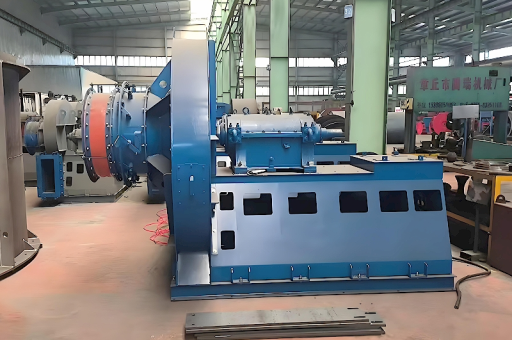
A single inlet centrifugal blower draws air axially from one side and discharges it radially. For foundry furnace applications, the design is heavily modified:
- Housing: Typically fabricated from heavy-gauge carbon steel or, for higher temperatures, stainless steel (304/316). The scroll shape is optimized to reduce turbulence and noise.
- Impeller: The most critical component. Foundry blowers use backward-curved blades (often airfoil or flat-plate) to handle high static pressures (up to 30-50 kPa) while minimizing particle impact on the blade surface.
- Single Inlet vs. Double Inlet: The single inlet design is preferred where space is constrained (e.g., side-mounted on a furnace) or where gas flow from one direction needs to be isolated. It also simplifies sealing against hot gases.
Key Insight: Many foundries mistakenly use a standard HVAC fan. This fails because the motor bearings, shaft seals, and blade tips are not designed for particulate erosion. A true material handling fan incorporates a robust shaft diameter and oversized bearings to handle dynamic loads.
Material Handling Challenges in High-Temperature Foundry Environments
The material handling fan in a foundry faces three distinct enemies:
- Thermal Stress: Sudden temperature spikes (e.g., during furnace charging) can warp the impeller if the metal is not stabilized. High-grade fan alloys are stress-relieved to prevent cracking.
- Abrasive Wear: Unburned coke particles, sand, and metal fines enter the gas stream. At velocities of 20-30 m/s, these particles act like sandpaper on the impeller leading edge.
- Corrosion: Moisture and sulfur compounds from certain melting processes can accelerate chemical attack on the fan housing.
Engineering Solution: The leading edge of the impeller blades is often coated with tungsten carbide or ceramic epoxy. The housing's interior may feature replaceable wear plates made of AR400 or AR500 steel, which can be swapped out every 6-12 months without replacing the entire blower.
Why Wear Resistance is Non-Negotiable for Foundry Fan Longevity
A wear resistant fan is not a luxury; it is a safety and economic necessity. Consider the following industry data:
- Typical failure mode: Imbalance due to uneven blade erosion, leading to bearing failure or shaft breakage.
- Cost of downtime: For a mid-sized grey iron foundry, an unplanned fan outage can cost $5,000–$15,000 per hour in lost production.
- Replacement frequency: A standard uncoated fan may last 3-6 months in a high-abrasion environment. A properly wear-protected fan (with hardfacing and liners) can last 2-4 years.
Key Wear Protection Technologies:
- Hardfacing Welds: Applied to blade edges using flux-cored wires (e.g., chromium carbide).
- Ceramic Tile Liners: Adhered to the housing at the "cut-off" area (the point of maximum turbulence).
- Vortex Shedding Prevention: Some advanced designs incorporate a spiral inlet to reduce particle velocity before impact.
Key Engineering Features: From Abrasion Liners to Impeller Design
When specifying a single inlet centrifugal blower for a furnace, look for these non-negotiable features:
| Feature | Purpose | Typical Specification |
|---|---|---|
| Replaceable Wear Liners | Protect housing from abrasion | AR400 steel, 12-25 mm thick |
| Backward-Curved Impeller | Higher efficiency, lower particle impact | 12-16 blades, airfoil profile |
| Shaft Seals | Prevent hot gas leakage | Air purge labyrinth seal |
| Drain Holes | Remove condensed moisture | At lowest point of scroll |
| Base Plate & Vibration Dampers | Minimize structural fatigue | Spring-mounted steel frame |
Pro Tip: Always request a no-load run test from the manufacturer (fan). This checks for critical speed resonance and balance. A fan that vibrates at idle will fail rapidly in service.
Performance Metrics: Airflow, Pressure, and Efficiency Trade-offs
Selecting the material handling fan requires balancing three variables:
- Airflow (CFM / m³/h): Must match furnace combustion requirements. A typical cupola furnace requires 50-100 m³ per ton of metal melted.
- Static Pressure (Pa / in. w.g.): Must overcome filter drag, ductwork losses, and furnace backpressure. Foundry fans often operate at 50-70% of their peak pressure to allow a safety margin.
- Efficiency (%): A high-efficiency fan (≥75%) reduces energy costs, but wear-resistant designs (with thicker blades) often drop efficiency by 2-5%. This trade-off is acceptable for longer uptime.
Example Calculation: For a 5-ton induction furnace, a fan with a flow rate of 25,000 m³/h and a pressure of 4,000 Pa is typical. The motor power needed is approximately 55-75 kW.
Q&A: Common Practical Questions from Foundry Engineers
Q1: Can I use a standard centrifugal fan for my foundry furnace if I add a cyclone pre-filter? A: Partially. A cyclone removes large particles but not fine abrasive dust (under 10 microns). Even with a pre-filter, the fan impeller must still be wear resistant - otherwise, fine particles will erode the blade trailing edge within 6 months.
Q2: What is the most common cause of bearing failure in foundry blowers? A: Heat radiation from the furnace and misalignment. Many fans fail because the bearing pedestal is mounted too close to the hot casing. Use insulated mounting brackets and consider remote bearing pedestals for high-temp applications.
Q3: How often should I inspect the wear liners? A: Schedule an internal inspection (using a borescope or by removing the side access panel) every 1,000 operating hours. If the liner is worn to 50% of its original thickness, replace it immediately. Never wait until it perforates.
Q4: Is a variable-frequency drive (VFD) recommended for a foundry material handling fan? A: Yes, but with caution. VFDs reduce starting stress and allow precise airflow control. However, ensure the VFD is derated for the motor at low speeds (to prevent overheating) and that the fan does not operate near its critical speed (where resonance occurs).
Q5: What is the difference between a "mill exhaust" fan and a "foundry furnace" fan? A: A mill exhaust fan is designed for air with lower temperature (under 150°C) and moderate dust load. A foundry furnace fan must handle higher temperature (200-350°C) , higher particulate concentration, and frequent thermal cycling. The impeller material is typically heat-treated alloy steel rather than standard mild steel.
Q6: What is the best way to seal the shaft penetration against hot gas leakage? A: A air-purge labyrinth seal is the industry standard. It uses compressed air (at 50-100 kPa) to create a positive pressure barrier inside the sealing chamber. This prevents both hot gas escape and the ingress of ambient dust into the bearing housing.
Conclusion: Selecting the Right Fan for Your Foundry Furnace
The foundry furnace single inlet centrifugal blower is a critical, high-wear component that directly impacts melting efficiency and plant uptime. To maximize durability:
- Never compromise on wear resistance. Invest in hardfaced impellers, ceramic liners, or both.
- Match the fan to your material. Analyze your gas stream for particle size, composition, and temperature.
- Plan for maintenance. Choose a design with replaceable wear parts and easy access panels.
- Consult the manufacturer early. A fan built for "material handling" is not the same as one built for a foundry furnace.
By integrating these principles into your selection and maintenance strategy, your foundry can achieve 3–5x longer fan life, lower energy costs, and significantly reduced unscheduled downtime.
For more technical specifications or to request a custom fan quote, consult a specialized foundry fan manufacturer. Always prioritize genuine wear-resistant components for long-term reliability.





