
This article's table of contents introduction:
- The Application: Coal Injection (PCI) Material Handling
- The Material: HG785 Alloyed Steel
- The Type: Backward Centrifugal Fan
- Potential Design & Operational Concerns
- Summary: What this Fan is
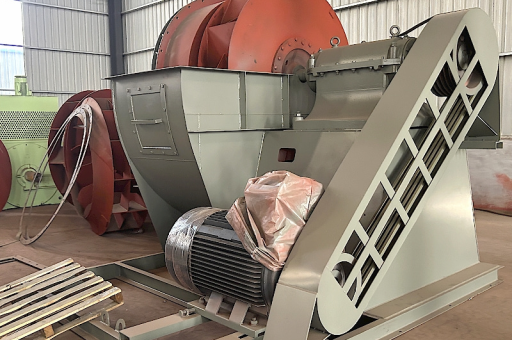
This is a highly specific piece of industrial equipment. Let's break down what you are describing, as it combines a specific application (Coal Injection), a material (HG785 Alloyed Steel), and a fan type (Backward Centrifugal Fan).
Here is a detailed analysis of the "Coal Injection Material Handling Blower HG785 Alloyed Steel Backward Centrifugal Fan."
The Application: Coal Injection (PCI) Material Handling
- What it is: In blast furnaces (steelmaking), Pulverized Coal Injection (PCI) is a process where finely ground coal is injected directly into the furnace.
- The Fan's Role: A blower (fan) is required to:
- Convey: Pneumatically transport the pulverized coal dust from storage to the injection lances.
- Pressurize: Overcome the pressure inside the blast furnace (often 4-8 bar / 60-120 psi at the injection point).
- Provide a Continuous, Stable Flow: Any fluctuation can disrupt the furnace's heat balance.
- Key Requirement: This is not a simple ventilation fan. It is a heavy-duty, high-pressure process fan designed for a highly abrasive, explosive, and corrosive environment.
The Material: HG785 Alloyed Steel
- What it is: HG785 is a high-strength, low-alloy (HSLA) structural steel, commonly used in China and other markets. It's roughly equivalent to materials like A514 (US) or S690QL (European).
- Yield Strength: ~690 MPa (100,000 psi)
- Tensile Strength: 785 MPa (114,000 psi)
- Why it's used for this fan:
- High Pressure Tolerance: The fan wheel (impeller) spins at very high speeds to generate the required pressure. Centrifugal forces are immense. HG785 can handle the stress without deforming.
- Abrasion Resistance (with caveats): While HG785 is tough, it is not inherently "wear-resistant" like a manganese steel (Hadfield). However, its high strength allows the impeller to be made thinner and lighter, reducing stress. It is often used as a base material for the impeller, which is then lined or coated with a harder wear-resistant material (e.g., ceramic tiles, tungsten carbide overlays, or hardfacing).
- Fatigue Life: Handling a continuous, high-pressure flow of coal dust causes cyclical stress. HG785 offers excellent fatigue resistance compared to mild steel.
The Type: Backward Centrifugal Fan
This is the most critical design feature. There are three main types of centrifugal fan blades: Forward Curved, Radial, and Backward Curved. For PCI, Backward Curved (or Backward Inclined) is the standard.
- How it works: Blades are curved away from the direction of rotation (leaning backward).
- Performance Curve: These fans have a "non-overloading" power curve. This means that as system pressure drops or airflow increases, the motor's power draw peaks and then decreases. This prevents the motor from burning out if the filter gets clogged or the pipeline opens up.
- Efficiency: Backward curved fans are the most efficient type of centrifugal fan (up to 85-90%).
- Advantages for PCI:
- High Static Pressure: Excellent for overcoming the resistance of long pipe runs and the blast furnace back-pressure.
- Stable Operation: The flat power curve makes them ideal for variable flow systems (using a VFD - Variable Frequency Drive).
- Lower Noise & Vibration: Compared to radial-blade fans.
Potential Design & Operational Concerns
The Elephant in the Room: Erosion
- Problem: Coal dust is extremely abrasive. The impeller blades, backplate, and housing will erode rapidly if not protected.
- Solution (for HG785): The HG785 impeller would almost certainly be:
- Thick-Section: Designed with a sacrificial thickness.
- Wear-Lined: The key wear areas (leading edges of blades, shroud, housing near the cut-off) would be lined with ceramic tiles, cast basalt, or a thick layer of tungsten carbide / hardfacing weld overlay.
- Replaceable Liners: The housing might have bolted-in, replaceable wear plates.
Explosion Risk
- Concern: Coal dust is explosive (Kst value, Pmax).
- Fan Design:
- The fan housing must be designed as a pressure shock-resistant or explosion-proof enclosure (e.g., ATEX, IECEx certified).
- It should have explosion relief panels or a design that contains a deflagration.
- Spark-proofing: The impeller and housing must be designed to avoid sparking (no aluminum/light alloy parts rubbing on steel). Copper or beryllium-copper tools might be used for maintenance.
Sealing & Bearings
- Shaft Seal: A labyrinth or carbon ring seal is needed to prevent coal dust from leaking out along the shaft and contaminating the bearings.
- Bearing Housing: Heavy-duty, split pillow-block bearings with vibration monitoring and temperature sensors (RTDs/thermocouples) are standard.
Summary: What this Fan is
A high-pressure, high-tensile steel backward-curved centrifugal blower, specifically engineered for pneumatic conveying of abrasive pulverized coal in a potentially explosive environment.
Its key selling points would be:
- High Efficiency: Lower energy costs over time.
- Non-Overloading Power Curve: Protects the motor.
- High Strength-to-Weight Ratio (from HG785): Allows for a high-speed, high-pressure impeller design.
- Durability: Based on the wear protection applied (not just the base steel).
For Procurement / Specification, you would need to ask:
- What is the specific wear protection used on the HG785 impeller? (Ceramic tiles? Carbide overlay? Thickness in mm?)
- What is the maximum allowable working pressure (MAWP) and the explosion pressure rating? (e.g., 1 bar overpressure, 3.5 bar explosion containment?)
- Is the fan designed for a Variable Frequency Drive (VFD)? (Almost certainly yes for PCI.)
- What is the specified flow rate (m³/hr or CFM) and static pressure (mmWG, kPa, or psi)?





