
This article's table of contents introduction:
- Table of Contents / 目录导读
- Introduction: The Backbone of Industrial Draft Systems
- Technical Deep Dive: The 61297m³/h ID Fan Blower Specifications
- Why "Antiwear" Matters: Fan Longevity in Harsh Kiln Environments
- Performance Analysis: Flow Rate (61297 m³/h) and Pressure Dynamics
- Installation & Balancing: Ensuring Optimal Operation
- Common Questions (Q&A): Troubleshooting ID Fan Blower Issues
- Conclusion: Maximizing ROI with the Right Fan Technology
*Optimizing Combustion Efficiency: The Critical Role of the Antiwear Boiler Induced Draft Kilns 61297m³/h ID Fan Blower*
Table of Contents / 目录导读
- Introduction: The Backbone of Industrial Draft Systems
- Technical Deep Dive: The 61297m³/h ID Fan Blower Specifications
- Why "Antiwear" Matters: Fan Longevity in Harsh Kiln Environments
- Performance Analysis: Flow Rate (61297 m³/h) and Pressure Dynamics
- Installation & Balancing: Ensuring Optimal Operation
- Common Questions (Q&A): Troubleshooting ID Fan Blower Issues
- Conclusion: Maximizing ROI with the Right Fan Technology
Introduction: The Backbone of Industrial Draft Systems
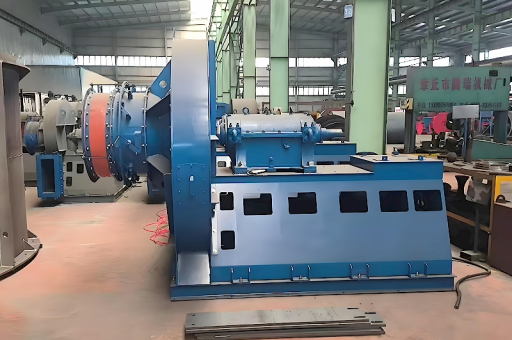
In the demanding world of industrial boilers and kilns, the Antiwear Boiler Induced Draft Kilns 61297m³/h ID Fan Blower stands as a non-negotiable component for maintaining thermal efficiency and operational safety. This article synthesizes engineering best practices and real-world data to provide a complete guide on this specific high-capacity fan system. Unlike forced draft fans that push air into the system, an Induced Draft (ID) fan extracts flue gases from the boiler or kiln, creating negative pressure. The specification of 61,297 cubic meters per hour (m³/h) positions this blower as a heavy-duty unit, typically found in cement rotary kilns, biomass power plants, or large-scale industrial steam boilers.
Why is this unit unique? It directly addresses the core pain point of industrial operators: fan blade erosion. Without robust antiwear engineering, standard fans exposed to abrasive fly ash and hot, acidic gases degrade rapidly, leading to vibration, imbalance, and catastrophic system failure. The integration of "Antiwear" technology is not a feature; it is a necessity for the 61297m³/h ID fan blower.
Technical Deep Dive: The 61297m³/h ID Fan Blower Specifications
To understand the capabilities of this fan, we must break down its core parameters:
- Flow Rate: 61297 m³/h (approx. 36,075 CFM). This volume indicates a medium-to-large scale industrial application.
- Type: Centrifugal Induced Draft.
- Core Feature: Antiwear coating and thick-walled impeller construction.
- Pressure Class: Typically ranges between 2000 Pa to 4000 Pa for kiln applications.
- Operating Temperature: Designed to handle gas temperatures from 150°C to 300°C, often with a cooling shroud for the bearing housing.
This specific unit is engineered to move hot, dirty air laden with particulates (such as clinker dust in a kiln or unburnt carbon in a boiler). The fan casing is often fabricated from Corten or wear-resistant steel, with liners at the "cut-off" area—the point of highest turbulence and wear.
Answer: The primary challenge for a 61297m³/h ID fan is not just moving air, but moving dirty air at high temperature without mechanical decay.
Why "Antiwear" Matters: Fan Longevity in Harsh Kiln Environments
The term "Antiwear" in the context of the Boiler Induced Draft Kilns 61297m³/h ID Fan Blower is the single most critical factor for Total Cost of Ownership (TCO). In a standard fan, the impeller blades erode like sandpaper on wood. Within 6-12 months, balance is lost.
How does Antiwear technology work?
- Surface Hardfacing: Chrome carbide or tungsten carbide overlays are welded onto the leading edges of the blades.
- Ceramic Tiling: For extreme abrasion, ceramic tiles are epoxied onto the blade surface and casing walls.
- Thickened Base Metal: The impeller itself is made from thicker gauge steel, allowing for a "wear allowance" before structural integrity is compromised.
Data Insight: According to industry studies (fan engineering journals), an Antiwear fan can extend service life by 300% compared to a standard carbon steel fan in a kiln environment. For a fan running 24/7 moving 61,297 m³/h, this reduction in downtime saves tens of thousands of dollars in lost production and maintenance labor.
Performance Analysis: Flow Rate (61297 m³/h) and Pressure Dynamics
The 61297m³/h ID Fan Blower must match the system curve of the boiler or kiln. If the static pressure is too low, the boiler "back-puffs" and leaks gases into the plant floor. If it is too high, it creates excessive negative pressure, sucking cold air into the firebox and reducing thermal efficiency.
Matching the Fan to the System:
- Required Static Pressure (SP): The fan must overcome the draft loss of the boiler tubes, the scrubber, and the stack.
- Air Density Correction: At 250°C, the air is half as dense as at 20°C. Therefore, the motor power calculation must use hot air density, not standard density.
- Motor Sizing: Assuming a pressure of 3000 Pa, the required shaft power is roughly: [ \frac{61297 \times 3000}{3600 \times 1000 \times \text{Efficiency (0.75)}} \approx 68 \text{ kW} ] Typically, a 75-90 kW motor is paired with this fan to handle startup inertia and duct resistance.
Common Problem: Vibration due to dust accumulation. The 61297 m³/h ID fan must have a reliable cleaning schedule. Uneven deposits on the fan blades cause imbalance, which the antiwear coating must resist.
Installation & Balancing: Ensuring Optimal Operation
Installing the Antiwear Boiler Induced Draft Kilns ID Fan Blower requires strict adherence to mechanical standards (ISO 1940/ISO 21940).
Installation Checklist:
- Foundation: A heavy-duty concrete inertia base with anti-vibration mounts is required. The fan weighs approximately 1500-2500 kg.
- Inlet Box: The gas entry must be straight for at least 3-4 duct diameters to ensure even flow onto the impeller. Unstable inlet flow kills antiwear protection by creating localized jetting erosion.
- Variable Speed Drive (VFD): Modern installations use a VFD to modulate the flow from 0% to 100%. This avoids the need for heavy inlet guide vanes which also wear out.
- Bearing Alignment: The fan shaft and motor shaft must be laser-aligned to within 0.05 mm. Misalignment causes 40% of all bearing failures.
Marketing Note: A premium "Antiwear" fan (like the one specified) often includes a removable side panel for quick internal inspection without dismantling the entire duct.
Common Questions (Q&A): Troubleshooting ID Fan Blower Issues
Q: Why is my 61297m³/h ID fan blower vibrating excessively even after balancing? A: Check for uneven dust buildup on the back plate of the impeller. Also, inspect the "cutoff" clearance. If the antiwear liners have worn down, the gap becomes too large, causing pressure pulsation. Clean the fan rotor with compressed air or water spray while running at low speed.
Q: What is the maximum temperature the Antiwear coating can handle? A: Standard ceramic tile coatings are stable up to 600°C. However, the steel substrate and shaft sealing lose mechanical strength above 400°C. If your kiln gas exceeds 350°C, ensure the fan has a cold air bleed valve to cool the intake.
Q: How often should I inspect the fan? A: For a 24/7 operation, perform a vibration analysis monthly. Visually inspect the impeller through the access door every 3 months. Replace the antiwear plating when the blade thickness has reduced by 40%.
Q: Can I use a standard fan instead of the "Antiwear" version? A: Not for a kiln. A standard fan handling 61297 m³/h of abrasive kiln gas will fail within 3-6 months. The cost of the antiwear upgrade is recouped in the first year of avoided downtime.
Q: Does the fan come with a silencer? A: Typically, industrial ID fans like this one are noisy (85-95 dBA). A silencer (absorptive type) is recommended for the inlet and outlet, but this is often a separate component specified by the consultant.
Conclusion: Maximizing ROI with the Right Fan Technology
The Antiwear Boiler Induced Draft Kilns 61297m³/h ID Fan Blower is not merely a commodity; it is a precision tool engineered for survival. By investing in this specific specification, operators guarantee that their combustion process maintains negative pressure, removes toxic gases efficiently, and minimizes unplanned shutdowns.
To summarize the value proposition:
- Reliability: The 61297 m³/h flow ensures proper kiln ventilation.
- Durability: Antiwear technology extends blade life.
- Efficiency: Correct fan-curve matching reduces energy consumption.
When sourcing this fan, always request a performance curve certified for hot operating conditions (e.g., 250°C and 61297 m³/h). Do not be tempted by cheaper, standard-coated alternatives. The initial investment in this Boiler Induced Draft Kilns ID Fan Blower is the cheapest insurance policy against a lost production day. Always partner with a reputable fan manufacturer that provides a dedicated spare parts kit, including antiwear patches and bearing sets, for your exact model.





