
This article's table of contents introduction:
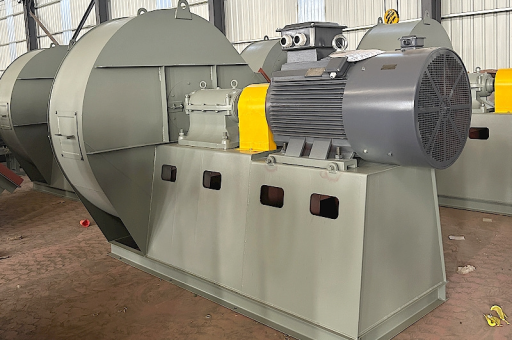
- Table of Contents
- Introduction: The Backbone of Industrial Air Management
- Deconstructing the Three Key Specifications
- Critical Applications: Where This Fan Excels
- Frequently Asked Questions (FAQ)
- Conclusion: Future-Proofing Your Ventilation System
*Maximizing Industrial Ventilation: The Ultimate Guide to High Air Flow Heavy Duty Abrasion Proof 380V Induced Draught Fans*
Table of Contents
- Introduction: The Backbone of Industrial Air Management
- What is an Induced Draught Fan? (Core Definition & Function)
- Deconstructing the Three Key Specifications
- 1 High Air Flow (CFM / m³/h)
- 2 Heavy Duty & Abrasion Proof Construction
- 3 The 380V Power Standard
- Why Choose a 380V Induced Draught Fan Over Alternatives?
- Critical Applications: Where This Fan Excels
- Selection Criteria: How to Buy the Right Model
- Installation, Maintenance & Safety Best Practices
- Frequently Asked Questions (FAQ)
- Conclusion: Future-Proofing Your Ventilation System
Introduction: The Backbone of Industrial Air Management
In heavy industrial environments—from steel foundries and cement plants to chemical processing units and mining tunnels—air quality is not a luxury; it is a safety and productivity necessity. Stagnant air laden with dust, fumes, heat, and particulate matter can lead to equipment failure, regulatory fines, and severe health risks for workers.
This is where the High Air Flow Heavy Duty Abrasion Proof 380V Induced Draught Fan enters the picture. It is not a generic exhaust fan; it is a mission-critical piece of machinery engineered to withstand the harshest conditions while moving massive volumes of air against significant resistance. This guide will dismantle every aspect of this fan—from its technical anatomy to real-world application—to help engineers and facility managers make informed, cost-effective decisions.
Key Insight: An induced draught fan works by creating a negative pressure at the outlet of a system (such as a boiler or dust collector), effectively "pulling" air and contaminants through the ductwork. This design is superior for high-temperature and high-dust applications compared to forced draught systems.
Deconstructing the Three Key Specifications
1 High Air Flow (CFM / m³/h)
"High air flow" is a relative term, but in the context of a 380V industrial fan, we are typically discussing volumes exceeding 50,000 m³/h (approx. 30,000 CFM) . This is achieved through a combination of:
- Large Impeller Diameter: Typically 800mm to 1600mm or more.
- Aerodynamic Blade Design: Backward-curved or radial-tipped blades that minimize turbulence and maximize static pressure conversion.
- High RPM Motor: A powerful motor capable of driving the impeller at speeds generating a high volumetric flow rate.
2 Heavy Duty & Abrasion Proof Construction
This is the most critical differentiator from a standard commercial fan. An abrasion-proof fan is built to survive:
- Material: The impeller (wheel) and housing are typically fabricated from Hardox® steel or manganese steel (Hadfield steel), or coated with a 10-15mm thick layer of ceramic or tungsten carbide. Some designs use a replaceable wear liner.
- Thickness: The steel gauge is significantly thicker (6mm-12mm) than a standard fan.
- Seals: Shaft seals are reinforced to prevent dust ingress into bearings, which would cause catastrophic failure.
- Balance: After welding, the impeller is dynamically balanced to G6.3 or G2.5 grade to ensure vibration-free operation even with imbalanced dust loading.
3 The 380V Power Standard
The 380V designation refers to the three-phase AC power supply (typically 50Hz or 60Hz depending on the region). Why 380V over 220V or 480V?
- Motor Efficiency: Three-phase motors are inherently more efficient and powerful per unit size than single-phase motors.
- Industrial Standard: 380V is the standard industrial voltage in many global markets (Europe, Asia, parts of Africa), ensuring easy integration with existing plant infrastructure.
- Starting Torque: A 380V induction motor (often equipped with a star-delta or VFD starter) provides high starting torque to overcome the inertia of a heavy, large-diameter impeller.
Real-World Example: A steel mill uses a 380V, 110 kW induced draught fan to pull 150,000 m³/h of air from an electric arc furnace (EAF). The air contains iron oxide particles at 120°C. Without the abrasion-proof impeller (hardox steel with 8mm thickness), the blades would erode within 6 months. With it, the service interval extends to 24 months.
Critical Applications: Where This Fan Excels
- Cement Plants: Clinker coolers, kiln exhaust, and raw mill baghouse systems.
- Metal Processing: Ferrous and non-ferrous smelting, steel ladle refining, and scrap melting.
- Chemical & Petrochemical: Fume extraction from reactors, dryers, and spray towers.
- Power Generation: Boiler induced draft (ID fans) for coal or biomass-fired plants.
- Mining & Quarrying: Ventilation of crushing stations, conveyor transfer points, and vibrating screens.
- Waste Incineration: Gas extraction from combustion chambers.
Abrasion proofing is mandatory when the dust load exceeds 50 mg/Nm³ and contains silica, iron oxide, or other hard minerals.
Frequently Asked Questions (FAQ)
Q1: What is the primary difference between an Induced Draught (ID) fan and a Forced Draught (FD) fan? A: An ID fan is located at the end of the system (after the boiler, kiln, or dust collector). It pulls air through the system, creating negative pressure. An FD fan is at the beginning, pushing air into the system. For hot, abrasive gas streams, an ID fan is the safer choice because it handles gas that has already lost some heat and contaminants.
Q2: Can I use a standard exhaust fan instead of a heavy-duty abrasion proof fan? A: No. Standard fans (e.g., roof ventilators) have thin, lightweight blades. In a dust-laden environment, they will:
- Erode rapidly (blade failure in weeks).
- Become unbalanced from uneven material buildup.
- Overheat the motor due to lack of cooling in a harsh atmosphere. A heavy-duty fan is an engineered asset, not a commodity.
Q3: How do I know if 380V is the right voltage for my facility? A: Check your facility's low-voltage distribution system. If you have three-phase power and your motor specification reads "380V ±10%, 50 Hz", this is correct. If you are in a 480V country (e.g., USA, Canada), you will need a 460V model and a step-down transformer, or a dual-voltage motor. Always consult a licensed electrician.
Q4: What is the typical lifespan of an abrasion-proof impeller in a cement plant? A: With proper maintenance and regular inspections, a high-quality Hardox® or ceramic-lined impeller can last 3 to 5 years before requiring replacement of the blades or wear liners. This contrasts with standard steel impellers, which may fail in 6 to 12 months.
Q5: Should I use a Variable Frequency Drive (VFD) with this fan? A: Highly recommended. A VFD allows you to modulate the fan speed to match actual air demand, saving significant energy (up to 30-40%) and reducing mechanical wear. It also allows for soft starting, eliminating high inrush currents.
Q6: What causes a fan vibration? How do I prevent it? A: Common causes:
- Erosion/Uneven wear on blades (most common in abrasive service).
- Material buildup on the backplate or blades.
- Bearing wear (due to dust ingress).
- Rotor imbalance. Prevention: Conduct monthly vibration analysis using an accelerometer. Clean the impeller with a pneumatic hammer (if allowed) or manual scraping during scheduled downtime. Install dust barriers on the shaft.
Conclusion: Future-Proofing Your Ventilation System
Investing in a High Air Flow Heavy Duty Abrasion Proof 380V Induced Draught Fan is not just about moving air; it is about safeguarding capital equipment, ensuring regulatory compliance, and protecting the health of your workforce.
When selecting your fan:
- Demand a wear test from the manufacturer (e.g., ASTM G65) for the impeller material.
- Insist on a VFD-ready motor to save energy for decades.
- Choose a fan supplier with a local service center for parts (impellers, bearings, seals).
The upfront cost of a true heavy-duty unit is 2-3 times higher than a standard fan. However, the Total Cost of Ownership (TCO), factoring in downtime, emergency repairs, and safety incidents, proves that quality and durability are the only economical choice in the long run. For any facility that handles dust, heat, and bulk materials, this fan is not an option—it is the standard.
For technical specifications, quotes, or engineering consultation, please contact your local fan industrial ventilation specialist.





