
This article's table of contents introduction:
- Table of Contents
- Introduction to the Single Suction V-Belt Driven 16Mn Cement Fan
- Key Structural Features and Material Selection
- Working Principle and Performance Characteristics
- Typical Applications in the Cement Industry
- Advantages Over Direct-Drive and Other Fan Types
- Installation and Operational Best Practices
- Common Problems, Troubleshooting, and Maintenance
- Frequently Asked Questions (FAQ)
- Conclusion and Future Trends
** The Comprehensive Guide to Single Suction V-Belt Driven 16Mn Cement Fan: Design, Applications, and Maintenance
Table of Contents
- Introduction to the Single Suction V-Belt Driven 16Mn Cement Fan
- Key Structural Features and Material Selection
- Working Principle and Performance Characteristics
- Typical Applications in the Cement Industry
- Advantages Over Direct-Drive and Other Fan Types
- Installation and Operational Best Practices
- Common Problems, Troubleshooting, and Maintenance
- Frequently Asked Questions (FAQ)
- Conclusion and Future Trends
Introduction to the Single Suction V-Belt Driven 16Mn Cement Fan
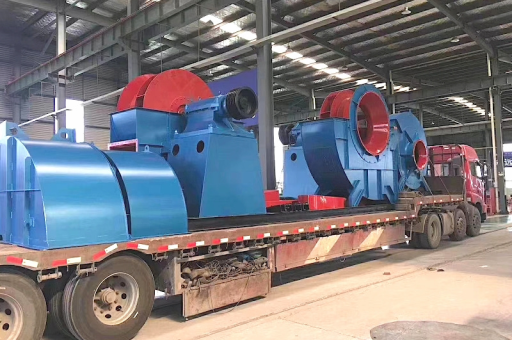
The Single Suction V-Belt Driven 16Mn Cement Fan represents a highly specialized industrial fan designed to meet the demanding requirements of cement production lines. Engineered for high-efficiency material handling and ventilation, this fan type is built with a single-sided air intake (single suction) and uses a V-belt transmission system to transfer mechanical power from the motor to the impeller. The “16Mn” designation refers to the high-quality low-alloy structural steel used in constructing critical components, such as the impeller. This material offers superior mechanical properties, including high tensile strength and excellent wear resistance, which are essential for handling abrasive cement dust and high-temperature gas streams.
Unlike generic industrial fans, the Single Suction V-Belt Driven 16Mn Cement Fan is tailored to operate in harsh environments where dust loading is high and continuous operation is non-negotiable. Its design philosophy balances aerodynamic efficiency with mechanical reliability, ensuring energy savings and extended service life in cement plants, clinker coolers, and raw mill exhaust systems.
Key Structural Features and Material Selection
The structural integrity of this fan comes from its deliberate engineering choices:
- Impeller: The core of the fan is made from 16Mn steel (equivalent to Q345B or ASTM A572 Grade 50), which provides a yield strength of approximately 345 MPa. The impeller blades are typically backward-curved or radial-tipped, depending on the required pressure and flow characteristics. The material’s excellent weldability and impact resistance minimize fatigue cracking.
- Casing: Constructed from welded carbon steel or reinforced 16Mn plate, the scroll-shaped casing ensures minimal flow losses. The casing is often lined with replaceable wear-resistant plates in high-impact areas.
- V-Belt Drive System: The V-belt arrangement allows for speed variation by changing pulley diameters. This flexibility is crucial for adjusting fan performance without replacing the motor. The belts are usually multi-groove (SPB or SPC profiles) for high power transmission efficiency.
- Shaft and Bearings: The shaft is machined from high-strength alloy steel, supported by heavy-duty spherical roller bearings housed in robust bearing frames. Grease or oil lubrication systems are available for high-temperature service.
- Single Suction Inlet: The single-sided air intake enables compact axial space while maintaining high volumetric flow. The inlet often features a bell-mouth or venturi-shaped cone to reduce turbulence and entry losses.
Working Principle and Performance Characteristics
The fan operates under the principle of forced draft or induced draft. The motor drives the V-belts, which rotate the impeller at a chosen speed. As the impeller spins, centrifugal force pulls air into the single suction inlet, accelerates it radially through the blades, and discharges it at a higher static pressure.
Key performance metrics and characteristics include:
- Flow Range: Typically from 10,000 m³/h to 500,000 m³/h, depending on size.
- Static Pressure: Ranges from 500 Pa to 8,000 Pa; high-pressure variants for kiln applications.
- Efficiency: Optimized for up to 82–85% total efficiency at the design point.
- Temperature Resistance: Designed for operation from 20°C up to 350°C with appropriate bearing and shaft cooling.
- Noise Control: V-belt drives reduce high-speed motor noise compared to direct-drive setups, though proper silencers may still be required.
Typical Applications in the Cement Industry
The Single Suction V-Belt Driven 16Mn Cement Fan is essential for multiple stages in cement manufacturing:
- Raw Mill Exhaust System: Removing hot gas and dust from the raw material grinding mill.
- Clinker Cooler Ventilation: Supplying cooling air and venting excess heat for clinker handling.
- Kiln Induced Draft (ID): Maintaining negative pressure in the kiln to control combustion.
- Cement Mill Dust Collection: Providing suction for bag filters or electrostatic precipitators.
- Conveying and Pneumatic Transport: Moving powder cement and granular materials.
Its ability to handle particulate-laden air with minimal erosion damage is a key reason for its adoption over standard fans in these applications.
Advantages Over Direct-Drive and Other Fan Types
Comparing with direct-drive or belt-driven fans made from standard materials, the Single Suction V-Belt Driven 16Mn Cement Fan offers distinct benefits:
- Speed Flexibility: V-belt systems allow quick pulley ratio changes, enabling flow adjustments without replacing the motor or fan. Direct-drive fans require expensive VFDs for speed control.
- Shock Absorption: The V-belts dampen torsional vibrations from the motor, protecting the fan impeller from sudden mechanical shocks.
- Material Durability: The 16Mn steel impeller withstands high centrifugal stresses and abrasive wear far longer than ordinary carbon steel.
- Cost-Effective Torque: For applications requiring moderate speed reduction, V-belt drives are more economical than gears or variable-frequency drives.
- Maintenance Simplicity: Belt replacement is straightforward compared to bearing or coupling repairs on direct-drive fans.
Installation and Operational Best Practices
Improper installation can negate the fan’s advantages. Follow these guidelines for optimum performance:
- Foundation: Use reinforced concrete foundations with vibration isolation pads.
- Alignment: Ensure motor and fan pulley grooves are perfectly aligned using a straight edge or laser alignment tool. Misalignment causes belt wear and shaft vibration.
- Belt Tensioning: Adjust belts to manufacturer-recommended initial tension (typically deflection of 10–15 mm per meter span). Over-tensioning shortens bearing life; under-tensioning causes slip and overheating.
- Inlet Conditions: Install a – and V-Belt Drive – clean air intake hood with a metal mesh filter to prevent large debris ingestion.
- Ductwork: Ensure duct connections are free of sharp bends or sudden expansion that could reduce efficiency.
Regularly inspect belts for cracking or glazing, and monitor bearing temperatures using infrared thermometers.
Common Problems, Troubleshooting, and Maintenance
Despite its robust design, issues can arise. Solve them systematically:
| Problem | Likely Cause | Suggested Fix |
|---|---|---|
| Excessive vibration | Imbalance (dust buildup on impeller) | Clean blades; re-balance impeller if needed. |
| Motor overheating | Overloaded belt drive (belt too tight) | Re-tension belts; verify fan load factors. |
| Reduced air flow | Belt slipping or broken | Inspect/replace belts; increase tension. |
| Bearing noise or failure | Poor lubrication or misaligned shaft | Replace bearing; realign drive system. |
| Impeller erosion | High dust concentration | Add wear liners; or upgrade to faced blades. |
Preventive Maintenance Schedule:
- Weekly: Check belt tension and visual wear.
- Monthly: Inspect bearing vibration levels (velocity < 4.5 mm/s recommended).
- Quarterly: Clean impeller and inspect casing thickness.
- Annually: Replace belts, service bearings, and conduct dynamic balancing.
Frequently Asked Questions (FAQ)
Q1: Why is 16MN steel preferred for cement fan impellers? A: 16MN has superior strength and wear resistance compared to standard Q235 carbon steel. It can withstand the high centrifugal forces and abrasive impact of cement dust, significantly extending the fan’s operational life.
Q2: Can I convert a direct-drive fan to a V-belt drive system? A: Yes, but it requires replacing the motor base, adding a pulley on the motor shaft, installing a pillow block bearing, and re-calculating the fan speed-pressure curve. Consult the manufacturer for a safe conversion.
Q3: What is the maximum temperature this fan can handle? A: Standard models operate up to 120°C continuously. With modifications like water-cooled bearings and thermal diffuser, the fan can handle temperatures up to 350°C for short periods.
Q4: How often should I change the V-belts? A: For normal 8-hour daily operation, belts last 12–18 months. In 24/7 cement plant operation, inspect monthly and replace every 6–9 months or if signs of cracking appear.
Q5: Are these fans safe for dusty environments? A: Yes. 16MN material is non-sparking under normal dry conditions. For explosive environments (e.g., coal grinding), additional spark-proofing and ATEX certification should be specified.
Conclusion and Future Trends
The Single Suction V-Belt Driven 16Mn Cement Fan remains a cornerstone of cement plant ventilation and material handling, valued for its balance of mechanical flexibility, reliability, and abrasion resistance. Its modular drive system enables cost-effective performance adjustments without major electrical upgrades.
However, the technology landscape is evolving. Future trends include:
- Smart Monitoring: Integration of IoT sensors for real-time vibration, temperature, and belt tension monitoring.
- Hybrid Drives: Combination V-belt and VFD systems for energy savings at low loads.
- Advanced Coatings: Ceramic or tungsten-carbide coatings to further extend impeller life.
- Lighter Constructing Materials: For new fans, stainless steel or composite materials may replace 16MN in reduced-dust applications.
For plant operators seeking a robust, maintainable fan that can handle heavy cement dust and temperature excursions, the Single Suction V-Belt Driven 16Mn Cement Fan remains a proven and cost-effective solution.
Note: Industry standards like IEC, AMCA, and ISO are critical to fan selection; always consult the manufacturer for site-specific performance guarantees.





