
This article's table of contents introduction:
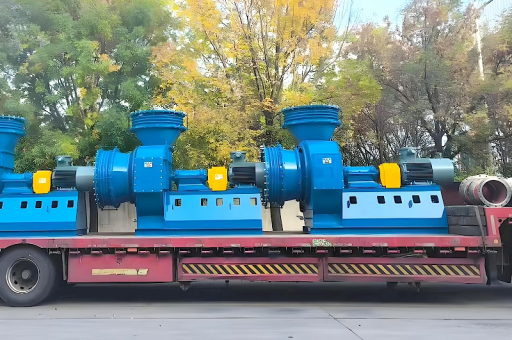
- Carbon Steel
- Single Inlet
- Explosion Proof (Explosionproof)
- Forward Power Plant Fan
- Summary: Putting It All Together
This appears to be a specification or description of a very specific type of industrial fan. Let's break down what each term means to understand the complete picture.
This is a high-power, heavy-duty fan designed for maximum safety in hazardous environments, specifically for moving large volumes of air or gas in a power plant.
Here is a detailed breakdown of each component of the description:
Carbon Steel
- Meaning: The material the fan is constructed from.
- Why it's used: Carbon steel is strong, durable, and relatively inexpensive compared to stainless steel or other alloys. It is the standard material for heavy industrial applications where corrosion resistance is not the primary concern (or where the fan is coated/painted for protection).
- In a Power Plant: Used for handling hot air, flue gas (often with particulate), or combustion air. It's suitable for temperatures up to a certain range (typically a few hundred degrees Fahrenheit/Celsius) before special alloys are needed.
Single Inlet
- Meaning: The fan wheel (impeller) only draws air in from one side.
- Why it's used: This is the standard design for a centrifugal fan of this type. Air enters axially (along the fan's shaft) from one side and is discharged radially (perpendicular to the shaft).
- Comparison: A double inlet fan draws air from both sides of the impeller, which is common for low-pressure, high-volume applications like HVAC. Single inlet is more common for higher pressures and direct duct connections.
Explosion Proof (Explosionproof)
- This is the most critical safety feature.
- Meaning: The fan is designed and built to contain an internal explosion without igniting the surrounding atmosphere. It doesn't prevent an explosion inside; it prevents that explosion from propagating outside.
- How it works:
- Robust Housing: The fan housing is heavily reinforced (thicker metal, flanged joints) to withstand internal pressure.
- Tight Clearances: The gap between the impeller and the housing is minimized to prevent sparks from escaping.
- Non-Sparking Materials (Potentially): While the housing is carbon steel, the impeller might be made of a non-sparking material like aluminum or a special alloy, or the steel impeller might have a coating. The fan shaft is well-sealed.
- Approved Motor: The motor must be a certified explosion-proof motor (e.g., UL, ATEX, IECEx certified) that is appropriately rated for the specific gas or dust group present.
- Why it's needed: In a power plant, you might have areas where flammable gases (like methane from coal, hydrogen from cooling systems) or combustible dust (coal dust) could accumulate. The fan must not be a source of ignition.
Forward Power Plant Fan
- "Forward" (or Forward Curved):
- Meaning: This describes the shape of the blades on the fan impeller. The blades curve in the direction of rotation.
- Characteristics:
- High Volume, Low Pressure: Best for moving large volumes of air against relatively low resistance (static pressure).
- Speed: Operates at lower speeds compared to other blade types (backward curved, radial).
- Power Draw: Can have a "power stall" or "overloading" characteristic – the power draw increases sharply as the system resistance drops (e.g., dampers open). This requires careful motor selection.
- "Power Plant Fan": The specific application.
- Common Uses in a Power Plant:
- Forced Draft (FD) Fan: Pushes combustion air into the boiler.
- Primary Air (PA) Fan: Provides air to transport and dry coal in pulverizers.
- Overfire Air (OFA) Fan: Supplies air for staged combustion to reduce NOx emissions.
- Common Uses in a Power Plant:
Summary: Putting It All Together
What it is: A heavy-duty, safety-critical fan used in coal, gas, or biomass power plants.
Typical Application: A Forced Draft (FD) fan or Primary Air (PA) fan for a boiler system. It draws ambient air in from one side, uses forward-curved blades to pressurize it, and pushes it into the furnace or coal mill.
Key Features & Justifications:
| Feature | Why It Matters |
|---|---|
| Carbon Steel | Strong, cost-effective material for high-temperature, abrasive environments. |
| Single Inlet | Standard design for high-pressure, duct-connected applications. |
| Explosion Proof | Critical safety requirement. Prevents an internal spark or explosion from igniting coal dust, methane, or other flammable gases outside the fan. |
| Forward Curved | Ideal for high-volume air flow against moderate pressure, typical for FD/PA fans. |
Other Names You Might Hear:
- Sirocco Fan (a common brand name for forward-curved fans)
- Centrifugal Fan (the general category)
- Arrangement 3 or Arrangement 1 (specific configurations for shaft and bearing placement)





