
This article's table of contents introduction:
- The Full Definition
- Breaking Down the Components
- How the Alloy Steel Coupling Saves Energy & Boosts Performance
- Common Types of Couplings for FD Fans
- Summary: Is it a Good Solution?
This is a highly specific request that seems to describe a piece of industrial equipment. Let's break down what this phrase means and how Alloy Steel Couplings contribute to Energy Saving in a Forced Draft (FD) Boiler Fan.
The core concept is about efficient power transmission and system reliability for a fan that is critical to boiler operation.
The Full Definition
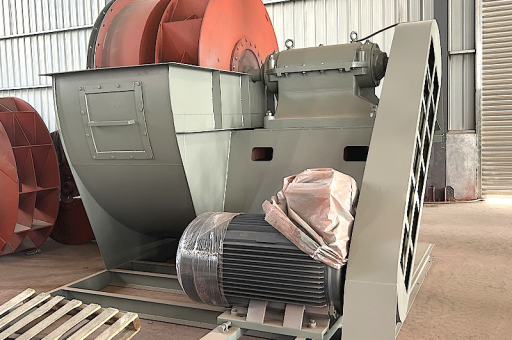
An Alloy Steel Coupling Driven Energy Saving Forced Draft Boiler Fan is a system where a high-efficiency fan, required to push combustion air into a boiler, is connected to its motor via a high-performance alloy steel coupling. This specific combination is designed to reduce energy losses, improve durability, and lower the total cost of ownership.
Breaking Down the Components
-
Forced Draft (FD) Boiler Fan: The fan that pulls air from the atmosphere and forces it under positive pressure into the boiler furnace. It’s the "lungs" of the boiler. Its energy consumption is a major operational cost.
-
Energy Saving: In this context, energy savings come from two primary places:
- Fan Efficiency: The aerodynamic design of the fan itself (e.g., backward-curved centrifugal or airfoil blades).
- Drive System (Coupling) Efficiency: Minimizing friction, misalignment, and power losses between the motor and the fan.
-
Alloy Steel Coupling: This is the mechanical link between the motor shaft and the fan shaft. Using Alloy Steel (as opposed to standard carbon steel or cast iron) is critical for the "energy saving" and "reliability" claims.
How the Alloy Steel Coupling Saves Energy & Boosts Performance
The coupling is the unsung hero of the system. Here’s why a premium alloy steel version makes a difference:
| Feature | How Alloy Steel Contributes | Energy Saving / Performance Benefit |
|---|---|---|
| High Strength-to-Weight Ratio | Alloy steel (e.g., 4140 or 4340) allows the coupling to be designed with a smaller, lighter cross-section while handling the high torque of an FD fan. | Lower inertia means the motor has to accelerate less mass during startup, reducing inrush current and energy spikes. |
| Excellent Fatigue Resistance | FD fans often have vibration and cyclic loads. Alloy steel handles this stress without cracking or deforming. | Longer maintenance intervals. A failed coupling causes unplanned downtime, which wastes massive energy in re-lighting the boiler. |
| Improved Wear Resistance | Coupling surfaces (gear teeth, grid springs, or diaphragm flex elements) experience friction. Alloy steel's hardness reduces wear. | Maintains alignment tolerance over time. Misalignment is a major source of energy loss (up to 10-15% of drive power) as it creates friction and heat. |
| Precise Tolerances | Alloy steel can be machined to tighter tolerances than cast iron. This is vital for flexible couplings (grid, diaphragm, or disc). | Lower vibration levels → less friction in bearings → lower motor current draw. |
| Heat Treatment Capability | Alloy steel can be heat-treated (quenched and tempered) to achieve specific hardness values. | Allows the coupling to be customized for the specific torque and speed of the fan, preventing "over-engineering" which adds weight and inertia. |
Common Types of Couplings for FD Fans
While the phrase doesn't specify the type, the "energy saving" aspect usually points to one of these:
- Diaphragm Coupling: Uses thin, flexible alloy steel diaphragms. Best for energy saving because it has zero moving parts, no backlash, and no need for lubrication frictional losses. It transmits torque with extremely high efficiency.
- Gear Coupling: Uses alloy steel hubs with crowned teeth meshing with a sleeve. Energy is saved through proper lubrication and high hardness steel that resists tooth wear, maintaining a tight, efficient fit.
- Grid Coupling: An alloy steel grid spring fits into slots. Energy saving comes from its torsional flexibility, which can absorb shock loads and protect the motor from current spikes.
Summary: Is it a Good Solution?
Yes, for demanding industrial applications.
- Why? A high-speed, high-power FD fan (often 100s to 1000s of HP) needs a robust, low-loss link to its motor. A premium Alloy Steel Coupling is not just a mechanical part; it is a reliability and efficiency component.
- The "Energy Saving" Truth: The coupling itself is not a magic energy generator. It saves energy by:
- Preventing misalignment losses (the biggest energy thief).
- Reducing friction and wear (maintaining peak system efficiency over time).
- Lowering system inertia (reducing startup energy).
- Increasing uptime (avoiding the massive energy waste of a boiler shutdown and restart).
Bottom Line: If you are specifying or sourcing an "Alloy Steel Coupling Driven Energy Saving Forced Draft Boiler Fan" , you are looking for a high-quality, heavy-duty system designed for maximum reliability and long-term operational savings, not just initial purchase price. The coupling is a critical, high-performance part of that equation.





