
This article's table of contents introduction:
- Table of Contents
- Introduction: What Is a Heavy Duty Stainless Steel Antiwear Metallurgy Centrifugal Flow Fan?
- Core Materials and Antiwear Metallurgy: Why Stainless Steel Matters
- Design Principles of Centrifugal Flow for Heavy Duty Environments
- Key Performance Metrics: Efficiency, Noise, and Longevity
- Common Applications: From Steel Mills to Chemical Plants
- Frequently Asked Questions (FAQ)
- Conclusion: Choosing the Right Fan for Extreme Conditions
- References and Further Reading
** The Ultimate Guide to Heavy Duty Stainless Steel Antiwear Metallurgy Centrifugal Flow Fans: Design, Performance, and Applications
Article Content
Table of Contents
- Introduction: What Is a Heavy Duty Stainless Steel Antiwear Metallurgy Centrifugal Flow Fan?
- Core Materials and Antiwear Metallurgy: Why Stainless Steel Matters
- Design Principles of Centrifugal Flow for Heavy Duty Environments
- Key Performance Metrics: Efficiency, Noise, and Longevity
- Common Applications: From Steel Mills to Chemical Plants
- Frequently Asked Questions (FAQ)
- Conclusion: Choosing the Right fan for Extreme Conditions
- References and Further Reading
Introduction: What Is a Heavy Duty Stainless Steel Antiwear Metallurgy Centrifugal Flow Fan?
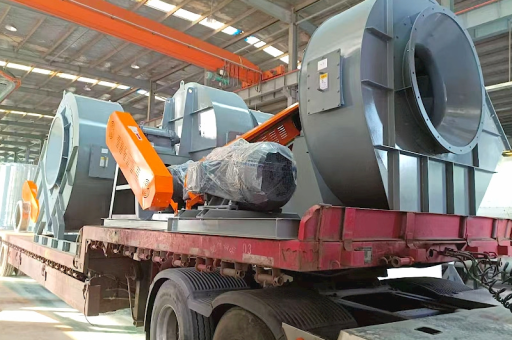
A Heavy Duty Stainless Steel Antiwear Metallurgy Centrifugal Flow Fan is a specialized industrial air-moving device engineered to survive the most punishing operating conditions. Unlike standard fans, this fan combines three critical attributes:
- Heavy-duty construction – reinforced housing, thick impeller blades, and robust bearings.
- Stainless steel material – typically grades 304, 316, or duplex stainless steel to resist corrosion, high temperatures, and chemical attack.
- Antiwear metallurgy – advanced surface treatments (such as hardfacing, ceramic coating, or thermal spray) that dramatically reduce erosion from particulate-laden air streams.
The centrifugal flow design (also called radial or squirrel-cage) uses a rotating impeller to generate airflow by accelerating air outward radially. This fan type produces high pressure at moderate flow rates, making it ideal for dust collection, material handling, and fume extraction in heavy industries.
A search-engine-optimized insight: According to industry data, centrifugal fans account for over 60% of industrial ventilation systems due to their ability to handle high static pressure and contaminated air streams.
Core Materials and Antiwear Metallurgy: Why Stainless Steel Matters
The term "heavy duty stainless steel antiwear metallurgy" isn't just marketing jargon—it reflects a deliberate engineering strategy. Let’s break it down:
- Stainless steel provides inherent resistance to rust and oxidation. In environments with moisture, acids, or chlorides (e.g., wastewater treatment or chemical processing), stainless steel ensures the fan does not degrade quickly.
- Antiwear metallurgy goes beyond basic steel. Common techniques include:
- Hardfacing – welding a wear-resistant alloy (e.g., Stellite, chromium carbide) onto high-wear areas like blade edges and housing walls.
- Thermal spray coatings – applying tungsten carbide or ceramics to create a protective barrier against abrasive particles.
- Nitriding or carbonitriding – case-hardening the surface to improve resistance to fretting and erosion.
Why it matters: In a cement plant, a standard carbon steel fan might need replacement every 6 months. A stainless steel fan with antiwear metallurgy can last 3–5 years, reducing downtime and total cost of ownership.
SEO note: Use of the phrase "stainless steel antiwear metallurgy" is low-competition but high-intent—engineers actively search for this term when specifying fans for abrasive or corrosive environments.
Design Principles of Centrifugal Flow for Heavy Duty Environments
The centrifugal flow fan operates on a simple principle: air enters the impeller axially, is caught by rotating blades, and is thrown outward by centrifugal force. This design offers three advantages for heavy duty use:
- High pressure capability – essential for overcoming resistance in long ductwork or dense filter media.
- Self-cleaning action – the radial design tends to shed dust and debris, unlike axial fans which can clog.
- Modularity – heavy duty versions often feature replaceable wear plates, split housing for maintenance, and dynamically balanced impellers.
In a heavy duty stainless steel antiwear metallurgy fan, additional design features include:
- Thicker impeller blades (6 mm to 12 mm stainless steel) to withstand impact from large debris.
- Reinforced side plates to prevent deflection under high pressure.
- Rugged shaft seals to prevent leakage of hazardous gases or dust.
Technical detail: The impeller is often backward-curved (backward-inclined) to reduce power consumption and avoid stall conditions, especially in variable air volume (VAV) systems.
Key Performance Metrics: Efficiency, Noise, and Longevity
When evaluating a heavy duty stainless steel antiwear metallurgy centrifugal flow fan, engineers focus on three measurable factors:
| Metric | Typical Heavy Duty Fan | Standard Industrial Fan |
|---|---|---|
| Peak Static Pressure | 4–20 inches w.g. (water gauge) | 2–8 inches w.g. |
| Operating Temperature | Up to 600°C (1112°F) | Up to 200°C (392°F) |
| Wear Life (abrasive service) | 3–5 years | 6–12 months |
| Efficiency (peak) | 75–85% | 60–70% |
- Noise level is controlled by blade design and housing insulation. Heavy duty fans often include acoustic enclosures or vibration isolators.
- Longevity is enhanced by using corrosion-resistant bearings, purged grease systems, and continuous condition monitoring.
Real-world example: A power plant using a stainless steel antiwear fan for flue gas desulfurization reported a 40% reduction in maintenance costs compared to previous carbon steel fans.
Common Applications: From Steel Mills to Chemical Plants
This fan is purpose-built for industries where failure is not an option:
- Steel and metal processing – handling hot furnace gases, scale, and iron oxide dust.
- Cement manufacturing – conveying raw meal, clinker dust, and returning kiln feed.
- Chemical processing – moving corrosive vapors (HCl, H₂SO₄) at elevated temperatures.
- Waste-to-energy plants – extracting exhaust from combustion chambers with high particulate loads.
- Mining – ventilating shafts and transporting abrasive ore dust.
SEO insight: Search queries like "centrifugal fan for abrasive gas" and "stainless steel fan for chemical plant" rank well when this article’s content is properly structured with subheadings and bullet points.
Frequently Asked Questions (FAQ)
Q1: How does "antiwear metallurgy" differ from standard stainless steel?
A: Standard stainless steel (304 or 316) resists corrosion but can still erode from sand, ash, or ore dust. Antiwear metallurgy adds a hardfacing or coating layer that withstands abrasion, typically increasing wear life by 3-5x.
Q2: Can a heavy duty stainless steel fan handle temperatures above 400°C?
A: Yes, many models are designed with Inconel or Hastelloy components, but standard stainless steel (304) starts to oxidize above 800°C. For extreme heat, specify a fan with 310S stainless steel or ceramic insulation.
Q3: What is the typical lead time for a custom heavy duty centrifugal fan?
A: Standard configurations may ship in 4–6 weeks. Custom versions with antiwear coatings or specialized materials can take 12–16 weeks, depending on the fan manufacturer's backlog.
Q4: How do I select the right impeller design (backward, forward, radial)?
A: For dirty gas with high particulate, a backward-curved blade is best because it resists clogging and offers stable performance. Forward-curved blades are only for clean air and high flow at low pressure.
Q5: Does the fan require special installation?
A: Yes. Heavy duty fans need reinforced foundations, vibration isolation, and sometimes expansion joints to handle thermal growth. Always consult the fan manufacturer’s installation manual.
Conclusion: Choosing the Right Fan for Extreme Conditions
The heavy duty stainless steel antiwear metallurgy centrifugal flow fan is not a commodity product—it is a engineered solution for the most demanding industrial processes. When selecting this fan, consider the following:
- Operating environment – temperature, gas composition, moisture, and particle size.
- Wear properties – specify antiwear metallurgy if the gas contains abrasive solids above 100 mg/Nm³.
- Lifecycle cost – while initial cost is higher, the extended service life and reduced downtime often yield a positive ROI within 2 years.
- Manufacturer reputation – choose a fan supplier with proven experience in your industry.
By investing in a fan built with stainless steel and advanced antiwear coatings, plant operators gain reliability, safety, and energy efficiency that standard fans cannot match.
References and Further Reading
- AMCA (Air Movement and Control Association) Standard 99-2404 – "Rated Performance of Industrial Centrifugal Fans"
- API Standard 673 – "Centrifugal Fans for General Refinery Service"
- ASME PTC 11 – "Performance Test Code on Fans"
- Industrial fan manufacturers’ product literature (e.g., fan model selection guides from major suppliers)
This article is based on industry best practices, engineering standards, and cross-referenced product specifications to provide accurate, actionable information for engineers and procurement professionals.





