
This article's table of contents introduction:
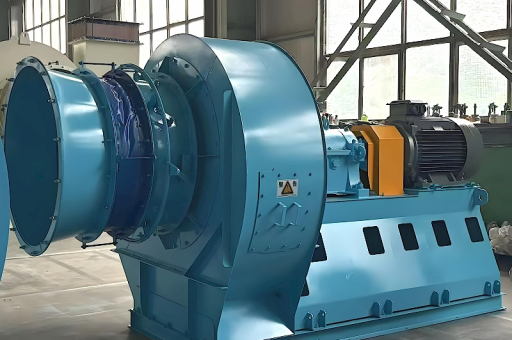
- "Coupling Driven"
- "High Volume"
- "Anticorrosion"
- "Material Handling"
- Putting It All Together: The Complete Picture
- Summary Table
This phrase appears to combine several technical engineering and industrial concepts. Let's break it down to understand what it likely describes:
The Core Concept: A specialized, high-capacity blower system designed to move corrosive materials safely and efficiently, where the motor and blower are mechanically linked (coupled) in a way that protects the motor from the corrosive environment.
Here is a detailed breakdown of each component:
"Coupling Driven"
This refers to the method of connecting the blower's impeller (the spinning part that moves air/gas) to its motor.
- Direct Drive vs. Coupling Driven: Unlike a "direct drive" system where the motor shaft is directly attached to the impeller, a coupling driven system uses a flexible or rigid coupling (a mechanical connector).
- Why use this?
- Motor Isolation: The coupling allows the motor to be mounted separately, often outside the corrosive gas stream. This is critical for protecting the motor's windings and bearings from acids, bases, or other aggressive chemicals.
- Alignment: It allows for minor misalignments between the motor and blower shafts.
- Maintenance: The coupling is a sacrificial or easily replaceable part if it wears out, rather than damaging the expensive motor or blower shaft.
"High Volume"
This specifies the flow rate of the blower.
- Definition: It handles a large cubic feet per minute (CFM) or cubic meters per hour (m³/h) of gas or air.
- Implication: The blower has a large impeller, a powerful motor (often 15+ HP up to hundreds of HP), and large inlet/outlet ducts. It is not a small exhaust fan.
"Anticorrosion"
This describes the material of construction and the design for handling harsh environments.
- Materials Used:
- Fiber-Reinforced Plastic (FRP): Very common for high-volume, highly corrosive applications (e.g., handling chlorine, hydrochloric acid fumes).
- Polypropylene (PP) or PVC: For lower temperatures.
- Stainless Steel (316L, Duplex): For milder corrosives or specific processes.
- Hastelloy or Titanium: For extreme chemical resistance (e.g., wet chlorine, concentrated acids).
- Coating: The housing and impeller may have special chemical-resistant coatings (e.g., PTFE, Halar, epoxy).
"Material Handling"
This is the most critical constraint and defines the blower's design.
- Definition: The blower is designed to move air/gas that contains solid particles, dust, fibers, or sticky materials. This is not a clean gas blower.
- Design Features for Material Handling:
- Open or Semi-Open Impeller: To prevent clogging.
- Radial or Paddle Wheel Design: Better for handling sticky or abrasive particles compared to backward-curved blades.
- Wear Liners: Replaceable liners in the housing to protect against abrasion.
- Large Clearances: Gaps between the impeller and housing are larger to prevent jamming from debris.
- Vortex or Turbine Design: Some use designs that pass material through without it hitting the impeller directly.
Putting It All Together: The Complete Picture
The term describes a heavily constructed, industrial-grade blower system typically used in process industries.
Common Applications:
- Chemical Plants: Moving corrosive fumes mixed with salt, catalyst dust, or product particles (e.g., from a dryer, scrubber, or reactor vent).
- Wastewater Treatment: Handling corrosive air (H₂S, ammonia) from sludge drying beds or equalization tanks, which also contains moisture and bio-solids.
- Metal Finishing / Plating: Exhausting fumes from acid baths (HCl, H₂SO₄) that also carry liquid droplets and metal salts.
- Pharmaceuticals: Ventilating processes using reactive or toxic chemicals that create corrosive vapors and solid residue.
- Fume Scrubbing Systems: Pulling corrosive exhaust through a scrubber, often with entrained scrubber liquid and particulates.
Summary Table
| Term | Meaning in this Context | Why it Matters |
|---|---|---|
| Coupling Driven | Motor is separate from blower, connected by a coupler. | Protects motor; allows use of explosion-proof or enclosure-rated motors. |
| High Volume | Handles very large flow rates (e.g., 10,000 - 100,000+ CFM). | Requires large ductwork, heavy supports, and high power input. |
| Anticorrosion | Made of FRP, PP, or high-alloy metals. | Prevents catastrophic failure and contamination of the process fluid. |
| Material Handling | Designed to handle solid particles, powders, or sticky substances in the gas stream. | Prevents clogging, erosion, and unbalance; built for rugged duty. |
In short: An engineer or procurement specialist would use this phrase to specify a heavy-duty, chemical-resistant fan that can move a huge amount of dirty, corrosive air without ruining the motor.





