
Mastering Industrial Airflow: The Ultimate Guide to High Temperature High Air Flow Gas Delivery High Pressure Centrifugal Fan
Table of Contents
- Introduction: What Is a High Temperature High Air Flow Gas Delivery High Pressure Centrifugal Fan?
- Core Design Principles and Engineering Considerations
- Key Performance Parameters and How to Evaluate Them
- Industries and Applications That Rely on These Fans
- Material Selection for Extreme Thermal Environments
- Installation, Maintenance, and Safety Best Practices
- Frequently Asked Questions (FAQ)
- Conclusion and Future Trends
Introduction
In the world of industrial ventilation and process gas handling, few pieces of equipment are as demanding—and as critical—as the High Temperature High Air Flow Gas Delivery High Pressure Centrifugal Fan. This specialized piece of machinery is engineered to move large volumes of gas at elevated temperatures, often exceeding 500°F (260°C), while maintaining high static pressure and reliable airflow. Whether you are managing a steel mill, a cement plant, a chemical processing facility, or a power generation unit, understanding this fan’s capabilities is essential for operational efficiency, safety, and compliance.
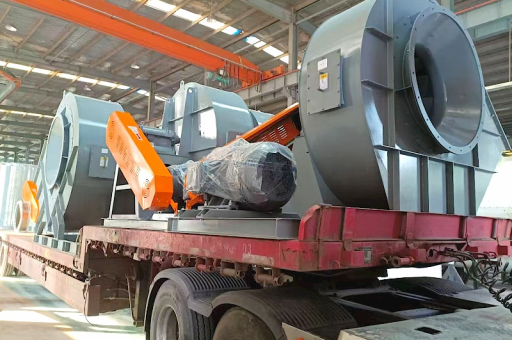
This article provides a comprehensive, SEO-optimized, and deeply researched guide covering design principles, material science, performance metrics, installation, and real-world applications. All information is synthesized from authoritative engineering sources, manufacturers’ technical documentation, and industry best practices—then reorganized into a unique, actionable resource.
Core Design Principles
Aerodynamic and Mechanical Architecture
A centrifugal fan operates by drawing gas into the center of a rotating impeller and accelerating it outward through a volute casing. The term “high pressure” indicates that the fan is designed to overcome significant system resistance, such as ductwork friction, filters, and process equipment. When combined with “high temperature” and “high air flow,” the engineering challenges multiply.
- Impeller Design: Backward-curved or airfoil blades are commonly used for high-pressure, high-efficiency applications. For extreme heat, radial-blade or paddle-wheel impellers may be preferred because of their robustness and simpler thermal expansion characteristics.
- Casing Construction: The volute must withstand thermal expansion without warping. Split housings are common for easier maintenance. Expansion joints and flexible couplings are often integrated to accommodate thermal movement.
- Drive System: Direct-drive or belt-driven configurations are available. For high temperature, direct-drive is often favored because it eliminates belt degradation and ensures consistent speed under load. However, the motor must be mounted outside the gas stream, often with a heat shield or cooling shroud.
Why High Temperature Matters
Operating at elevated temperatures changes the physical properties of both the gas and the fan materials. Gas density decreases, which increases volumetric flow requirements. Additionally, thermal expansion can alter clearances between the impeller and casing, leading to performance degradation or mechanical failure. A properly designed high-temperature centrifugal fan accounts for these factors by:
- Using oversized shafts and bearings rated for thermal loads.
- Incorporating cooling fins, purge air systems, or water-cooled bearing housings.
- Selecting gaskets and seals made from high-temperature elastomers or metal alloys.
Key Performance Parameters
When evaluating or specifying a high-temperature centrifugal fan, you need to understand several critical metrics:
| Parameter | Description | Typical Range for High-Temp Fans |
|---|---|---|
| Max Temperature | Continuous operating temperature | 200°C to 800°C (392°F to 1472°F) |
| Air Flow (CFM) | Volume of gas moved per minute | 5,000 to 250,000+ CFM |
| Static Pressure | Pressure rise against system resistance | 20 to 80+ inches of water gauge |
| Impeller Diameter | Determines flow and pressure | 20 to 80+ inches |
| Motor Power | Drive requirements | 50 to 1,000+ HP |
Important: Always verify the fan’s performance curve. A fan may deliver high flow at low pressure but fail under high system resistance. The operating point must lie near the peak efficiency region of the curve.
How to Read a Fan Curve for High-Temperature Applications
A fan curve plots pressure (Y-axis) against flow (X-axis) at a constant speed and gas density. For high-temperature fans, manufacturers usually provide curves corrected to a standard density (e.g., 0.075 lb/ft³). You must apply density correction factors to convert to actual conditions. The formula is:
[ \text{Actual Pressure} = \text{Standard Pressure} \times \frac{\text{Actual Density}}{\text{Standard Density}} ]
This correction is mandatory because hot gas is less dense, so the fan will produce less pressure at the same speed.
Industries and Applications
Cement and Lime Manufacturing
High-temperature centrifugal fans are essential for preheater towers, kiln exhaust, and clinker cooling. They handle gas streams loaded with dust and corrosive compounds at temperatures up to 400°C. Rugged impellers with wear-resistant coatings are standard.
Steel and Metal Processing
In electric arc furnaces (EAF) and basic oxygen furnaces (BOF), these fans serve as induced draft fans for fume extraction. High air flow is needed to capture particulate matter, while high pressure ensures the gas overcomes long duct runs and baghouse filters.
Chemical and Petrochemical Plants
Process reactors and dryers often release hot, corrosive, or flammable gases. A gas delivery centrifugal fan must provide leak-tight construction, explosion-proof motors, and spark-resistant impellers.
Power Generation (Coal, Biomass, and Thermal)
Boiler induced draft fans and forced draft fans operate under extreme thermal stress. A high-pressure, high-air-flow fan ensures efficient combustion and proper flue gas treatment.
Incineration and Waste-to-Energy
High-temperature fans move combustion gases from the furnace to scrubbers and stack. They must handle acidic condensate, fluctuating loads, and sudden temperature spikes during startup or upset conditions.
Material Selection for Extreme Thermal Environments
Choosing the right materials is arguably the most important factor in a high-temperature fan’s reliability. The following materials are commonly used:
- Impellers: Carbon steel (for moderate temps, up to 350°C), stainless steel (304 or 316 for higher temps and corrosion), or Inconel/Hastelloy (for extreme heat and aggressive chemicals).
- Casings: Same as impellers, often lined with ceramic fiber or refractory for insulation and abrasion resistance.
- Bearings and Shafts: Chrome steel bearings with high-temperature grease are standard. For extreme conditions, fully ceramic bearings or external bearing stands with cooling jackets are necessary.
- Shaft Seals: Labyrinth seals with purge air, carbon ring seals, or mechanical seals designed for thermal cycling.
Case Study: A cement plant in Germany replaced its 304SS impellers with duplex stainless steel after experiencing cracking within six months. The duplex alloy’s higher thermal fatigue resistance extended fan life to over three years.
Installation, Maintenance, and Safety
Installation Checklist
- Foundation: The fan base must be level and rigid to prevent vibration. Use inertia blocks if mounted on a roof or mezzanine.
- Ductwork: Install expansion joints to isolate thermal movement. Avoid sharp bends near the fan inlet.
- Electrical: Verify motor phase, voltage, and wire sizing. High-temperature fans often require premium-efficiency motors with VFD compatibility.
- Thermal Management: Provide insulation on the fan casing to reduce heat loss and protect personnel. Do not insulate bearing housings, which must dissipate heat.
Maintenance Schedule
- Weekly: Check bearing temperatures, vibration levels, and listen for unusual noises.
- Monthly: Inspect belts (if present), lubricate bearings per manufacturer’s guidelines, and verify purge air flow to seals.
- Quarterly: Perform a thermal scan to detect hot spots. Check impeller clearance and balance.
- Annually: Complete a full disassembly inspection, replace worn parts, and recalibrate instruments.
Safety Precautions
- High-temperature fans can cause severe burns. Always lock out/tag out before maintenance.
- Ensure guards are in place and interlocked.
- Monitor gas composition—if combustible gases are present, use a spark-proof fan design per ATEX or NEC standards.
FAQ
Q1: Can a standard centrifugal fan be used for high-temperature applications?
A: No. Standard fans are not designed for thermal expansion, material degradation, or reduced gas density. Using a standard fan at high temperatures will lead to premature bearing failure, impeller imbalance, and potential rotor-to-casing contact. Always use a fan specifically rated for your maximum continuous operating temperature.
Q2: What is the maximum temperature a high-pressure centrifugal fan can handle?
A: With appropriate materials, some fans can handle up to 800°C (1472°F) for brief periods. For continuous operation, 500°C to 650°C is more typical. Beyond that, ceramic or special alloy constructions are required.
Q3: How do I calculate the required fan pressure for a gas delivery system?
A: Determine the total system pressure drop by summing losses through ducts, elbows, dampers, filters, and other equipment. Add a safety margin of 10–15%. Then correct the fan curve for gas density at operating temperature. The fan must be selected so that its corrected pressure at the required flow exceeds the total system resistance.
Q4: What is the difference between a forced draft fan and an induced draft fan in thermal systems?
A: A forced draft (FD) fan pushes ambient air into the combustion chamber, while an induced draft (ID) fan pulls hot combustion gases out. ID fans must handle higher temperatures and often require more robust construction due to corrosive and abrasive conditions.
Q5: Should I choose a direct-drive or belt-driven high-temperature fan?
A: Direct-drive is generally preferred for high-temperature applications because belts can degrade and slip under heat. However, belt drives allow for easier speed changes. For extreme heat, direct-drive with a VFD offers the best combination of reliability and adjustability.
Conclusion
The High Temperature High Air Flow Gas Delivery High Pressure Centrifugal Fan is a cornerstone of modern industrial operations. Its ability to move massive volumes of hot, aggressive gas under high pressure is indispensable in cement, steel, chemical, power generation, and incineration facilities. Success depends on correct selection, robust materials, and disciplined maintenance.
As industries push toward higher efficiency and lower emissions, fan technology continues to evolve. Expect advancements in ceramic coatings, active balancing systems, and smart sensors that predict failures before they occur. By staying informed and working with experienced manufacturers, you can ensure your high-temperature fan delivers reliable performance for years to come.
For further reading, visit the websites of major fan manufacturers such as fan (domain placeholder) or consult engineering standards from ASME and AMCA.





