
This article's table of contents introduction:
- Typical Applications
- Key Specifications to Look For (When Buying)
- Advantages of Aluminium in This Context
- Potential Confusion to Avoid
- Summary
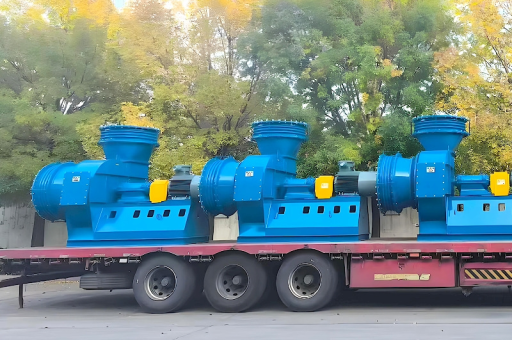
It sounds like you're describing a specific type of industrial fan or blower. To give you the most accurate and helpful information, here’s a breakdown of what that description typically entails, its applications, and key specifications you should look for.
The phrase "Large Capacity Aluminium Alloyed Cooling Industrial High Pressure Blower" breaks down into several critical features:
- Large Capacity: Refers to a high Airflow Volume (CFM - Cubic Feet per Minute, or m³/h - Cubic Meters per Hour). This is not a small exhaust fan; it's designed to move massive amounts of air.
- Aluminium Alloyed: The impeller (fan wheel) and often the housing are made from cast or fabricated aluminum. This is a key feature because it makes the blower lightweight, non-sparking (critical for flammable environments), and corrosion-resistant.
- Cooling: The primary application is for cooling. This could mean cooling electronic components, machinery, heat exchangers, or large spaces.
- Industrial: Built for continuous duty, 24/7 operation in harsh environments (dust, heat, vibration).
- High Pressure: This is the most important differentiator. Unlike a simple axial fan that moves air easily, this is a centrifugal blower. It can overcome significant resistance (static pressure) from ductwork, filters, cooling coils, or dense heat sinks.
Typical Applications
Because of the aluminum construction (non-sparking) and high-pressure capability, these blowers are often used in:
- Electronics & Server Room Cooling: For cooling large server racks, UPS systems, or power electronics where space is tight and backpressure from filters is high.
- Ventilation of Hazardous Locations: Removing flammable fumes or dust in chemical plants, paint booths, or grain silos (the aluminum prevents sparks).
- Material Handling (low-density): Conveying light materials like dust, lint, or granules.
- Industrial Drying: Forcing high-pressure air through nozzles to dry products on a conveyor line.
- Battery Manufacturing & Storage: Cooling battery packs or cabinets safely without risk of short-circuit sparks.
Key Specifications to Look For (When Buying)
If you are sourcing one of these blowers, you will need these parameters:
| Specification | Unit (Typical) | What to Look For |
|---|---|---|
| Airflow (CFM) | CFM (ft³/min) or m³/h | Large Capacity: e.g., 2,000 CFM to 50,000+ CFM |
| Static Pressure | inWG (inches of water gauge) or Pa | High Pressure: e.g., 10 inWG to 50+ inWG |
| Impeller Type | - | Backward Curved (BC) is most efficient for high pressure. |
| Impeller Material | - | Aluminum Alloy (e.g., 5083, A356). Confirm it's "non-sparking". |
| Motor Power | HP or kW | Will be substantial (e.g., 5 HP to 100+ HP) |
| Motor RPM | RPM | Typically direct-driven (high RPM) or belt-driven (adjustable). |
| Motor Type | - | Often TEFC (Totally Enclosed Fan Cooled) for industrial use. |
| Housing Construction | - | Aluminium alloy or fabricated steel with aluminum impeller. |
| Ingress Protection | IP rating | For industrial cooling, aim for IP55 or higher (dust & water resistant). |
Advantages of Aluminium in This Context
- Non-Sparking: The single most important safety feature. If the impeller strikes the housing (mechanical fault), aluminum is less likely to generate a spark than steel.
- Light Weight: Reduces load on motor bearings and structural supports.
- Corrosion Resistance: Better than steel in humid or mildly corrosive environments (like cooling towers or indoor pools).
- Low Inertia: Allows for faster startup and speed control.
Potential Confusion to Avoid
- "Blower" vs. "Fan": In industrial terms, a blower (centrifugal) produces high pressure. An axial fan (like a box fan) produces high volume but low pressure. Yours is definitely a centrifugal blower.
- "Cooling" vs. "Ventilation": Cooling implies removing heat from a source. Your blower will not create cold air; it moves ambient air to carry away heat. For significant temperature drop, consider pairing it with an air-to-air heat exchanger or evaporative cooling.
Summary
You are describing a high-performance, safety-critical piece of equipment. It is not a standard HVAC fan. It is a heavy-duty, high-pressure centrifugal blower built from non-sparking aluminum, designed to move large volumes of air through restrictive paths for cooling applications.
If you are looking to purchase or specify one, your critical questions should be:
- What is the exact static pressure (inWG) the blower must overcome?
- What is the required CFM at that pressure?
- Is the aluminum impeller certified non-sparking (e.g., for ATEX or NEC Class 1 Division 2 environments)?
Would you like help calculating the required CFM or pressure for a specific cooling task?





