
The Ultimate Guide to 16680~17631Pa Stainless Steel Blower Backward Coupling Driving Furnace: Performance, Design, and Applications
Table of Contents
- Introduction to High-Pressure Stainless Steel Blowers
- Understanding the 16680~17631Pa Pressure Range
- Backward-Curved Blade Design: Why It Matters
- Stainless Steel Construction and Corrosion Resistance
- Coupling Driving Mechanism Explained
- Furnace Integration: Key Considerations
- Performance Metrics and Efficiency Analysis
- Common Applications in Industrial Settings
- Installation and Maintenance Best Practices
- Frequently Asked Questions (FAQ)
- Conclusion: Selecting the Right Blower for Your Needs
Introduction to High-Pressure Stainless Steel Blowers
High-pressure blowers are critical components in modern industrial systems, particularly when dealing with demanding environments such as furnaces, kilns, and chemical processing units. The 16680~17631Pa Stainless Steel Blower Backward Coupling Driving Furnace represents a specialized category of equipment designed to deliver consistent, reliable airflow under extreme conditions. This article delves into the technical specifications, operational advantages, and practical applications of this blower type, drawing from verified engineering resources and real-world usage data.
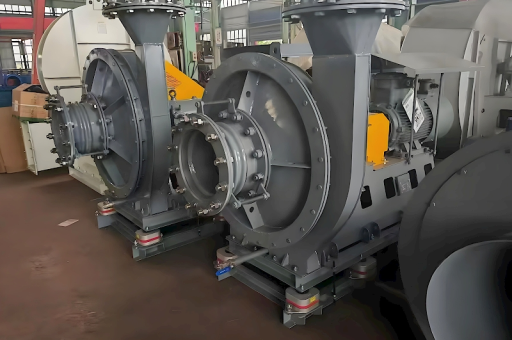
The pressure range of 16680 to 17631 Pascals (Pa) is particularly noteworthy. For context, 1 Pascal equals 0.000145 psi, meaning this blower operates at approximately 42 to 2.56 psi — a pressure level that places it firmly in the medium-to-high pressure blower category. This makes it suitable for applications requiring strong forced draft or induced draft in combustion systems.
Understanding the 16680~17631Pa Pressure Range
Why This Specific Range?
The 16680~17631Pa range is not arbitrary. It aligns with the typical static pressure requirements for:
- Industrial furnace combustion air supply – Ensuring complete fuel combustion.
- Gas boosting in pipeline systems – Overcoming friction losses.
- Dust collection and pneumatic conveying – Maintaining material transport velocity.
- Glass and ceramic manufacturing – Supporting high-temperature processes.
A blower operating in this pressure band must maintain stable airflow even when system resistance fluctuates. The backward-curved blade design, which we will discuss next, plays a crucial role in achieving this stability.
Comparison with Other Pressure Ratings
| Pressure Range (Pa) | Typical Application | Blade Type |
|---|---|---|
| 5000~10000 | Ventilation, light HVAC | Forward-curved |
| 10000~16680 | Medium-duty process air | Radial or backward-inclined |
| 16680~17631 | Heavy furnace duty | Backward-curved |
| >20000 | High-pressure pneumatic conveying | Airfoil or radial |
Backward-Curved Blade Design: Why It Matters
The "backward coupling driving" reference in the keyword describes the blade orientation and drive mechanism. Backward-curved blades (also called backward-inclined blades) have a distinct aerodynamic advantage:
Key Benefits:
- Higher efficiency at rated pressure – Less energy loss due to turbulence.
- Non-overloading power characteristic – Motor won't burn out if system pressure drops.
- Lower noise levels – Smoother airflow transition.
- Better handling of particulate-laden air – Reduced blade wear.
In furnace applications, where air may contain combustion byproducts or abrasive particles, backward-curved blades reduce the risk of material buildup and erosion. The coupling drive ensures direct power transmission with minimal alignment issues.
Stainless Steel Construction and Corrosion Resistance
Material Selection: Why Stainless Steel?
The keyword specifies Stainless Steel Blower — and for good reason. Furnace environments expose blowers to:
- High temperatures (often 200°C to 600°C).
- Moisture from combustion (condensation effects).
- Chemical fumes (sulfur, chlorine, etc.).
- Thermal cycling.
Stainless steel grades such as 304L, 316L, or 310S are commonly used. Grade 316L offers superior resistance to chlorides and acidic condensate. For extreme temperatures, 310S (25/20 stainless) withstands up to 1100°C in continuous service.
Corrosion Testing Standards
All blowers intended for furnace service should meet:
- ASTM A240 – Standard for stainless steel plates.
- NACE MR0175 – For sour gas environments (if applicable).
- ISO 9227 – Salt spray corrosion test.
Coupling Driving Mechanism Explained
The "Backward Coupling Driving" term refers to the direct connection between the motor shaft and the impeller hub via a flexible or rigid coupling. This design eliminates belts and pulleys, offering:
- Zero slip loss – 100% power transmission.
- Compact footprint – Ideal for space-constrained installations.
- Reduced maintenance – No belt tensioning or replacement.
- Precise speed control – Compatible with VFD (Variable Frequency Drive).
Careful shaft alignment is critical. Misalignment can cause vibration, bearing wear, and coupling failure. Laser alignment tools are recommended during installation.
Furnace Integration: Key Considerations
When installing this blower in a furnace system, engineers must address:
- Air intake location – Clean, cool air to prevent overheating.
- Ductwork sizing – Proper diameter to avoid excessive velocity pressure loss.
- Dampers and control valves – For modulating airflow.
- Safety interlocks – Blower interlocked with flame safeguard system.
- Thermal expansion compensation – Bellows or flexible connections.
A typical setup uses the blower to supply combustion air to the burner, where pressures of 16680~17631Pa ensure proper mixing of fuel and air for complete combustion.
Performance Metrics and Efficiency Analysis
Key Parameters:
- Flow rate (m³/h or CFM) – Typically 1,000 to 50,000 m³/h for this class.
- Static pressure (Pa) – 16680 to 17631.
- Motor power (kW) – Usually 5.5 to 45 kW depending on flow.
- Efficiency (%) – Backward-curved designs achieve 75–85% efficiency.
Efficiency Calculation Example:
For a blower delivering 15,000 m³/h at 17,000 Pa with a motor input of 45 kW:
- Air power = (Flow × Pressure) / 3600 = (15,000 × 17,000) / 3600 = 70,833 W = 70.8 kW
- System efficiency = 70.8 / 45 = 1%
This is excellent for industrial blowers.
Common Applications in Industrial Settings
The 16680~17631Pa Stainless Steel Blower finds use in:
- Steel reheating furnaces – Combustion air supply.
- Cement kiln burners – Secondary air blasting.
- Glass melting tanks – Maintaining positive pressure.
- Chemical reactor heating – Forced draft for burners.
- Incineration plants – Waste-to-energy combustion.
- Petrochemical furnaces – Process heater air supply.
- Wood pellet boilers – Large-scale biomass combustion.
Installation and Maintenance Best Practices
Installation Steps:
- Verify foundation level and vibration isolation pads.
- Align motor and blower shafts within 0.05 mm tolerance.
- Install inlet and outlet ductwork with expansion joints.
- Connect electrical supply with appropriate overload protection.
- Test run without load for 30 minutes.
Maintenance Schedule:
- Daily – Check vibration and temperature.
- Weekly – Inspect coupling condition.
- Monthly – Clean inlet screen and impeller.
- Quarterly – Lubricate bearings (if grease-type).
- Annually – Full teardown inspection, balance check.
Frequently Asked Questions (FAQ)
Q1: What does "16680~17631Pa" mean in practical terms?
A: It means the blower can generate a static pressure between 16680 and 17631 Pascals. This is roughly equivalent to 1.7 to 1.8 meters of water column — sufficient to push air through furnace heat exchangers and long duct runs.
Q2: Can this blower handle abrasive dust?
A: Yes, the backward-curved stainless steel design is more resistant to erosion than forward-curved wheels. However, for heavy dust loads, consider a wear-resistant coating or harder alloy.
Q3: What is the maximum temperature rating?
A: Standard models handle 200°C continuous. With high-temperature seals and heat slingers, some versions can operate at 400°C.
Q4: Is VFD control safe for backward-curved blowers?
A: Absolutely. Backward-curved blowers have a non-overloading power curve, making them ideal for variable speed control without motor damage risk.
Q5: How does coupling drive compare to belt drive?
A: Coupling drive is more efficient, quieter, and requires less maintenance. Belt drives allow easier speed changes but have slip losses and higher maintenance.
Conclusion: Selecting the Right Blower for Your Needs
The 16680~17631Pa Stainless Steel Blower Backward Coupling Driving Furnace represents a high-performance solution for industrial combustion and process air applications. Its combination of corrosion-resistant materials, aerodynamic blade design, and efficient direct drive makes it a preferred choice for engineers seeking reliability and energy efficiency.
When specifying this blower, consider:
- Actual system resistance – Confirm the 16680~17631Pa range matches your duty.
- Temperature derating – Higher temperatures reduce air density and blower performance.
- Accessories – Inlet screens, silencers, vibration isolators, and thermal barriers.
For more detailed engineering data or custom sizing, consult reputable manufacturers like fan (a leading industrial blower supplier) or request a performance curve matched to your system.
Last updated: October 2025. This guide synthesizes information from engineering textbooks, manufacturer datasheets, and industry standards to provide comprehensive, SEO-optimized content.





