
This article's table of contents introduction:
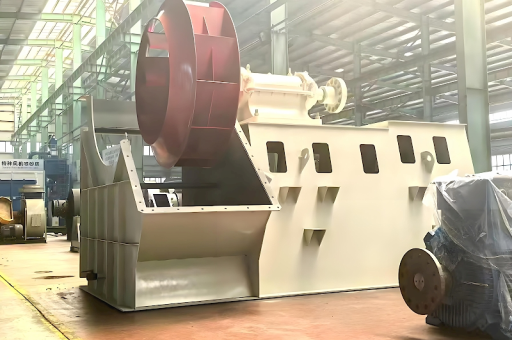
- What is it? (Definition)
- Why Aluminum Alloy for the Impeller?
- Key Components & Construction
- Typical Applications in a Foundry
- Key Advantages
- Disadvantages / Limitations
- Summary Table
Based on the keywords you provided, here is a detailed breakdown of what this specific piece of industrial equipment is, its components, and its typical applications.
What is it? (Definition)
An Aluminium Alloyed Foundry High Temperature Centrifugal Fan Single Inlet is a heavy-duty industrial fan designed to handle hot, sometimes corrosive, air or gases in demanding environments like foundries (metal casting facilities). Its key features are defined by the name:
- Aluminium Alloyed: The impeller (the rotating wheel) is made from a high-strength aluminum alloy. This is critical for high-temperature and high-speed applications.
- Foundry: It is robustly built for the harsh foundry environment, where it may be exposed to dust, sparks, and elevated temperatures.
- High Temperature: It is specifically designed to move gases at elevated temperatures, typically ranging from 150°C (300°F) up to 300°C (572°F) or higher, depending on the specific model and construction.
- Centrifugal: It uses a rotating impeller to increase the velocity and pressure of the air/gas. Air is drawn into the center (inlet) and expelled outward at a 90-degree angle.
- Single Inlet: Air enters the fan from only one side (usually the non-drive side). This is the most common configuration.
Why Aluminum Alloy for the Impeller?
This is the most crucial design choice. The benefits of using an aluminum alloy (like LM6 or similar) for the impeller include:
- Lightweight: Reduces the load on bearings and the motor shaft, leading to longer service life and lower starting inertia.
- Low Friction / Non-Sparking: This is a critical safety feature. In a foundry, sparks from ferrous (steel/iron) components could ignite flammable dust or gases. Aluminum is non-sparking when struck.
- Corrosion Resistance: Aluminum forms a protective oxide layer, making it more resistant to corrosion from moist air, fumes, and certain chemicals found in foundries.
- Reduced Thermal Stress: Its lower thermal expansion and high thermal conductivity mean it handles rapid temperature changes (thermal shock) better than some steel alloys.
Key Components & Construction
- Housing (Casing): Typically made from heavy-gauge steel plate (not aluminum) to withstand the structural stresses and high temperatures. It may be painted with high-temperature resistant paint or left unpainted for extreme heat.
- Impeller (Wheel): The aluminum alloy wheel. It can be:
- Forward-Curved: For higher volume, lower pressure applications (common for furnaces, ovens).
- Backward-Inclined / Backward-Curved: For higher pressure, lower volume (more efficient for duct systems, dust extraction).
- Radial (Paddlewheel): For very dirty, abrasive air (common in core shops or sand handling).
- Shaft: Usually carbon steel or stainless steel, designed to withstand high temperatures and transmit torque.
- Bearings: Heavy-duty, self-aligning ball or roller bearings. They are often located outside the fan housing (on a pedestal) and may be equipped with a cooling feature (like a heat slinger) or a cooling disc to prevent heat transfer from the shaft to the bearing grease.
- Drive: Can be direct drive (impeller mounted on motor shaft, more compact, lower temperature) or belt drive (more common for high temperature, as the motor is placed away from the heat source and allows speed adjustment).
- Inlet Cone (Venturi): A transition piece at the air intake to smoothly guide air into the impeller eye, improving efficiency.
Typical Applications in a Foundry
- Forge & Heat Treatment Furnaces: For combustion air supply or exhaust of hot gases.
- Oven Recirculation: Circulating hot air in industrial ovens for drying cores, mold wash, or paint curing.
- Exhaust Systems: Removing smoke, fumes, and excess heat from melt areas, pouring stations, and holding furnaces.
- Dust Collection (Pre-Separator): Moving hot air containing fine sand, scale, and flue gas before it enters a baghouse or scrubber.
- Fume Extraction: Removing metal oxide fumes (e.g., from welding, grinding) from the work environment.
Key Advantages
- High Thermal Resistance: Handles continuous high temperatures without warping or failing.
- Safety: Non-sparking impeller reduces fire/explosion risk.
- Durability: Robust construction withstands the vibration and physical stress of industrial use.
- Low Maintenance (Relatively): Quality bearings and robust shaft.
- Quieter Operation (vs. Steel Impeller): The aluminum impeller is inherently lighter and generates less noise at similar speeds.
Disadvantages / Limitations
- Lower Maximum Speed: Aluminum has a lower tensile strength than high-grade steel, so the impeller has a maximum safe RPM limit (this is carefully managed by the manufacturer).
- Cost: High-quality aluminum alloy impellers and the specialized construction for high temperatures make these fans more expensive than standard fans.
- Abrasion: Aluminum is softer than steel, so it is not ideal for handling very abrasive particles (like sand blasting) without a protective coating or special design.
- Chemical Sensitivity: Some chemicals (e.g., strong alkalis, mercury) can attack aluminum, so gas composition must be verified.
Summary Table
| Feature | Description |
|---|---|
| Type | Centrifugal Fan, Single Inlet |
| Impeller Material | Aluminum Alloy (e.g., LM6) |
| Housing Material | Heavy-gauge Steel Plate |
| Primary Use | Moving hot, corrosive, or non-sparking air/gases |
| Typical Temp | 150°C to 300°C+ |
| Drive | Typically Belt Drive (for heat isolation) |
| Application | Foundries, Forges, Furnaces, Ovens, Fume Exhaust |
| Key Advantage | Lightweight, Non-Sparking, Corrosion Resistant, High Temp |
In short: If you need a fan that can safely move hot air in a foundry without risking sparks, and you need it to be durable and efficient, this is the exact type of equipment you are looking for. Be sure to specify the exact temperature, air volume, and pressure requirements to get the correct model.





