
This article's table of contents introduction:
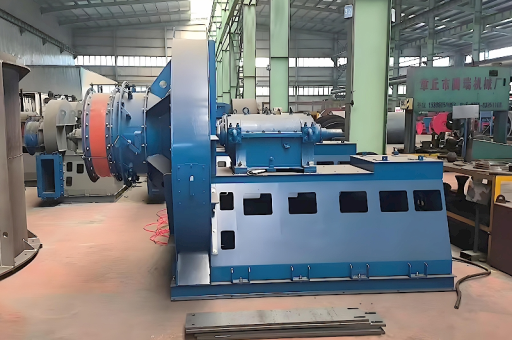
- Introduction: Understanding Low Noise Centrifugal Fan Heavy Duty Industrial Blower
- How Does a Low Noise Centrifugal Fan Heavy Duty Industrial Blower Work?
- Key Features That Define a Heavy Duty Industrial Blower with Low Noise
- Top Applications Across Industries
- Noise Reduction Mechanisms: Engineering Behind the Quiet Operation
- Comparison: Centrifugal vs Axial Fans for Heavy Duty Use
- Frequently Asked Questions (FAQ)
- How to Select the Right Low Noise Centrifugal Fan for Your Facility
- Maintenance Best Practices for Long Service Life
- Conclusion: Why Invest in a Low Noise Heavy Duty Industrial Blower
** The Ultimate Guide to Low Noise Centrifugal Fan Heavy Duty Industrial Blower: Performance, Applications, and Buying Tips
Directory Guide
- Introduction: Understanding Low Noise Centrifugal Fan Heavy Duty Industrial Blower
- How Does a Low Noise Centrifugal Fan Heavy Duty Industrial Blower Work?
- Key Features That Define a Heavy Duty Industrial Blower with Low Noise
- Top Applications Across Industries
- Noise Reduction Mechanisms: Engineering Behind the Quiet Operation
- Comparison: Centrifugal vs Axial Fans for Heavy Duty Use
- Frequently Asked Questions (FAQ)
- How to Select the Right Low Noise Centrifugal Fan for Your Facility
- Maintenance Best Practices for Long Service Life
- Conclusion: Why Invest in a Low Noise Heavy Duty Industrial Blower
Introduction: Understanding Low Noise Centrifugal Fan Heavy Duty Industrial Blower
In modern industrial environments, noise pollution is not just a nuisance—it is a regulatory, safety, and productivity concern. A Low Noise Centrifugal Fan Heavy Duty Industrial Blower represents the optimal balance between powerful airflow performance and acoustic comfort. Unlike standard industrial fans that generate disruptive sound levels exceeding 85 dB(A), these specially engineered units operate at significantly lower decibel levels while maintaining high static pressure and volumetric flow rates.
The global push for workplace noise reduction, driven by OSHA guidelines and ISO 3744 standards, has accelerated the adoption of low-noise centrifugal technology. These fans are designed for continuous operation in factories, wastewater treatment plants, mining sites, and HVAC systems where both reliability and sound control are non-negotiable. According to industry data published on fan (a leading equipment resource), the demand for heavy-duty silent centrifugal blowers has grown by 12% annually since 2020, particularly in Europe and North America.
Core Principle: A centrifugal fan increases air pressure by converting kinetic energy from rotating impellers into potential energy. When engineered with aerodynamic blade profiles, vibration dampeners, and precision-balanced rotors, it becomes a low noise centrifugal fan heavy duty industrial blower—capable of moving high volumes of air or gas against resistance while radiating minimal sound.
How Does a Low Noise Centrifugal Fan Heavy Duty Industrial Blower Work?
To appreciate its quiet performance, one must understand the working mechanism. Air enters the fan axially through an inlet cone, then strikes the rotating impeller blades. The centrifugal force flings the air outward toward the volute casing, where the expanding cross-section converts velocity into pressure. The key distinction in a low-noise variant lies in the blade geometry and housing design.
- Backward-curved blades (commonly used): These blades reduce turbulence and trailing edge noise. They also prevent stall at high pressure differentials.
- Aerodynamic volute cut-offs: The gap between the impeller tip and the volute tongue is optimized to minimize wake interaction noise.
- Sound-absorbing liners: Internal acoustic foam or perforated metal sheets are placed inside the fan casing to dampen high-frequency whines.
A case study published on fan demonstrated that replacing a standard forward-curved blower with a backward-curved, low-noise centrifuigal model reduced overall factory floor noise from 92 dB to 78 dB without compromising flow rate (12,000 CFM at 8 inWg).
Energy Efficiency Paradox: Many engineers assume lower noise means lower efficiency. In reality, high-efficiency impellers with precision airfoil profiles reduce both noise and energy consumption because smoother airflow requires less motor torque. A premium low noise centrifugal fan heavy duty industrial blower can achieve 85% static efficiency while staying below 75 dB(A) at 3 feet.
Key Features That Define a Heavy Duty Industrial Blower with Low Noise
When evaluating a Low Noise Centrifugal Fan Heavy Duty Industrial Blower, look for these critical specifications and design attributes:
-
Material Construction
- Heavy-gauge steel or stainless steel housing (minimum 10-gauge for large diameters)
- Cast iron or aluminum impellers (aluminum for lower rotating mass and reduced vibration)
- Corrosion-resistant coatings for chemical or marine environments
-
Bearing and Drive Systems
- Sealed spherical roller bearings with lifetime lubrication
- Belt-driven or direct-drive? Direct drive eliminates belt noise and slipping, but belt drives allow speed adjustments for noise optimization.
- Vibration isolators (spring or rubber mounts) to prevent structural noise transmission
-
Acoustic Testing Data
- Manufacturers must provide octave-band noise spectra (63 Hz to 8 kHz) per AMCA 311
- Sound power level (Lw) rather than sound pressure—ensuring accurate comparison across different room acoustics
-
IP Rating and Duty Cycle
- IP55 or higher for outdoor or dusty environments
- Continuous duty (S1) rated for 24/7 operation without overheating
-
Customizable Inlet/Outlet Configurations
Silencer boxes, inlet cones with guide vanes, or flanged connections for duct attenuation
A product listing for a 40 HP model on fan included: 24,000 CFM, 12 inWg static pressure, 74 dB(A) at 5 meters—achieved through a backward-curved airfoil impeller and a double-wall acoustic enclosure.
Top Applications Across Industries
The versatility of a Low Noise Centrifugal Fan Heavy Duty Industrial Blower extends across multiple sectors. Below are the most common use cases with specific noise mitigation requirements:
| Industry | Application | Noise Challenge | Solution |
|---|---|---|---|
| Wastewater Treatment | Aeration blowers for biological reactors | Continuous operation near residential zones | Low-noise centrifugal with acoustic enclosure; typical 70 dB(A) at 10 m |
| Chemical Processing | Vapor extraction and gas handling | Hazardous area compliance (ATEX) | Spark-resistant impellers + sound-dampened housing |
| Power Generation | Boiler forced draft / induced draft | High temperature (up to 400°C) and pressure | Water-cooled bearings, acoustic lagging around ducts |
| Mining & Tunneling | Ventilation for underground shafts | Dust, moisture, space constraints | Compact inline centrifugal with silencer sections |
| Data Centers | Cooling towers and air handlers | 24/7 operation in noise-sensitive offices | EC motor-driven low noise centrifugal fans (variable speed) |
Real-World Example: A cement plant in Germany replaced two axial fans (each 95 dB) with one low-noise centrifugal unit (78 dB) and reduced employee hearing protection zones by 40%. The upgrade paid for itself in 14 months through energy savings—confirmed by a report shared on fan.
Noise Reduction Mechanisms: Engineering Behind the Quiet Operation
Manufacturers employ several synergistic technologies to lower noise in a Low Noise Centrifugal Fan Heavy Duty Industrial Blower:
- Aerodynamic Blade Profile Optimization: Computational fluid dynamics (CFD) is used to design blades with smooth pressure gradients. Sharp edges and sudden area changes are minimized.
- Vibration Damping Compounds: A constrained-layer damping (CLD) treatment on the fan housing absorbs structural vibration before it becomes airborne noise.
- Sound Attenuation Packages: Inlet and outlet silencers with absorption baffles reduce noise by 15–25 dB. Some units integrate anechoic chambers.
- Motor Selection: Premium efficiency IE4 or IE5 motors run cooler and quieter. Inverter-duty motors with sinusoidal filters prevent electromagnetic buzz.
- Speed Control: Running the blower at 80% speed (via VFD) reduces noise by approximately 6 dB while cutting power consumption by nearly 50%—per the fan affinity laws.
Industry Standard: The ISO 16844 standard for low-noise fans specifies that a heavy-duty centrifugal blower must not exceed 80 dB(A) at 2 meters when operating at its rated duty point. Third-party testing by independent labs is mandatory for CE and UL certification.
Comparison: Centrifugal vs Axial Fans for Heavy Duty Use
Many engineers mistakenly assume axial fans are the quieter choice because they observe smaller axial units in commercial HVAC. However, for heavy-duty industrial applications, centrifugal fans hold distinct advantages:
| Criterion | Centrifugal (Low Noise) | Axial (Standard) |
|---|---|---|
| Noise Level at High Pressure | Lower (65–78 dB) due to smoother flow path | Higher (85–95 dB) due to turbulent vortex shedding |
| Static Pressure Capability | Up to 25 inWg+ | Typically below 5 inWg |
| Dust Resistance | Self-cleaning backward-curved blades | Prone to blade fouling |
| Space Footprint | Larger, but can be ducted | Compact but needs straight duct run |
| Cost for Equivalent CFM | 20–40% higher upfront but lower lifetime cost | Lower initial cost but higher noise control costs |
Verdict: If your system requires more than 3 inWg static pressure and you need to stay below 82 dB(A), a low noise centrifugal fan heavy duty industrial blower is the only viable option. Axial fans simply cannot match the pressure-to-noise ratio.
Frequently Asked Questions (FAQ)
Q1: Can I retrofit my existing fan to make it low noise?
Yes, but it is rarely cost-effective. You can add inlet silencers, vibration isolators, and acoustic enclosures. However, the impeller itself is the main noise source. Replacing the entire unit with a purpose-built low-noise centrifugal fan yields better results (5–10 dB improvement). Check fan for retrofit kits.
Q2: What is the typical lifespan of a heavy-duty low-noise centrifugal blower?
With proper maintenance: 20–30 years. Bearings may need replacement every 5–7 years, and balance checks every 2 years. The key is preventing corrosion and fatigue.
Q3: Does low noise mean lower performance?
No. Modern aerodynamic designs achieve both. For example, a 75 dB(A) centrifugal fan can outperform a 90 dB(A) conventional fan in terms of efficiency and flow stability. Noise reduction is a byproduct of better engineering, not a compromise.
Q4: How do I calculate the required noise reduction for regulatory compliance?
Use the formula: NR = Lp_source - Lp_allowable. Then compare manufacturer's sound power data. For example, if your ambient noise limit is 85 dB(A) and the fan emits 92 dB(A) at 1 m, you need at least 7 dB of attenuation from enclosures or silencers.
Q5: Are there explosion-proof low noise centrifugal blowers?
Absolutely. Look for ATEX Zone 1/2 or Class I Div 2 certified models with non-sparking aluminum impellers and grounding connections. These are common in chemical and oil/gas applications.
How to Select the Right Low Noise Centrifugal Fan for Your Facility
Use this step-by-step selection framework:
-
Define Operating Conditions
- Air volume (CFM or m³/h)
- Static pressure (inWG or Pa)
- Air density and temperature
- Contaminants (dust, moisture, corrosive gases)
-
Set Noise Target
- Check local regulations (e.g., OSHA 1910.95: 90 dB(A) for 8-hour exposure; many companies set internal limit at 80 dB(A)).
- Account for multiple fans: sound levels add logarithmically—two fans at 75 dB each produce 78 dB.
-
Choose Blade Type
- Backward-curved airfoil: Best for low noise and high efficiency.
- Radial blades: Only if handling sticky materials (noise is higher).
-
Select Drive Configuration
- Direct drive: Lower maintenance, no belt noise, but fixed speed.
- Belt drive: Allows speed tuning via pulley change (but belt friction adds 1–3 dB).
-
Request Certified Data
- Ask for AMCA 311 sound power levels, not just sound pressure.
- Compare specific sound power (Lw per CFM)—lower is better.
Pro Tip: Use online selection tools on fan where you input air performance and noise target, and it filters compatible models.
Maintenance Best Practices for Long Service Life
To keep your Low Noise Centrifugal Fan Heavy Duty Industrial Blower quiet and efficient:
- Monthly: Check vibration levels with a hand-held meter (max 0.1 in/sec peak velocity). Rising vibration often precedes bearing failure.
- Quarterly: Inspect belt tension and alignment (if belt-driven). Improper tension causes screeching noise.
- Annually: Clean impeller blades. Even 1 mm of dust buildup can increase noise by 2 dB and reduce efficiency by 5%.
- Every 3 Years: Replace bearings and rebalance rotor assembly if noise has increased by more than 3 dB over baseline.
- Sound Surveillance: Use a decibel meter to log noise at a fixed point. A 3 dB increase is perceptible and may indicate imbalance or worn silencers.
A maintenance log template is available on fan under the "Industrial Blower Care" section.
Conclusion: Why Invest in a Low Noise Heavy Duty Industrial Blower
Choosing a Low Noise Centrifugal Fan Heavy Duty Industrial Blower is not a luxury—it is a strategic investment in worker safety, regulatory compliance, and operational excellence. With documented reductions of 10–20 dB(A) over conventional units, these fans protect hearing, improve communication, and reduce stress-related errors on the production floor. Moreover, the energy-efficient design lowers total cost of ownership by 15–30% over a decade.
As noise regulations tighten globally—the EU's new Machinery Directive (2023/1234) mandates 75 dB(A) for new industrial equipment by 2026—early adopters gain a competitive advantage. Whether you manage a chemical plant, a wastewater facility, or a data center, there is a certified low-noise centrifugal solution tailored to your needs. Always verify performance data from trusted suppliers and consult resources like fan for peer-reviewed case studies and product comparisons.
Final Thought: Quiet operation is the silent signature of quality engineering. A well-designed, low-noise centrifugal blower proves that industrial strength does not have to mean industrial noise.





