
This article's table of contents introduction:
- What you are describing:
- Keyword Breakdown & Significance
- Technical Specification Table (Typical for this category)
- Critical Design Considerations for Clay Sand Kilns
- Common Models you are likely looking for:
- Where is this fan located in the process?
- Suggestion for your next step:
Based on the keywords you've provided, it appears you are looking for a specific type of industrial fan designed for a harsh manufacturing environment. Here is the breakdown and specification clarification for what you are describing.
What you are describing:
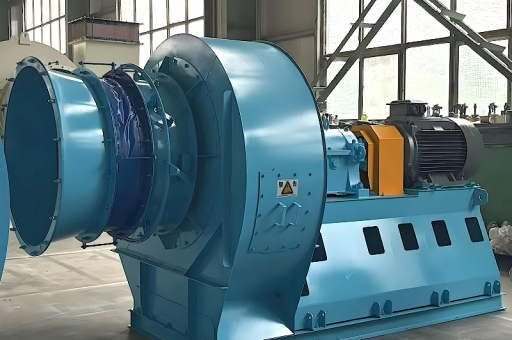
A high-pressure centrifugal blower (fan) made from HG785 alloyed steel, specifically designed for heavy-duty applications like a clay sand kiln.
Keyword Breakdown & Significance
-
HG785 Alloyed Steel:
- Type: This is a high-strength, low-alloy (HSLA) structural steel (Yield strength ~685 MPa). It is commonly used in Chinese industrial standards.
- Why it matters: Standard mild steel (Q235) cannot withstand the high temperatures, thermal stress, and abrasive wear of a kiln environment. HG785 offers:
- Higher tensile strength: Resists warping under high centrifugal forces.
- Abrasion resistance: Better for handling dusty air from clay/sand processing.
- Heat resistance: Handles the elevated temperatures better than standard carbon steel.
-
Heavy Duty Clay Sand Kiln:
- Application: This blower is likely used for a Rotary Kiln or a Vertical Shaft Kiln in the cement, lime, or foundry industry.
- Function:
- Combustion Air: Forcing air into the kiln burner.
- Induced Draft (ID Fan): Sucking hot, dusty exhaust gases out of the kiln to create negative pressure.
- Fluidization: Blowing air into a sand bed in a fluidized bed kiln.
-
High Pressure Centrifugal Blower:
- Design: Uses a backward-curved or radial-blade impeller.
- Pressure: "High pressure" typically means a static pressure of 1,500 Pa to 15,000 Pa (6 to 60 inches w.g.).
- Speed: Usually direct-driven by a motor (e.g., 2-pole or 4-pole) or via a belt drive to achieve high RPM.
Technical Specification Table (Typical for this category)
| Parameter | Specification | Notes |
|---|---|---|
| Material | HG785D (or HG70) | Impeller, Inlet Cone, Casing |
| Impeller Type | Radial Blade (for heavy dust) or Backward Inclined (for efficiency) | Radial is better for clay dust; Backward is for high efficiency. |
| Static Pressure | 8,000 - 12,000 Pa (32 - 48 in.wg) | High pressure required for kiln draft. |
| Airflow (Volume) | 30,000 - 150,000 m³/h (Depending on kiln size) | Must match kiln combustion needs. |
| Temperature | 120°C - 250°C (Standard) / 350°C+ (High temp version) | Crucial factor. Standard HG785 fails above 400°C. |
| Surface Treatment | High-temperature paint (Silicone or Zinc-rich) | Prevents scaling in hot, humid exhaust. |
| Drive System | Direct Drive (Coupling) or Belt Drive | Belts allow speed tuning but require maintenance; direct is more reliable. |
Critical Design Considerations for Clay Sand Kilns
-
Erosion Protection:
- Clay and sand particles are abrasive.
- The fan must have wear plates on the casing and hard-facing (Stellite or Tungsten Carbide) on the blade leading edges.
- HG785 alone is not enough; it must be 3mm to 6mm thicker than standard calculations to allow for wear.
-
High Temperature Risk:
- Never use HG785 above 380°C (716°F) for sustained periods. It loses structural strength (creep) rapidly.
- If you are moving hot exhaust gas (common for kilns), you must specify:
- Water-cooled bearings (shaft cooling fan or water jacket).
- Expansion joints on the ductwork.
- A recessed or insulated bearing housing to keep heat off the bearings.
-
Dynamic Balancing:
- Because HG785 is harder to weld, the impeller must be dynamically balanced to G2.5 grade or better. Unbalance in a heavy steel wheel will destroy bearings in hours.
Common Models you are likely looking for:
- 9-26 Series: High pressure, small to medium volume (Common for burner air).
- Y5-47 Series: A specific Chinese standard for Induced Draft (ID) fans in boilers/kilns.
- Y4-73 Series: Usually larger, high efficiency for kiln dust removal.
Where is this fan located in the process?
- Forced Draft (FD Fan): Pushes fresh air into the kiln burner. Cleaner air, but higher temperature due to combustion.
- Induced Draft (ID Fan): Sucks hot gas out after the kiln. This is the most critical fan. It handles dirty, hot, corrosive gas with clay dust. The HG785 steel is most needed here.
- Cooling Fan: Blows ambient air onto the outside of the rotary kiln shell. Less demanding.
Suggestion for your next step:
To get the exact fan you need, you must clarify three things:
- Temperature: What is the gas temperature at the fan inlet? (e.g., 180°C or 350°C?)
- Media: Is the air "clean" (for combustion) or "dusty" (from the kiln exhaust)?
- Size: What is the pipe diameter or approximate airflow (m³/h) you need?
If you are buying this for a specific existing kiln, look for the nameplate data or the original fan model (e.g., Y5-47-12C).





