
This article's table of contents introduction:
- Table of Contents
- Introduction: What is an HG785 Alloyed Steel Flue Gas Fan?
- Why HG785 Alloyed Steel? Material Science and Advantages
- Single Inlet vs. Double Inlet: Why Single Inlet for ID Fans?
- Key Design Parameters for a Boiler Induced Draft (ID) Fan
- Performance Characteristics: Pressure, Flow, and Efficiency
- Common Operational Challenges
- Maintenance Best Practices for Long Service Life
- Frequently Asked Questions (FAQ)
- Conclusion: Selecting the Right Fan for Your System
** The Ultimate Guide to HG785 Alloyed Steel Flue Gas Fan: Single Inlet Boiler ID Fan Performance, Design, and Maintenance
Table of Contents
- Introduction: What is an HG785 Alloyed Steel Flue Gas Fan?
- Why HG785 Alloyed Steel? Material Science and Advantages
- Single Inlet vs. Double Inlet: Why Single Inlet for Boiler ID Fans?
- Key Design Parameters for a Boiler Induced Draft (ID) Fan
- Performance Characteristics: Pressure, Flow, and Efficiency
- Common Operational Challenges (Erosion, Corrosion, Vibration)
- Maintenance Best Practices for Long Service Life
- Frequently Asked Questions (FAQ)
- Conclusion: Selecting the Right Fan for Your System
Introduction: What is an HG785 Alloyed Steel Flue Gas Fan?
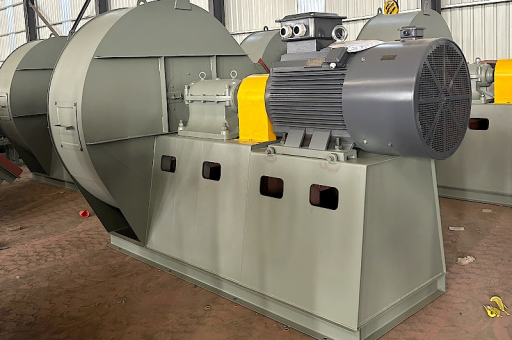
In the industrial world, particularly within power plants, cement kilns, and large-scale steam generation facilities, the HG785 Alloyed Steel Flue Gas Fan Single Inlet Boiler ID Fan represents a critical component for system safety and efficiency. This fan, often referred to as an Induced Draft (ID) fan, is responsible for pulling combustion flue gases through the boiler, economizer, scrubber, and stack.
The term "HG785" refers to a high-strength, low-alloy (HSLA) structural steel grade known for its high yield strength (approximately 785 MPa) and excellent weldability. When applied to a Flue Gas Fan, this material provides the necessary robustness to handle the abrasive particulate matter and elevated temperatures typical of boiler exhaust.
The "Single Inlet" configuration indicates that gas enters the fan wheel from one side only. This design is typically preferred for systems requiring consistent pressure characteristics and lower flow rates compared to massive utility boilers. This article will dissect the engineering behind this fan, focusing on its material advantages, design logic, and operational best practices.
Why HG785 Alloyed Steel? Material Science and Advantages
A common question among engineers is: Why use HG785 steel instead of standard carbon steel or stainless steel for a Flue Gas Fan? The answer lies in the balance of strength, weight, and cost-effectiveness.
High Yield Strength
Standard Q235 or Q345 steel may suffice for clean air applications, but flue gas often contains fly ash and silica particles. HG785 offers a yield strength of approximately 785 MPa. This allows the fan impeller to be designed with thinner blade sections without sacrificing structural integrity. Thinner blades mean less weight, reducing bearing loads and allowing for higher rotational speeds.
Wear Resistance
The alloying elements in HG785 (including chromium, manganese, and nickel) enhance its hardness. While not a "wear plate" like AR400, HG785 provides superior resistance to the low-angle erosion caused by fine particles hitting the blade surface. In a Single Inlet Boiler ID Fan, the leading edges of the blades are subjected to constant particle impact; HG785 significantly extends the Mean Time Between Replacements (MTBR).
Weldability and Fabrication
Unlike many ultra-high-strength steels, HG785 maintains good weldability when preheating procedures are followed. This is crucial because fan impellers are complex welded assemblies. The heat-affected zone (HAZ) remains tough, reducing the risk of cracking under the cyclic loading of fan operation.
Critical Note: When fabricating or repairing an HG785 Alloyed Steel Flue Gas Fan, always use low-hydrogen welding electrodes and follow the manufacturer’s preheat specifications to preserve the material’s properties.
Single Inlet vs. Double Inlet: Why Single Inlet for ID Fans?
The fan is designated as a Single Inlet fan. This design choice is not arbitrary; it is a function of the system’s aerodynamic and spatial requirements.
Double Inlet (DI) Fans
These are typically used for very large volumes (e.g., main utility boiler ID fans). Air enters from both sides, allowing for a wider impeller and lower axial velocity. However, the inlet flow path can be more complex, requiring an inlet box with turning vanes.
Single Inlet (SI) Fans
The HG785 Alloyed Steel Flue Gas Fan in a single inlet configuration offers several distinct benefits:
- Simpler Ductwork: The ductwork transitions from the boiler exit to the fan inlet in a straight line. This reduces pressure drop.
- Lower Axial Load: In a double inlet fan, the gas pressure on the two sides of the impeller must be perfectly balanced. If not, a significant axial thrust is placed on the bearing. A single inlet fan, while having a net thrust, is simpler to manage with a single thrust bearing.
- Space Efficiency: For industrial boilers (typically 50 MW to 200 MW), the physical footprint of a single inlet fan is smaller, making installation and maintenance access easier.
- Performance Curve: Single inlet fans often have a steeper pressure curve, which can be advantageous for systems where the gas density varies significantly due to temperature changes.
SEO Keyword Note: For engineers searching for "boiler induced draft fan specifications," understanding the single inlet vs. double inlet trade-off is a primary decision point.
Key Design Parameters for a Boiler Induced Draft (ID) Fan
Designing a reliable Flue Gas Fan requires precise calculation of several parameters. Here is what a search-engine-optimized guide must cover:
- Temperature Margin: The fan is typically designed for a Temperature Class (e.g., 200°C or 400°F). HG785 retains its strength up to approximately 350°C. For higher temperatures, alternative cooling systems (like shaft cooling fins) or exotic alloys must be considered.
- Fly Ash Loading: This dictates the required erosion protection. The HG785 impeller often includes sacrificial wear plates on the blade leading edges and the backplate.
- Rotational Speed (RPM): The critical speed of the shaft must be calculated. The fan must operate at least 20% below the first lateral critical speed to avoid resonance.
- Housing Design: The housing is typically fabricated from Q235 or mild steel, as it is stationary and less susceptible to wear than the rotating impeller. However, the inlet cone and casing nearest to the impeller are often lined with HG785 or a ceramic coating.
Performance Characteristics: Pressure, Flow, and Efficiency
The HG785 Alloyed Steel Flue Gas Fan Single Inlet Boiler ID Fan generally operates in the medium-to-high pressure range. You can expect:
- Static Pressure Rise: 2000 Pa to 8000 Pa (8 inWG to 32 inWG).
- Flow Rate: Typically 100,000 to 500,000 m³/h, depending on boiler size.
- Efficiency: Modern aerodynamic blade designs (backward-curved centrifugal) achieve peak efficiencies of 82% to 86%.
Q: How do I know if my single inlet ID fan is operating at peak efficiency?
A: Use a manometer to measure the pressure differential across the inlet and outlet. Compare this to the fan’s certified performance curve. A significant deviation (more than 10%) indicates either a system resistance change (e.g., clogged heat exchanger) or internal damage to the impeller.
Common Operational Challenges
Even a robust HG785 Alloyed Steel Flue Gas Fan faces environmental threats.
- Erosion: The most common failure. Small particles (fly ash) act like sandblasting, thinning the blade roots. Solution: Install wear plates made of HG785 or apply tungsten carbide spray coating on the leading edges.
- Corrosion: If the flue gas temperature drops below the acid dew point (approx. 100-140°C), sulfuric acid condenses and attacks the steel. Solution: Maintain a minimum operating temperature or use a corrosion-resistant paint system.
- Imbalance: Uneven dust accumulation on the impeller blades causes vibration. Solution: Install a purge air system to keep the blades clean, or perform regular water washing (if permitted by the boiler design).
- Vibration: The most dangerous issue. High vibration can cause shaft fatigue and bearing failure. Solution: Install seismic vibration sensors with a tripping mechanism set to alarm at 7 mm/s and trip at 11 mm/s (ISO 10816-3 standard).
Maintenance Best Practices for Long Service Life
To ensure your HG785 Alloyed Steel Flue Gas Fan lasts 10-15 years, follow these procedures:
- Daily Inspection: Check for unusual noise, high motor current, or visible duct leaks.
- Monthly Lube: Grease the bearings according to the manufacturer’s schedule. Over-greasing is as bad as under-greasing.
- Quarterly Vibration Analysis: Record vibration readings at the bearing housing in the horizontal, vertical, and axial directions. Trend the data to predict failure.
- Annual Impeller Inspection: Remove the access door and inspect the blade roots for cracks. Use a dye-penetrant test on the weld joints of the HG785 steel.
- Balance Check: After any repair or coating, the impeller must be dynamically balanced to ISO 1940 G6.3 grade.
Frequently Asked Questions (FAQ)
Q1: Can I repair an HG785 impeller with standard low-carbon steel? No. You must use matching HG785 filler metal or a certified low-hydrogen alternative. Using standard MIG wire will create a weld with significantly lower strength, which will crack under the dynamic load of the fan.
Q2: What is the maximum temperature for an HG785 Flue Gas Fan? The material integrity begins to degrade above 350°C. For high-temperature boilers operating above 400°C, you need a cooling system on the shaft or a higher-grade stainless steel impeller (like 310S).
Q3: Why is my ID fan vibrating after a shutdown? This is often due to "rotor sag" or uneven dust shedding. When the fan cools, fly ash can harden on the blades. Upon restart, the imbalance is severe. A gradual warm-up cycle or compressed air cleaning before restart is recommended.
Q4: Is a Single Inlet fan louder than a Double Inlet fan? Generally, yes. Because the air velocity through the single inlet is higher, it can generate more aerodynamic noise. A silencer on the inlet duct is highly recommended for compliance with OSHA noise regulations.
Q5: How do I choose between a forward-curved and backward-curved blade for this application? For an HG785 Alloyed Steel Flue Gas Fan in a boiler ID application, backward-curved blades are almost always superior. They are non-overloading (motor won't burn out if system resistance changes), more efficient, and less prone to dust build-up than forward-curved blades.
Conclusion: Selecting the Right Fan for Your System
The HG785 Alloyed Steel Flue Gas Fan Single Inlet Boiler ID Fan is a highly specific, robust solution for industrial flue gas handling. By choosing the fan with HG785 material, you prioritize longevity and fatigue resistance over cheaper, less durable alternatives.
When specifying this product, always provide the manufacturer with:
- Max flue gas temperature (°C).
- Particulate concentration (mg/Nm³).
- Required flow and pressure (at normal operating conditions).
A well-designed single inlet fan built from HG785 steel will provide reliable service, reducing downtime and maintenance costs for your boiler system. Whether you are upgrading an old unit or designing a new plant, this fan configuration remains the gold standard for medium-duty Induced Draft applications.





