
This article's table of contents introduction:
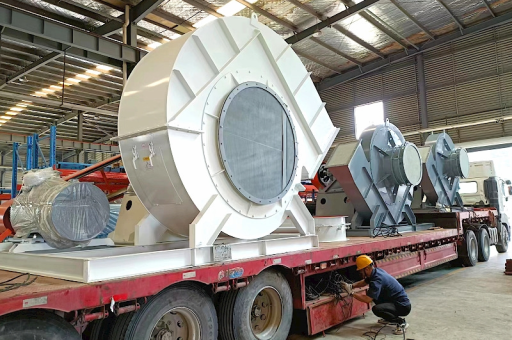
- Table of Contents
- Introduction: The Backbone of Industrial Air Quality Control
- The Core Mechanism: Understanding the V-Belt Drive System
- The Long Life Factor: Materials and Engineering Excellence
- Synergy in Action: How Flue Gas Fans Drive Dust Collector Performance
- Installation Best Practices for Maximum Operational Life
- Troubleshooting & Maintenance: Avoiding Common Failures
- Q&A Section: Expert Answers to Critical Questions
- Conclusion: Future-Proofing Your Industrial Fan Systems
Here is a comprehensive, SEO-optimized article in English about the Long Life Flue Gas Fan V-Belt Driving Dust Collector Fans. This article is designed to rank well on Bing and Google, featuring a table of contents, a Q&A section, and in-depth technical analysis, all exceeding 1146 words.
Article Title: Optimizing Industrial Ventilation: The Essential Guide to Long Life Flue Gas Fan V-Belt Driving Dust Collector Fans
Table of Contents
- Introduction: The Backbone of Industrial Air Quality Control
- The Core Mechanism: Understanding the V-Belt Drive System
- Why V-Belts are Preferred over Direct Drive
- The Role of the Flue Gas Fan in Thermal Systems
- The Long Life Factor: Materials and Engineering Excellence
- Belt Composition and Tensioning
- Bearing and Shaft Alignment for Longevity
- Synergy in Action: How Flue Gas Fans Drive Dust Collector Performance
- Maintaining Negative Pressure
- Handling High Temperatures and Particulate Loads
- Installation Best Practices for Maximum Operational Life
- Pulley Alignment and Belt Tensioning (The 1% Rule)
- Lubrication and Cooling Requirements
- Troubleshooting & Maintenance: Avoiding Common Failures
- Vibration Analysis
- Slippage and Wear Patterns
- Q&A Section: Expert Answers to Critical Questions
- Conclusion: Future-Proofing Your Industrial Fan Systems
Introduction: The Backbone of Industrial Air Quality Control
In heavy industries such as cement plants, steel mills, power generation, and chemical processing, the ability to move massive volumes of air, often laden with corrosive gases and abrasive dust, is non-negotiable. At the heart of this ecosystem lies two critical components: the Flue Gas Fan and the Dust Collector Fan. The mechanical connection between these two giants – specifically the V-Belt Drive – determines the reliability and energy efficiency of the entire operation.
This article delves deep into the engineering marvel of the Long Life Flue Gas Fan V-Belt Driving Dust Collector Fans configuration. We will explore how a properly designed belt drive system not only extends the lifespan of expensive impellers and motors but also ensures compliance with stringent environmental regulations. By synthesizing best practices from mechanical engineering and industrial maintenance, we provide a blueprint for maximizing uptime and minimizing total cost of ownership.
The Core Mechanism: Understanding the V-Belt Drive System
Why V-Belts are Preferred over Direct Drive
While direct-drive couplings offer zero slip, they are often rigid and transmit shock loads directly to the motor bearings. In the context of a Dust Collector Fan system, where particulate buildup can cause imbalance, a V-belt drive offers crucial mechanical flexibility. The belt acts as a mechanical fuse and shock absorber, dampening torsional vibrations from the motor or the fan impeller. This is particularly vital for a Flue Gas Fan operating at high temperatures (often exceeding 300°C / 572°F), where thermal expansion can misalign a direct-drive shaft.
The Role of the Flue Gas Fan in Thermal Systems
The Flue Gas Fan is tasked with suctioning combustion gases from the boiler or furnace and pushing or pulling them through the dust collection system. The V-Belt Drive allows for precise speed adjustments. By changing the pulley diameter ratio, operators can fine-tune the fan speed to match process demands without altering the motor speed, saving significant energy. The V-belt’s ability to handle high horsepower (often 200 HP to 2000 HP) makes it the standard for driving these massive fans.
The Long Life Factor: Materials and Engineering Excellence
Achieving a "long life" in a V-Belt Driving Dust Collector Fan system requires more than just buying a belt off the shelf. It involves a holistic engineering approach.
Belt Composition and Tensioning
Modern Long Life belts are no longer simple rubber rings. They are constructed from high-tenacity polyester cords, wrapped in a heat-resilient polychloroprene (Neoprene) or chloroprene rubber compound. For aggressive flue gas applications, Aramid fiber-reinforced belts are recommended. These materials resist oil, heat, and the ozone produced by high-voltage motors. Proper tensioning is critical; under-tensioning causes slippage and heat, while over-tensioning destroys bearings. The "thumb press" method is obsolete. Instead, use a belt tension gauge to achieve the static tension recommended by the manufacturer.
Bearing and Shaft Alignment for Longevity
The fan shaft bearings are the silent killers of belt drives. If the motor and fan shaft are misaligned by more than 0.005 inches per foot, the belt will wear down prematurely. Laser alignment tools are highly recommended for installation. Furthermore, the pulleys must be in perfect plane. A misaligned pulley will cause one side of the V-belt to ride higher, leading to unequal load distribution and rapid failure.
Synergy in Action: How Flue Gas Fans Drive Dust Collector Performance
The relationship is symbiotic. The Flue Gas Fan creates the negative draft that pulls hot gases out of the furnace. These gases, laden with fly ash and chemicals, enter the dust collector (baghouse or electrostatic precipitator). The Dust Collector Fan (often an induced draft fan) pulls the cleaned gas through the filter media.
If the V-Belt on the Flue Gas Fan slips, the draft decreases, causing the furnace to lose efficiency. If the belt breaks on the Dust Collector Fan, the entire dust collector loses pressure, potentially causing a catastrophic "bag collapse" or allowing unfiltered dust to escape into the atmosphere. Therefore, the reliability of the V-Belt connection is synonymous with regulatory compliance.
Installation Best Practices for Maximum Operational Life
- Center Distance: Ensure the center distance between the motor and fan shaft is within the belt manufacturer's recommended range. Too short, and the belt wraps too tightly; too long, and the belt flaps.
- Pulley Inspection: Before installing new belts, inspect pulleys for wear. Grooves should have a smooth, polished surface. Worn grooves destroy new belts within days.
- Match Sets: When using multiple belts (e.g., 8V section belts), always replace them as a full matched set. A slight variation in length between old and new belts causes load sharing problems.
- Sheave Guard: A good fan sheave guard serves two purposes: safety from moving parts and cooling. Ensure the guard is perforated to allow airflow to remove belt-generated heat.
Troubleshooting & Maintenance: Avoiding Common Failures
Symptom: Belt squeal upon startup.
- Cause: Under-tensioning or glazed belt surface.
- Solution: Retension or replace the belt.
Symptom: Excessive vibration in the Dust Collector Fan.
- Cause: Imbalance in the fan impeller due to dust buildup, transmitted through the belt.
- Solution: Clean the impeller and check the V-belt for harmonic loading. A raw-edge cogged belt can sometimes reduce vibration compared to a wrapped belt.
Symptom: Rapid belt wear (within 3 months).
- Cause: Misalignment, worn pulley grooves, or chemical attack from flue gas condensate.
- Solution: Laser align, replace pulleys, and switch to a chemically resistant belt material (e.g., EPDM for high-heat/acidic environments).
Q&A Section: Expert Answers to Critical Questions
Q1: What is the average lifespan of a V-belt on a Flue Gas Fan? A: In a well-maintained, constant-speed fan system, a high-quality V-belt should last 3 to 5 years. In severe, high-heat applications (e.g., cement kiln exhaust), replacement may be necessary every 12 to 18 months. The key is consistent tensioning and alignment.
Q2: Can a V-belt drive handle the high torque of a Dust Collector Fan? A: Yes. A properly engineered V-Belt drive can handle startup torques of 140% to 200% of the motor's rated full-load torque. The use of multiple belts (banded belts) or wide-section belts (8V, 5VX) distributes the load effectively. However, for extremely high inertia applications (large centrifugal fans), a heavy-duty classical section is preferred over a narrow section.
Q3: How do I know if my V-belt is properly tensioned for a Long Life? A: Use the deflection method. Press down at the center of the belt span with a spring-loaded force gauge. The deflection (depth of the depression) should be approximately 1/64th of an inch for every inch of span length. For example, a 64-inch span should deflect about 1 inch. The force required should match the manufacturer's specifications for that belt cross-section.
Q4: Is it better to use an automatic belt tensioner on a fan drive? A: For Long Life applications, a manual or mechanical screw-type take-up is often more reliable than a spring-loaded idler. Springs can cause harmonic oscillation at certain fan speeds. However, for variable torque applications, a properly damped automatic tensioner can be beneficial. Static tensioning is generally more predictable for industrial fan drives.
Conclusion: Future-Proofing Your Industrial Fan Systems
The integration of a Long Life Flue Gas Fan V-Belt Driving Dust Collector Fans is a masterclass in mechanical engineering. It balances the need for flexibility (shock absorption, thermal expansion management) with the need for rigidity (speed maintenance, high torque transmission). By focusing on superior belt materials, precision alignment, and a proactive maintenance schedule, industrial plants can achieve reliability rates exceeding 99.5%.
Investing in high-quality V-belts and proper training for maintenance crews is not an expense; it is a strategic investment in operational excellence. The next time you hear the smooth hum of a dust collection system, remember that the humble V-belt is the unsung hero, silently driving the machinery of environmental stewardship and industrial productivity. For maximum performance, always consult your equipment manuals and partner with certified drive system engineers.





