
This article's table of contents introduction:
- Table of Contents
- Introduction: The Core of Industrial Air Management
- What is an AC Motor Carbon Filter Extractor Fan Drying Industrial Centrifugal Blower?
- Key Components and How They Work Together
- Industrial Applications and Use Cases
- FAQs: Answering Your Most Common Questions
- Conclusion: Why This System is the Future of Industrial Ventilation
Table of Contents
- Introduction: The Core of Industrial Air Management
- What is an AC Motor Carbon Filter Extractor Fan Drying Industrial Centrifugal Blower?
- Key Components and How They Work Together
- 1 The AC Motor: The Powerhouse
- 2 The Carbon Filter: The Purification Shield
- 3 The Extractor Fan & Drying Mechanism
- 4 The Industrial Centrifugal Blower: High-Pressure Airflow
- Industrial Applications and Use Cases
- FAQs: Answering Your Most Common Questions
- Conclusion: Why This System is the Future of Industrial Ventilation
Introduction: The Core of Industrial Air Management
In modern industrial environments, managing air quality, moisture, and particulate matter is not optional—it is a necessity. Whether you operate a food processing plant, a chemical laboratory, a woodworking workshop, or a wastewater treatment facility, you need a robust ventilation system. This is where the AC Motor Carbon Filter Extractor Fan Drying Industrial Centrifugal Blower comes into play.
This integrated system combines the durability of an AC motor, the filtration power of activated carbon, the extraction capability of a high-performance fan, and the high static pressure of a centrifugal blower. It is designed to handle harsh conditions, remove airborne contaminants, and ensure rapid drying. In this article, we will break down every component, explain how they synergize, and answer the most common questions found in search engine results.
What is an AC Motor Carbon Filter Extractor Fan Drying Industrial Centrifugal Blower?
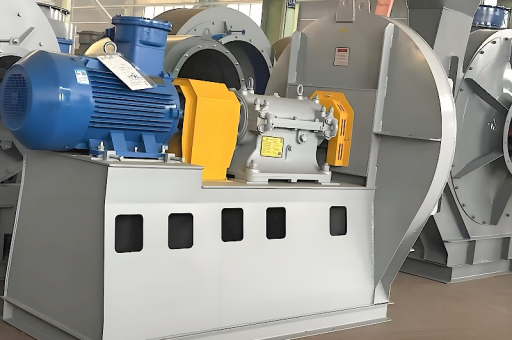
At its simplest, this is a heavy-duty ventilation unit that uses an AC motor to drive a centrifugal blower that pulls air through a carbon filter, extracts it from a space, and facilitates drying by moving large volumes of air at high velocity.
Unlike standard axial fans, the centrifugal design allows for higher pressure output, making it ideal for ducted systems where air must travel through long pipes or push against resistance. The carbon filter is crucial for odor control and chemical adsorption, while the extractor fan ensures continuous airflow. Many industrial drying processes rely on this combined system to remove moisture quickly from products, surfaces, or air.
Key Components and How They Work Together
1 The AC Motor: The Powerhouse
The AC (Alternating Current) motor is the heart of the system. Industrial-grade AC motors are preferred over DC motors for continuous, heavy-duty operations because they offer:
- High torque at startup, essential for moving heavy impellers.
- Durability in high-temperature and dusty environments.
- Simple speed control via variable frequency drives (VFDs).
In this system, the AC motor directly drives the centrifugal impeller. The motor's horsepower (HP) rating determines the blower's ability to generate static pressure—a critical factor when filters are clogged or ducts are long.
2 The Carbon Filter: The Purification Shield
Activated carbon filters are not just for odor control. In this industrial setup, they:
- Adsorb volatile organic compounds (VOCs) from paints, solvents, or chemical processes.
- Capture toxic gases that standard HEPA filters cannot.
- Reduce airborne contaminants that could corrode equipment or harm workers.
The carbon filter is typically placed before the blower (pre-filter) to protect the motor and impeller from sticky or corrosive particles. Some systems use a multi-stage filtration setup: a pre-filter for dust, followed by the carbon filter for gases.
3 The Extractor Fan & Drying Mechanism
The term "extractor fan" refers to the fan's specific function: to pull air out of a confined space. When combined with a drying function, the system moves high-velocity air across wet surfaces or products. This enhances evaporation by:
- Increasing the surface-level air movement.
- Reducing relative humidity in the enclosed area.
- Removing heat and moisture simultaneously.
This is especially important in drying chambers for agricultural products, textiles, or even electronics after washing.
4 The Industrial Centrifugal Blower: High-Pressure Airflow
Unlike a simple axial fan, the centrifugal blower draws air into the center of the spinning impeller and expels it at a right angle, creating high pressure. This allows the system to:
- Overcome the resistance of the carbon filter.
- Push air through long ducting networks.
- Provide consistent airflow even when the filter becomes partially clogged.
The impeller design (forward-curved or backward-curved) affects efficiency. For carbon filter applications, backward-curved impellers are often preferred as they are less prone to dust buildup.
Industrial Applications and Use Cases
This system is widely adopted across multiple sectors:
- Chemical Laboratories & Fume Hoods: The carbon filter absorbs hazardous vapors, while the AC centrifugal blower ensures negative pressure.
- Pharmaceutical Drying Rooms: The system extracts moisture and prevents contamination.
- Food Processing Plants: Used for drying grains, spices, or meats while filtering out airborne allergens.
- Wastewater Treatment: The blower moves air through biofilters, with carbon polishing for odor control.
- 3D Printing or Resin Curing Stations: Extracts fumes and speeds up drying of printed parts.
FAQs: Answering Your Most Common Questions
Q1: Can I use an AC motor carbon filter extractor fan for continuous 24/7 operation? Yes. Industrial AC motors are designed for continuous duty (S1 rating). However, ensure the motor enclosure (e.g., TEFC – Totally Enclosed Fan Cooled) is suitable for the environment. Always monitor the carbon filter saturation level; a clogged filter can overheat the motor.
Q2: How often should I replace the carbon filter? This depends on the concentration of chemicals and airflow volume. For moderate use (e.g., daily 8-hour shifts), replacement every 3–6 months is typical. For heavy chemical exposure, monthly changes may be necessary. Use a manometer (pressure gauge) to measure filter resistance.
Q3: Why choose a centrifugal blower over an axial fan? Axial fans move high volumes of air at low pressure. They are inefficient when resistance (like a carbon filter or ductwork) exists. A centrifugal blower generates 2–5 times more static pressure, making it mandatory for filtered extraction systems.
Q4: What is the ideal power (HP) for a drying application? For small drying chambers (e.g., 100 cubic feet), a 1 HP blower is often sufficient. For large industrial ovens or rooms, 5–10 HP or more may be required. Use CFM (cubic feet per minute) and static pressure calculations to be precise.
Q5: Can I use a speed controller for the AC motor? Yes, but only with an inverter-duty-rated AC motor. Standard motors may overheat if driven at low speeds due to reduced cooling from the built-in fan. A VFD (Variable Frequency Drive) allows you to adjust airflow for different drying or extraction stages.
Q6: Is the carbon filter reusable? No, activated carbon filters are generally single-use. They become saturated with contaminants and cannot be washed. However, some industrial systems use "regenerable" carbon beds that are thermally treated, but these are less common in standard extractor fan systems.
Q7: How do I maintain the centrifugal blower?
- Inspect the impeller for dust buildup quarterly.
- Check bearing lubrication every 6 months.
- Ensure the motor's cooling fins are clean.
- Replace worn belts (if belt-driven) or check direct coupling alignment.
Conclusion: Why This System is the Future of Industrial Ventilation
The combination of an AC motor, carbon filter, extractor fan, drying capability, and industrial centrifugal blower creates a powerhouse of air management. It solves the three primary challenges in industrial airflow: pressure resistance (via centrifugal force), air purification (via activated carbon), and moisture control (via high-velocity extraction).
For engineers and facility managers looking for a reliable, energy-efficient, and low-maintenance solution, this integrated system is not just a purchase—it is an investment in safety, product quality, and workplace health. When selecting your unit, always match the motor power, filter pressure drop, and blower curve to your specific duct layout and environmental requirements.
Remember: the right system will keep your air clean, your products dry, and your operations running smoothly.





