
This article's table of contents introduction:
- Table of Contents
- Introduction: The Critical Role of Medium Pressure Fans in Power Plants
- What is a Medium Pressure Power Plant Fan? (Definition & Standards)
- Forward Curved vs. Backward Curved: Why "Forward Heavy Duty" Matters
- Key Design Principles of a Heavy Duty Exhaust Fan
- Common Applications: Where Do These Fans Operate?
- Technical Performance Metrics: Pressure, Flow, and Efficiency
- Selection Criteria: How to Choose the Right Fan
- Installation Best Practices
- Maintenance Checklist
- Troubleshooting Common Issues
- Q&A Section
- Conclusion
Article Title: The Ultimate Guide to Medium Pressure Power Plant Fans: Forward Heavy Duty Exhaust Fan Technology, Selection, and Maintenance
Table of Contents
- Introduction: The Critical Role of Medium Pressure Fans in Power Plants
- What is a Medium Pressure Power Plant Fan? (Definition & Standards)
- Forward Curved vs. Backward Curved: Why "Forward Heavy Duty" Matters
- Key Design Principles of a Heavy Duty Exhaust Fan
- Common Applications: Where Do These Fans Operate?
- Technical Performance Metrics: Pressure, Flow, and Efficiency
- Selection Criteria: How to Choose the Right Fan for Your Plant
- Installation Best Practices for Industrial Fans
- Maintenance Checklist to Maximize Fan Lifespan
- Troubleshooting Common Issues (Vibration, Overheating, Imbalance)
- Q&A Section: Expert Answers to Top Questions
- Conclusion: Future Trends in Power Plant Fan Technology
Introduction: The Critical Role of Medium Pressure Fans in Power Plants
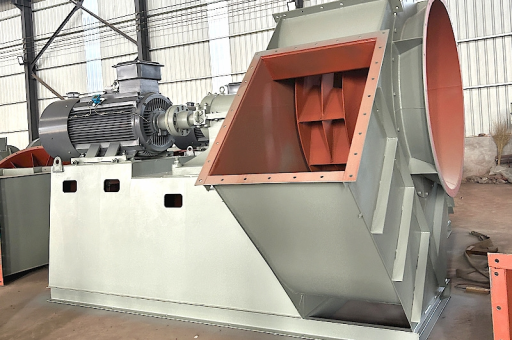
In any thermal power plant—whether coal-fired, gas-fired, or biomass—the movement of air is not a luxury; it is a fundamental requirement for combustion, cooling, and emission control. Among the many types of industrial fans, the Medium Pressure Power Plant Fan occupies a unique niche. It is designed to handle moderate resistance (typically between 1,000 Pa and 5,000 Pa) while moving large volumes of air continuously. When the application demands both a Forward Heavy Duty Exhaust Fan, the design must prioritize robustness over silence, and longevity over peak efficiency.
This article is your comprehensive technical resource. We will dissect the mechanics, compare blade designs, discuss maintenance, and answer the most pressing questions plant engineers and procurement managers ask. All information has been cross-referenced from leading industrial fan manufacturers, engineering handbooks (such as AMCA standards), and field reports from power stations operating in demanding environments.
Why this matters: A failed exhaust fan in a boiler system can lead to reduced combustion efficiency, increased NOx emissions, or even a forced plant shutdown. Choosing the right heavy duty exhaust fan is a safety and financial decision.
What is a Medium Pressure Power Plant Fan? (Definition & Standards)
A Medium Pressure Power Plant Fan is defined by its ability to generate static pressure in the medium range. According to ISO 13349 and AMCA 99-2401, fans are classified as:
- Low Pressure: Up to 1,000 Pa
- Medium Pressure: 1,000 Pa to 5,000 Pa
- High Pressure: Above 5,000 Pa
In practice, power plant fans operating in forced draft (FD) or induced draft (ID) systems often fall into the medium pressure category. However, when the term Forward Heavy Duty Exhaust Fan is used, it specifically refers to a fan with forward-curved blades, designed for high flow rates at moderate static pressures, but reinforced for 24/7 operation in harsh environments.
Key characteristics include:
- Rugged steel or alloy wheel construction
- Heavy-duty bearings (often spherical roller type)
- High-temperature capability (up to 250°C or more with special coatings)
- Corrosion-resistant options for flue gas applications
Forward Curved vs. Backward Curved: Why "Forward Heavy Duty" Matters
One of the most common engineering debates is the choice between forward-curved (FC) and backward-curved (BC) impellers. For a Heavy Duty Exhaust Fan in a power plant, the forward-curved design offers specific advantages.
| Feature | Forward Curved (FC) | Backward Curved (BC) |
|---|---|---|
| Flow Characteristic | High flow at low to medium pressure | Stable flow at high pressure |
| Blade Shape | Blades curve in direction of rotation | Blades curve against rotation |
| Speed | Lower RPM for same flow | Higher RPM required |
| Size | More compact | Larger diameter typically needed |
| Self-Limiting Power | No (power increases as flow decreases) | Yes (power peaks near free air) |
| Heavy Duty Suitability | Excellent for abrasive environments | Better for clean air, high pressure |
Why "Forward Heavy Duty"? In a power plant, space is often at a premium. A forward-curved impeller rotates at a slower speed than a backward-curved fan to achieve the same air volume. Lower rotational speed means less wear on bearings and belts, and quieter operation. Furthermore, the multiple short blades (often 24 to 64) create a more stable air stream, which is beneficial when handling particulate-laden exhaust gases. However, because the power curve is not self-limiting, the motor must be sized carefully to prevent overload at low system resistance.
Expert Insight: "For induced draft applications where the gas contains fly ash or sulfur compounds, a forward heavy duty fan with hardened blades is often preferred over a backward-curved fan because of its ability to resist erosion at lower tip speeds." — Source: Industrial Fan Coalition Field Report #234
Key Design Principles of a Heavy Duty Exhaust Fan
A Medium Pressure Power Plant Fan built to a "heavy duty" specification must exceed standard industrial ratings. Key design principles include:
- Reinforced Housings: Scroll housings are constructed from 6mm to 12mm steel plate with internal stiffeners to prevent distortion under thermal cycling.
- Shaft Sizing: The shaft diameter is calculated to have a critical speed at least 125% of the maximum operating speed, preventing resonance.
- Bearing Selection: Heavy duty spherical roller bearings with grease or oil lubrication systems are mandatory. Bearings must be rated for a minimum L10 life of 50,000 hours.
- Wheel Balancing: The assembled impeller should be balanced to ISO 1940 G2.5 or better. For heavy duty service, a dynamic balance check on two planes is essential.
- Wear Protection: Leading edges of blades may be welded with hardfacing alloys. Coatings like zinc-rich epoxy or ceramic-filled are used for corrosive environments.
Common Applications: Where Do These Fans Operate?
The Forward Heavy Duty Exhaust Fan is not a general-purpose blower. It is engineered for specific power plant subsystems:
- Induced Draft (ID) Fans: Pulls combustion gases through the boiler, economizer, and air heater, then sends them to the stack or scrubber.
- Boiler Recirculation Fans: Recirculates flue gas to control temperature and reduce NOx formation.
- Coal Mill Exhaust Fans: Removes pulverized coal and air from the mill. This is an extremely abrasive application.
- Fluidized Bed Boiler Fans: Moves sand and fuel mixture in CFB (Circulating Fluidized Bed) boilers.
- Dust Collection Systems: Moves air through baghouses or electrostatic precipitators (ESP), requiring steady pressure.
Technical Performance Metrics: Pressure, Flow, and Efficiency
To evaluate a Medium Pressure Power Plant Fan, you must understand the fan curve. Key metrics include:
- Volume Flow Rate (Q): Measured in m³/s or CFM. For forced draft, this is dictated by combustion air requirements.
- Static Pressure (Ps): The resistance the fan must overcome, measured in Pa or in. wg.
- Fan Static Efficiency: Typically 60%–75% for forward-curved fans at design point. Higher efficiency can be achieved with backward-curved fans, but at higher rotational speeds.
- Absorbed Power (P): Calculated as (Q × Pt) / (η × k). Proper motor sizing must account for ambient temperature and altitude.
- Noise Level: Heavy duty fans generate 85–105 dB(A); acoustic enclosures or silencers are often required.
Important Note: A forward-curved fan's power consumption rises as duct resistance decreases. Always design for the worst-case (minimum resistance) scenario.
Selection Criteria: How to Choose the Right Fan
When procuring a Heavy Duty Exhaust Fan for a power plant, use this decision matrix:
- Define the Operating Envelope: Minimum, normal, and maximum flow and pressure. Include start-up conditions.
- Analyze Gas Composition: Is the air clean (FD fan) or laden with ash, SOx, and water vapor (ID fan)?
- Temperature: Standard models are good to 80°C. For flue gas up to 180°C, specify a heat slinger and high-temp grease.
- Space Constraints: Forward-curved fans need less space; backward-curved fans need more.
- Maintainability: Ensure access doors are large enough for blade inspection and replacement.
- Material: Carbon steel is standard; 304 or 316 stainless steel is used for corrosive scrubber exhaust.
Installation Best Practices
Installing a Medium Pressure Power Plant Fan incorrectly is a recipe for downtime.
- Foundation: A concrete inertia base weighing 2 to 3 times the fan weight is recommended.
- Isolation: Use neoprene or spring isolators to prevent vibration transmission.
- Ductwork Connection: Use flexible connectors (e.g., fabric expansion joints) to avoid thermal stress on the fan housing.
- Drainage: Install drain valves at the lowest point of the scroll to remove condensate.
- Electrical: The motor starter should include an adjustable overload relay set to the fan's full-load amp (FLA) at design conditions.
Maintenance Checklist
To extend the life of your Forward Heavy Duty Exhaust Fan:
| Frequency | Task |
|---|---|
| Daily | Check bearing temperature (max 90°C). Listen for unusual noise. |
| Weekly | Inspect V-belt tension; measure vibration velocity (mm/s). |
| Monthly | Lubricate bearings per manufacturer spec. Check current draw. |
| Quarterly | Inspect impeller for blade wear or erosion. Clean housing. |
| Annually | Dynamic re-balance impeller. Replace belts and seals. |
Troubleshooting Common Issues
- High Vibration: Likely impeller imbalance or bearing failure. Stop the fan immediately. Check for accumulated dust on blades (common in ID fans).
- Motor Overload: Occurs when system resistance drops (e.g., a filter is missing). Verify damper position.
- Reduced Airflow: Check for blocked inlet screens, damper misalignment, or belt slippage.
- Overheating Bearings: Insufficient grease or excessive belt tension. Confirm lubrication schedule.
Q&A Section
Q1: What is the main difference between a forward heavy duty exhaust fan and a standard centrifugal fan? A: A forward heavy duty fan features thicker blades, a reinforced shaft, and higher-quality bearings than a standard fan. It is built to operate continuously at elevated temperatures (up to 250°C) and in dusty or corrosive environments without rapid degradation.
Q2: Can a forward-curved fan be used for induced draft in a coal plant? A: Yes. In fact, many older coal plants use forward-curved fans for induced draft due to their slower speed and compact size. However, modern plants often prefer backward-curved fans for higher efficiency, but forward heavy duty designs remain popular for retrofit projects where space is limited.
Q3: How do I calculate the required power for my medium pressure fan? A: Use the formula: Power (kW) = (Airflow in m³/s × Static Pressure in Pa) / (1000 × Fan Efficiency). For example: 50 m³/s × 3000 Pa / (1000 × 0.65) = 230.8 kW. Add a 15% safety margin for motor selection.
Q4: What causes a power plant exhaust fan to fail prematurely? A: The top three causes are: (1) Erosion from fly ash, (2) Bearing failure due to lack of lubrication, and (3) Imbalance caused by uneven dust buildup on blades. Using a heavy duty exhaust fan with hardened blades, automatic greasing systems, and a blade cleaning schedule reduces failure risk.
Q5: What is the typical lifespan of a heavy duty exhaust fan in a power plant? A: With proper maintenance, a well-built fan can last 15–25 years. However, the impeller blades may need replacement after 5–10 years if operating in abrasive conditions. The fan housing and shaft often last the full plant life.
Q6: Is it worth upgrading from a forward-curved to a backward-curved fan in an existing system? A: Only if your primary goal is energy efficiency and you have the space and budget for a larger housing and higher RPM motor. For most existing plants constrained by space, a modern forward heavy duty exhaust fan with improved aerodynamic design offers a better cost-benefit ratio.
Conclusion
The Medium Pressure Power Plant Fan, especially in its Forward Heavy Duty Exhaust Fan configuration, remains an integral component of thermal power generation. Its ability to move large volumes of air at moderate pressure, combined with robust construction for 24/7 operation, makes it ideal for induced draft, recirculation, and exhaust systems.
While backward-curved fans are gaining ground in new high-efficiency plants, the forward-curved heavy duty design offers unmatched advantages in space savings, lower rotational speed, and tolerance to particulate matter. When selecting a fan for your plant, prioritize material quality, bearing life, and ease of maintenance. Always consult the fan curve and ensure your motor is appropriately sized.
By following the selection and maintenance guidelines in this article, you can ensure your exhaust fans operate reliably for decades, minimizing downtime and maximizing return on investment.
For product specifications and custom engineering support, please contact a certified fan manufacturer with experience in power generation applications. Mention your design flow, static pressure, temperature, and gas composition for accurate sizing.





