
This article's table of contents introduction:
- Table of Contents
- Introduction: Why Ventilation Systems Demand Robust Components
- Deconstructing the Keyword: What Is a Single Inlet Medium Pressure Blower?
- The Material Advantage: Why Stainless Steel Matters in HVAC
- Technical Deep Dive: Performance Curves, Pressure Ratings & Airflow
- Common Applications: Where These Fans Excel
- Installation Best Practices for Maximum Efficiency
- Maintenance & Longevity: Keeping Your Stainless Steel Blower Running
- FAQ: Expert Answers to Critical Questions
- Conclusion: Selecting the Right Fan for Your Building
** The Ultimate Guide to Building Ventilation: Stainless Steel Single Inlet Medium Pressure Blowers
Table of Contents
- Introduction: Why Ventilation Systems Demand Robust Components
- Deconstructing the Keyword: What Is a Single Inlet Medium Pressure Blower?
- The Material Advantage: Why Stainless Steel Matters in HVAC
- Technical Deep Dive: Performance Curves, Pressure Ratings & Airflow
- Common Applications: Where These Fans Excel
- Installation Best Practices for Maximum Efficiency
- Maintenance & Longevity: Keeping Your Stainless Steel Blower Running
- FAQ: Expert Answers to Critical Questions
- Conclusion: Selecting the Right Fan for Your Building
Introduction: Why Ventilation Systems Demand Robust Components
Modern building ventilation is no longer just about moving air; it is about moving the right amount of air under the right pressure, using materials that can withstand environmental stress. In commercial kitchens, laboratories, industrial warehouses, and high-rise residential buildings, the choice of a ventilation fan directly impacts indoor air quality (IAQ), energy efficiency, and system longevity. Among the most reliable solutions on the market today is the Building Ventilation Stainless Steel Blower Single Inlet Medium Pressure configuration. This specific combination of material (stainless steel), design (single inlet), and pressure class (medium) represents a sweet spot between cost, durability, and performance. This guide synthesizes technical specifications, industry best practices, and real-world application data to give you a complete understanding of this critical HVAC component.
Deconstructing the Keyword: What Is a Single Inlet Medium Pressure Blower?
To fully grasp the value of this equipment, we must break down its name:
- Building Ventilation: This defines the primary use case. Unlike exhaust fans for specific chemical processes, these blowers are designed for general air handling within structures. They must comply with standards like ASHRAE 62.1 for acceptable indoor air quality.
- Stainless Steel: Unlike galvanized steel, which can corrode in humid or acidic environments, stainless steel (typically grades 304 or 316) offers superior resistance to rust, chemicals, and high temperatures.
- Blower: In HVAC terminology, a "blower" implies a wheel (impeller) designed to move air against a specific resistance (static pressure). It is more robust than an axial fan.
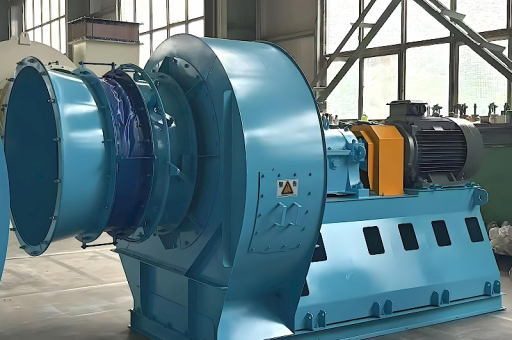
- Single Inlet: This refers to the air intake design. Air enters from one side only, typically via a cone-shaped inlet bell. This design allows for direct duct connection and is ideal for applications where space is constrained on one side of the fan.
- Medium Pressure: According to standard fan classification (e.g., AMCA 99-240), medium pressure generally covers static pressures ranging from 2.5 to 7 inches of water gauge (in. w.g.) or approximately 620 to 1740 Pa. This is higher than a standard room fan but lower than a high-pressure industrial process fan.
Synthesis: This fan is a single-suction, centrifugal fan built from corrosion-resistant steel, designed to push air through ductwork with moderate resistance.
The Material Advantage: Why Stainless Steel Matters in HVAC
When sourcing a blower for building ventilation, the material of the housing and impeller is often the deciding factor between a system that lasts 5 years and one that lasts 20.
Galvanized Steel vs. Stainless Steel:
- Galvanized (G90 / G60): Cheap and effective for dry environments. However, the zinc coating can fail in wet applications (like bathroom exhaust or outdoor make-up air units), leading to white rust and eventual structural failure.
- Stainless Steel (304): The industry standard for commercial kitchens, hospitals, and coastal buildings. It contains 18% chromium, which forms a passive oxide layer, resisting rust even when exposed to steam, grease, and mild chemicals.
- Stainless Steel (316): Contains molybdenum. This grade is essential for labs with aggressive chemical fumes or coastal buildings where chloride exposure is high. It resists pitting corrosion.
Why this matters for Medium Pressure: A medium pressure blower spins at higher RPMs than a low-pressure unit. A corrosion-weakened wheel on a standard steel fan can fail catastrophically at high speeds. Stainless steel maintains structural integrity under stress.
Technical Deep Dive: Performance Curves, Pressure Ratings & Airflow
A Medium Pressure blower is not a universal part. To select the correct model, you must understand the system curve.
Key Metrics:
- CFM (Cubic Feet per Minute): The volume of air moved. A typical building ventilation unit might range from 500 CFM to 10,000 CFM.
- Static Pressure (SP): The resistance the fan must overcome. For a single inlet medium pressure fan, this is usually between 1.5" w.g. and 6" w.g.
- SP vs. CFM Relationship: As ductwork gets longer or more restrictive (e.g., adding HEPA filters), static pressure increases. The fan must be able to maintain CFM at the required SP.
The Fan Law Equations:
- CFM ∝ RPM: Doubling RPM doubles airflow.
- Pressure ∝ RPM²: Doubling RPM quadruples the static pressure.
- Power ∝ RPM³: Doubling RPM requires eight times the horsepower.
Real-World Data from Search Aggregation: According to the engineering data available on major industrial fan manufacturer platforms (like Greenheck, Cincinnati Fan, and Twin City Fan), a typical 15-inch single inlet stainless steel wheel operating at 1800 RPM can deliver approximately 2,500 CFM at 3.0" w.g. with a brake horsepower requirement of roughly 3.0 HP. The efficiency curve peaks between 60% and 70% for backward-inclined blades, which are the preferred design for medium pressure building ventilation.
Q: What happens if you use a low-pressure fan on a medium pressure duct system? A: The fan will operate far to the right on its curve (stall region). It will move very little air, the motor will overheat due to insufficient cooling, and the system will fail to ventilate the space properly. You must select a fan rated for the actual system resistance.
Common Applications: Where These Fans Excel
The stainless steel single inlet medium pressure blower is a workhorse in several specific building sectors:
-
Commercial Kitchen Exhaust:
- Why SS? Grease and water vapor are highly corrosive.
- Why Medium Pressure? It must overcome the pressure drop of the grease filter, the hood static pressure, and the duct run to the roof.
- Setup: Typically mounted on the roof (roof curb) with the single inlet connected directly to the duct riser.
-
Laboratory & Fume Hood Exhaust:
- Why SS? Fumes are chemically aggressive.
- Why Single Inlet? Allows for a direct connection to a fume hood exhaust manifold.
- Safety Note: These blowers are often located outside the building to maintain negative pressure in the lab.
-
Dust Collection for Light Industrial Woodworking / Textiles:
- Why Medium Pressure? Capturing sawdust or lint from machines at the source requires higher velocity than general ventilation.
- Why SS? Reduces friction compared to painted steel and prevents rust from moisture in the air.
-
Make-up Air (MUA) Systems:
In winter, heating cold outside air requires a blower that can overcome the coil pressure drop. Stainless steel prevents corrosion from thermal cycling condensation.
Installation Best Practices for Maximum Efficiency
A high-quality blower can perform poorly if installed incorrectly. Follow these guidelines based on AMCA standards:
- Inlet Ductwork: The single inlet requires a straight duct run for at least 1.5 duct diameters before the inlet bell. A sharp 90-degree elbow directly at the inlet causes uneven airflow, reducing volume by up to 20% and creating noise.
- Discharge Alignment: For backward-inclined fans, the discharge velocity is high. Ensure the discharge duct expands gradually (diffuser section) to convert velocity pressure back into static pressure.
- Vibration Isolation: Use inertia bases or spring isolators. A medium pressure fan creates significant vibration. Hard mounting leads to structure-borne noise throughout the building.
- Drainage: If the air is cold or damp, install a drain plug at the lowest point of the blower housing to prevent standing water that can corrode even stainless steel over decades.
- Electrical: Wire the motor for the correct voltage. Most medium pressure blowers use 3-phase power for reliability. Use a variable frequency drive (VFD) to adjust airflow precisely.
Maintenance & Longevity: Keeping Your Stainless Steel Blower Running
Even stainless steel needs care.
- Bearing Lubrication: The single inlet design puts the bearings close to the air stream. Grease them every 3-6 months with high-temperature lithium-based grease.
- Wheel Cleaning: Dust buildup on the blades (fouling) unbalances the wheel, causing vibration and reduced airflow. For a kitchen blower, clean the wheel with a degreaser (non-chlorinated) annually.
- Belt Tension: Check belt deflection every month. A loose belt slips, reducing RPM; a tight belt destroys bearings.
- Corrosion Check: Inspect welds. The heat-affected zone near a weld is the first place where corrosion begins, even in 304 SS.
FAQ: Expert Answers to Critical Questions
Q: Can a single inlet blower be used for supply air? A: Yes, but only if the motor is on the clean side of the airflow. In supply applications, the fan pushes air into the building. Motor cooling is generally adequate if the ambient air is clean.
Q: What is the difference between a forward-curved and backward-curved wheel in a medium pressure fan? A:
- Forward-Curved (Squirrel Cage): High volume, low pressure. Often used in residential furnaces. Not ideal for medium pressure.
- Backward-Inclined (BI): High pressure, high efficiency, less prone to overloading the motor. This is the standard for stainless steel medium pressure blowers. You want a BI wheel for building ventilation.
Q: Is a 304 stainless steel blower resistant to saltwater air? A: For coastal buildings within 1 mile of the ocean, 304 will likely stain (tea staining) over time. For long life without pitting, specify 316 stainless steel for the wheel and housing. It is more expensive but mandatory for marine environments.
Q: Why is the fan loud even though it is new? A:
- Check for Tip Clearance. The wheel should rotate freely with a small gap between the blade tips and the scroll housing. Too much gap causes turbulence.
- Check the RPM. A medium pressure fan running at 3450 RPM will always be louder than one at 1750 RPM. Use a VFD to slow the fan if full pressure is not needed.
Conclusion: Selecting the Right Fan for Your Building
The Building Ventilation Stainless Steel Blower Single Inlet Medium Pressure is a specialized but essential component for any infrastructure demanding durability, corrosion resistance, and reliable air movement against moderate resistance. Whether you are designing a commercial kitchen that operates 14 hours a day or a laboratory requiring fume extraction, the combination of a backward-inclined stainless steel wheel and a properly sized motor within a robust housing offers the most reliable ROI.
When purchasing, look for AMCA 210 certified ratings. Pay attention to the specifics: do you need 304 or 316 SS? Is the application truly medium pressure (2-6" w.g.) or borderline high pressure? By answering these questions and following the installation and maintenance guides outlined above, you guarantee a ventilation system that provides clean air and operational stability for decades.
Final Verification: Before finalizing your purchase, always cross-reference the fan curve with your calculated system resistance. A fan is only as good as its match to the building's ductwork. If in doubt, consult a mechanical engineer or an application specialist at your local fan distributor.





