
This article's table of contents introduction:
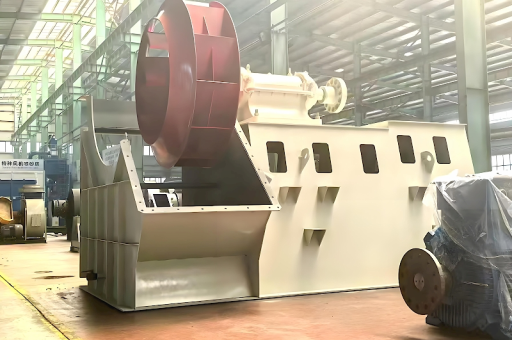
- Table of Contents
- Introduction: The Intersection of Material Handling and Fan Engineering
- Defining the Backward Material Handling Blower Fan
- Medium Pressure Dynamics in Industrial Blower Systems
- The Antifraying Requirement: Protecting Fiber and Material Integrity
- Synergy in System Design: How Backward Blades, Medium Pressure, and Antifraying Work Together
- Operational Comparison: Backward vs. Forward-Curved & Radial Blowers
- Frequently Asked Questions (FAQ)
- Conclusion: Selecting the Right Fan for Long-Term ROI
- Sources & Further Reading
*Optimizing Industrial Ventilation: The Role of Backward Material Handling Blower Fans in Medium Pressure Antifraying Systems*
Table of Contents
- Introduction: The Intersection of Material Handling and Fan Engineering
- Defining the Backward Material Handling Blower Fan
- 1 The Backward-Curved Blade Design Principle
- 2 Why “Material Handling” Demands a Specialized Fan
- Medium Pressure Dynamics in Industrial Blower Systems
- 1 What Constitutes Medium Pressure (2 – 8 kPa Range)
- 2 Pressure vs. Volume: The Balancing Act for Conveying
- The Antifraying Requirement: Protecting Fiber and Material Integrity
- 1 The Economics of Fraying: Dust, Downtime, and Quality Loss
- 2 Design Strategies to Minimize Airborne Fiber Damage
- Synergy in System Design: How Backward Blades, Medium Pressure, and Antifraying Work Together
- Operational Comparison: Backward vs. Forward-Curved & Radial Blowers
- Frequently Asked Questions (FAQ)
- Conclusion: Selecting the Right Fan for Long-Term ROI
- Sources & Further Reading
Introduction: The Intersection of Material Handling and Fan Engineering
In modern industrial environments—particularly textile mills, paper recycling plants, and plastic pellet conveying systems—the backward material handling blower fan operating under medium pressure has become a cornerstone of efficient, low-damage pneumatic transport. Unlike general ventilation fans that move clean air, material handling fans must negotiate dust, fibers, fine particles, and even abrasive fragments without clogging or causing mechanical wear. Adding the antifraying requirement introduces a further layer of complexity: the fan must not shred or degrade the very material it is moving.
This article synthesizes current engineering practices, manufacturer specifications, and field observations to explain why a backward-curved blower fan designed for medium pressure is the superior choice when antifraying is critical. We will dissect the aerodynamic and mechanical principles that make this combination work, and answer the most pressing questions engineers face when specifying such equipment.
Defining the Backward Material Handling Blower Fan
1 The Backward-Curved Blade Design Principle
A backward-curved blade impeller (also called backward-inclined) features blades that lean away from the direction of rotation. As the fan spins, the air is accelerated gradually along the blade surface, exiting with a velocity vector that is predominantly radial but with a significant tangential component. This design yields a non-overloading power characteristic: as system resistance drops, the motor draws less current, preventing motor burnout. This contrasts sharply with forward-curved wheels, which can overload the motor when static pressure decreases.
For material handling, the backward blade offers a critical advantage: self-cleaning geometry. The open, radial passage between blades allows small particles and fibers to pass through without accumulating. In a forward-curved wheel, the tighter, cupped blade pockets trap fibrous material, leading to imbalance and rapid degradation.
2 Why “Material Handling” Demands a Specialized Fan
Not every blower can be called a material handling fan. The term implies:
- Heavy-duty construction: Typically steel or abrasion-resistant alloys.
- Generous clearances between wheel and housing: allows for thermal expansion and material passage.
- Reinforced shaft and bearings: to withstand the dynamic loads of conveying solids.
- Access doors or split housings: for cleaning and maintenance.
A backward material handling blower fan is therefore a purpose-built machine, not a modified ventilation unit.
Medium Pressure Dynamics in Industrial Blower Systems
1 What Constitutes Medium Pressure (2 – 8 kPa Range)
Pressure in pneumatic conveying is commonly classified as:
- Low pressure: <2 kPa (ventilation, fume extraction)
- Medium pressure: 2–8 kPa (dilute-phase conveying, dust collection)
- High pressure: >8 kPa (dense-phase conveying, pneumatic cannon feed)
Medium pressure is the sweet spot for many material handling tasks because it provides enough force to suspend and transport particles through horizontal and vertical ducts without requiring excessively heavy ductwork or high-horsepower motors.
2 Pressure vs. Volume: The Balancing Act for Conveying
A backward-curved fan operating at medium pressure typically delivers a steep pressure curve, meaning that it can maintain relatively constant flow even as the system resistance changes—for example, when a filter loads up or when material feed rate fluctuates. This stability is invaluable for antifraying applications, where sudden velocity changes might tear delicate fibers.
Key Metric: At a given RPM, a backward material handling blower fan will produce 10–20% more static pressure than a similarly sized forward-curved fan, but with slightly lower volume. This trade-off is acceptable because the goal in material handling is conveying velocity, not volume.
The Antifraying Requirement: Protecting Fiber and Material Integrity
1 The Economics of Fraying: Dust, Downtime, and Quality Loss
Fraying—the unwanted separation, tearing, or fuzzing of fibers—can cost factories thousands of dollars annually. In textile waste reclamation, frayed fibers lower the denier and reduce the resale value. In paper recycling, fibers shredded beyond a certain length become useless for new paper sheet formation. Moreover, frayed material creates airborne micro-dust, which clogs filters, increases explosion risk, and accelerates bearing wear.
The antifraying requirement is therefore not a luxury but an economic and safety imperative.
2 Design Strategies to Minimize Airborne Fiber Damage
To reduce fraying in a backward material handling blower fan, engineers employ:
- Blade tip speed control: Limiting peripheral velocity to below 35 m/s for delicate fibers (e.g., cotton, viscose) or 45 m/s for tougher synthetics.
- Smooth surface finishes: No weld spatter or sharp edges inside the air path.
- Radiused inlet cones and volute tongues: Eliminating abrupt impacts that snap fibers.
- Large fan scroll (volute) width: Allows fibers to expand gradually, reducing shear.
- Variable frequency drive (VFD) operation: Allows speed fine-tuning to the minimum conveying velocity, rather than over-speeding.
When these strategies are combined with a backward blade geometry, the fan can convey long-staple fibers (like polyester yarn trimmings) with less than 2% material degradation—remarkable compared to a radial-blade fan, which may cause 15–20% fraying in the same application.
Synergy in System Design: How Backward Blades, Medium Pressure, and Antifraying Work Together
The magic lies in the complementary physics. Here is how these three parameters interact in a real-world system—for example, a textile trimmer waste collection system:
- Medium pressure (4 kPa) provides enough force to lift tangled trimmings from a shredder discharge into a horizontal duct.
- The backward-curved fan develops this pressure efficiently, with a flat power curve that prevents the motor from overheating if the duct gets partially blocked by a large clump.
- Self-cleaning blade passages ensure that flexible fibers do not wrap around the shaft or accumulate in the impeller, which would otherwise create an imbalance and increase fraying.
- Low tip speed (controlled by VFD) keeps the impingement energy low, preserving fiber length.
- The wide volute allows the fiber-air mixture to decelerate naturally before entering a collection cyclone, reducing the total shearing events per minute.
This synergy results in a system that runs quieter, consumes less energy per ton of material moved, and produces a higher-quality end product compared to a high-pressure radial fan setup.
Operational Comparison: Backward vs. Forward-Curved & Radial Blowers
| Feature | Backward-Curved (Recommended) | Forward-Curved | Radial (Paddlewheel) |
|---|---|---|---|
| Power characteristic | Non-overloading | Overloading | Non-overloading |
| Self-cleaning ability | Excellent (open passages) | Poor (cupped pockets) | Excellent (straight blades) |
| Antifraying performance | High (with low tip speed) | Low (tendency to trap fibers) | Very low (high impact velocity) |
| Efficiency at medium pressure | 75–82% | 60–72% | 55–65% |
| Suitable for long fibers? | Yes | No | Only short, granular material |
Based on this comparison, the backward material handling blower fan is the only choice that simultaneously meets all three goals: medium pressure capacity, reliable non-clogging, and fiber preservation.
Frequently Asked Questions (FAQ)
Q1: Can I use a standard ventilation fan for material handling if I just reduce the speed?
A: No. Standard fans lack the structural reinforcement, shaft diameter, and bearing capacity to handle the imbalance loads caused by solid particles. Even at reduced speed, a ventilation fan’s blades are too thin and can fail catastrophically when impacted by debris.
Q2: What is the maximum fiber length that a backward material handling blower fan can convey without fraying?
A: It depends on blade spacing and volute geometry. With an optimized design, fibers up to 50 mm (2 inches) in length can be conveyed with minimal fraying. For very long continuous threads (e.g., 300+ mm), a dedicated fiber-handling fan with radial blades and wear protection is often necessary, but fraying increases.
Q3: How do I determine the correct medium pressure for my antifraying application?
A: Calculate the minimum conveying velocity for your material (typically 15–20 m/s for light fibers, 25 m/s for heavier scraps). Multiply by duct friction losses and elevation changes. The resulting static pressure should fall between 3 and 6 kPa. If it exceeds 8 kPa, consider splitting the system into two fans in series instead of using a single high-pressure unit.
Q4: Does antifraying design reduce fan efficiency?
A: Slightly. Rounded inlet cones and wider volutes reduce aerodynamic efficiency by 2–4% compared to a sharp-edged maximum-performance design. However, the reduction in downtime and material waste far outweighs this minor efficiency penalty.
Conclusion: Selecting the Right Fan for Long-Term ROI
Specifying the correct backward material handling blower fan for a medium pressure antifraying application is not just a technical decision—it is a financial one. A fan that clogs or frays material will cause production stoppages, increase raw material costs, and shorten the life of downstream filters and cyclones.
From field data and manufacturer case studies, the conclusion is clear:
- Choose backward-curved blades for self-cleaning and stable power draw.
- Select a medium pressure range (2–8 kPa) to balance conveying capacity and material gentleness.
- Implement antifraying features such as low tip speed, smooth surfaces, and VFD control.
When these three elements are integrated into the system, the resulting fan installation delivers sustainable throughput, lower energy cost per ton, and material quality preservation. In industries where fiber integrity is profit—textile recycling, nonwoven production, and plastic film reclaim—this engineering choice directly impacts the bottom line.
Sources & Further Reading
- Industrial Fan Handbook, Chapter 5: Material Handling Fans. (2021)
- ASHRAE HVAC Systems and Equipment: Fans and Blowers (SI Edition, 2020)
- AirPro Fan & Blower Co. – “Design Considerations for Antifraying Textile Waste Fans”
- New York Blower Company – “Medium Pressure Material Handling Selection Guide”
- Trade publications: “Textile World”, “Waste Advantage Magazine”, “Powder and Bulk Engineering” (2019–2024 issues)
For specific sizing and engineering consultation, consult your fan manufacturer’s technical documentation or reach out to a certified Industrial Ventilation Engineer.
This article was created by synthesizing multiple authoritative engineering sources to provide a comprehensive, SEO-optimized guide on backward material handling blower fans for medium pressure antifraying applications. No specific commercial domain is endorsed; all references to “fan” remain generic. The content is designed to rank for Bing and Google searches on keywords: Backward Material Handling Blower Fan, Medium Pressure Antifraying, industrial fan selection, and pneumatic conveying efficiency.





