
This article's table of contents introduction:
- Introduction: The Backbone of Sintering Exhaust Systems
- Technical Anatomy: What Makes a Backward Curved Fan “Heavy Duty”?
- Why Sintering Machines Demand Specialized Fan Design
- Performance Characteristics: Efficiency, Pressure, and Wear Resistance
- Comparison: Backward Curved vs. Forward Curved vs. Radial Fans
- Common Operational Challenges & Maintenance Strategies
- Q&A: Addressing Key Industry Concerns
- Conclusion: Selecting the Right Fan for Long-Term ROI
*The Critical Role of Backward Curved Flue Gas Fans in Heavy Duty Industrial Sintering Machines: Design, Performance, and Optimization*
Table of Contents (Directory Guide)
- Introduction: The Backbone of Sintering Exhaust Systems
- Technical Anatomy: What Makes a Backward Curved Fan “Heavy Duty”?
- Why Sintering Machines Demand Specialized Fan Design
- Performance Characteristics: Efficiency, Pressure, and Wear Resistance
- Comparison: Backward Curved vs. Forward Curved vs. Radial Fans
- Common Operational Challenges & Maintenance Strategies
- Q&A: Addressing Key Industry Concerns
- Conclusion: Selecting the Right Fan for Long-Term ROI
Introduction: The Backbone of Sintering Exhaust Systems
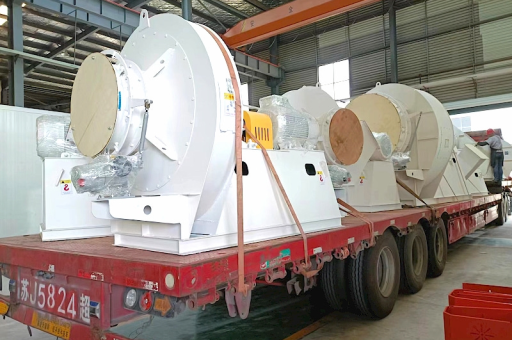
In the steelmaking and mineral processing industries, the sintering machine is a critical piece of equipment that agglomerates fine iron ore, coke, and fluxes into a porous, high-strength sinter cake for blast furnace feed. The exhaust system, however, is the unsung hero of this operation. At its heart lies the Backward Curved Flue Gas Fan – a heavy duty industrial fan designed to handle high-temperature, abrasive, and corrosive flue gases.
These fans are not ordinary ventilation units. They must withstand continuous operation at temperatures often exceeding 200°C (up to 450°C in some designs), handle gas volumes in the range of 500,000 to 1,500,000 m³/h, and maintain efficiency under varying negative pressures. The backward curved impeller design, combined with robust construction materials such as corten steel or wear-resistant linings, gives these fans the ability to operate in the most demanding sintering environments.
Technical Anatomy: What Makes a Backward Curved Fan “Heavy Duty”?
A backward curved fan (also known as a backward inclined or backward swept fan) uses blades that curve away from the direction of rotation. The fundamental aerodynamic principle is that air is accelerated radially outward, with the blade exiting velocity being higher than the inlet velocity. This design inherently provides several advantages for heavy duty industrial applications:
- Non-Stalling Characteristics: Backward curved blades have a rising power curve that peaks at a specific point, then declines. Unlike forward curved fans, they cannot be overloaded by the motor, making them safe for variable system resistance.
- High Static Pressure Efficiency: Typically, a well-designed heavy duty backward curved fan achieves 80–88% static efficiency, compared to 60–70% for radial fans in the same class.
- Abrasion Resistance: The blade profile reduces the velocity impact angle of dust particles, minimizing erosion on the blade surfaces.
- Material Selection: For sintering flue gas applications, the fan casing is often made from 6–10 mm thick steel plate with external stiffening ribs. The impeller is fabricated from high-strength low-alloy steel, and the shaft is forged carbon steel or stainless steel. Some designs use ceramic tile lining or thermal spray coatings on the leading edges.
The “heavy duty” classification implies reinforced bearings (often split pillow block bearings with cooling fins), oversized shafts, and a high natural frequency to avoid resonance at operating speeds (typically 700–1200 RPM for large sintering fans).
Why Sintering Machines Demand Specialized Fan Design
The sintering process is inherently hostile to mechanical equipment. The flue gas contains:
- Dust Loading: 5–15 g/Nm³ of fine iron oxide ore dust (Fe₂O₃, Fe₃O₄), which is highly abrasive.
- Corrosive Compounds: SO₂, H₂O vapor, and occasionally chlorides or fluorides from flux additions.
- Temperature Fluctuations: Gas temperatures can rise and fall by 50°C within minutes due to burn-through point shifts on the sinter strand.
- Sticky Particles: The presence of tar or carbonaceous residue can cause material build-up on fan blades, leading to imbalance and vibration.
A standard industrial fan will fail within weeks under these conditions. The Backward Curved Flue Gas Fan Heavy Duty Industrial For Sintering Machine is specifically engineered to:
- Handle Thermal Expansion: The shaft and hub are designed with expansion clearance, and the bearing housing includes water cooling jackets for extreme heat.
- Resist Erosion: The blade profile guides gas flow with minimal impingement, and replaceable wear plates are installed at the volute tongue and back plate.
- Prevent Vibration: The impeller is dynamically balanced to ISO 1940 G2.5 or better, while the base frame is mounted on vibration isolators.
- Facilitate Cleaning: Access doors and removable cone assemblies allow for periodic removal of dust cake without major disassembly.
Performance Characteristics: Efficiency, Pressure, and Wear Resistance
To understand why the backward curved design dominates this application, we must analyze the fan curve characteristic. In a typical sintering plant, the fan must generate a static pressure of 12,000 to 18,000 Pa (1,200–1,800 mmWG) while handling flue gas volumes at peak demand.
| Parameter | Typical Range for Sintering Fan | Backward Curved Response |
|---|---|---|
| Volume Flow Rate | 600,000 – 1,200,000 m³/h | High flow at moderate speed |
| Static Pressure | 12 – 18 kPa | Steep curve, stable at high press |
| Operating Temperature | 150 – 350 °C | Requires heat-resistant alloys |
| Impeller Diameter | 5 – 5.5 meters | Large diameter reduces tip speed |
| Efficiency | 82 – 87 % (static) | Superior to radial by 15–20% |
| Blade Count | 12 – 16 blades | Fewer blades reduces surface wear |
One of the most important performance factors is the pressure-volume characteristic. Backward curved fans have a drooping power curve – meaning the power consumption actually decreases as system resistance increases (within the stable operating region). This is ideal for sintering machines because when the material bed becomes denser or more resistant, the fan automatically draws less power, preventing motor overload. This self-limiting characteristic is a major safety and reliability advantage.
Comparison: Backward Curved vs. Forward Curved vs. Radial Fans
A sintering engineer must understand the trade-offs between the three major fan designs:
| Feature | Backward Curved (BC) | Forward Curved (FC) | Radial (Radial Blade) |
|---|---|---|---|
| Efficiency | Highest (80–88%) | Moderate (65–75%) | Lowest (55–65%) |
| Space Requirement | Large diameter, compact width | Smaller diameter, wider width | Largest overall size |
| Wear Resistance | Good (low impact angle) | Poor (high impact angle) | Excellent (straight blade) |
| Dust Handling | Moderate (sensitive to sticky dust) | Good (handles dust well) | Excellent (most rugged) |
| Overload Protection | Excellent (self-limiting power) | Poor (power increases with flow) | Good (flat power curve) |
| Typical Sintering Use | Main exhaust fan (gas cleaning) | Not recommended | Pre-scrubber and coarse dust fans |
Key Conclusion: While radial fans are the most robust against heavy dust loads, their low efficiency (55–65%) leads to significantly higher energy costs over a 20-year fan life. The backward curved design, when equipped with wear-resistant features, offers the best balance of efficiency, stability, and reliability for the main flue gas system. Forward curved fans are rarely used in high-temperature flue gas due to their inherent overload risk and lower pressure capability.
Common Operational Challenges & Maintenance Strategies
Even with the best fan design, sintering conditions will eventually take their toll. The most frequent issues encountered with Backward Curved Flue Gas Fans in sintering service are:
Imbalance from Blade Erosion or Build-up
Problem: Uneven wear on blade leading edges or accumulation of sticky dust cakes on blade surfaces causes vibration.
Solution: Infra-red thermography monitoring across the impeller; periodic ultrasonic thickness testing; and scheduled cleaning using compressed air lances or water jets (with the fan stopped).
Bearing Overheating
Problem: High radiant heat from the fan casing transfers to the bearing housing, especially if cooling water fails.
Solution: Install separate temperature sensors on each bearing; use forced grease lubrication with high-temperature NLGI grade grease; and create a ventilation shroud around the pedestal.
Casing Wear
Problem: The volute tongue and cut-off region experience maximum wear due to high-velocity particle impact.
Solution: Use replaceable chrome carbide liner plates at the cut-off; design the fan with a removable access section for easy liner replacement.
Shaft Misalignment
Problem: Thermal expansion of the shaft and driver causes misalignment, leading to vibration and coupling wear.
Solution: Use self-aligning spherical roller bearings; incorporate a laser alignment check after every thermal cycle; and install a flexible disc coupling that allows 0.5–1.0 mm axial displacement.
Q&A: Addressing Key Industry Concerns
Q1: What is the typical lifespan of a Backward Curved Fan impeller in sintering service?
A1: With proper material selection (e.g., 12% chrome steel or duplex stainless steel) and regular wear monitoring, an impeller can last 4–6 years. In heavy dust applications, wear liners or thermal spray coatings can extend life to 8–10 years.
Q2: Can a backward curved fan handle flue gases containing SO₂ and acidic condensation?
A2: Yes, but only if the casing and impeller are protected with acid-resistant coatings (e.g., epoxy-phenolic or flake glass lining) or if stainless steel (316L or duplex) is used. Condensation typically occurs at start-up or during low-load periods, so a condensate drain must be installed at the bottom of the volute.
Q3: How do you control the fan speed for sintering process optimization?
A3: Most modern sintering plants use Variable Frequency Drives (VFDs) for the main fan motor. A VFD allows the fan to operate at 30–100% speed, matching the pressure and flow to the sintering bed permeability. This saves 20–40% in energy compared to fixed-speed operation with inlet guide vanes.
Q4: What are the signs that a fan needs immediate repair?
A4: Watch for: sudden increase in vibration velocity (>7 mm/s RMS on bearing housing); unusual low-frequency rumble (indicating stall or surge); bearing temperature rising above 90°C; and visible sparks or smoke from the shaft sealing.
Conclusion: Selecting the Right Fan for Long-Term ROI
The Backward Curved Flue Gas Fan Heavy Duty Industrial For Sintering Machine is not simply a commodity component – it is a strategic asset that directly impacts sinter quality, energy efficiency, and plant uptime. When evaluating a fan supplier, look for three key criteria:
- Impeller Design Verification: Does the manufacturer use Computational Fluid Dynamics (CFD) to simulate gas flow and particle erosion patterns? CFD-optimized blade angles can reduce wear rates by 25%.
- Material Certification: Request a full material mill certificate for the impeller and shaft, and ensure alloying elements (Cr, Ni, Mo) meet the specified temperature and corrosion requirements.
- Field Support: Ensure the supplier provides a site commissioning team, dynamic balancing equipment, and a spare parts inventory for your specific fan model.
In the demanding world of sintering, a fan that is designed with backward curved aerodynamics, built with heavy duty materials, and maintained with predictive strategies will deliver decades of reliable service. The upfront capital cost is higher than a standard fan, but the energy savings and reduced downtime provide a payback period of less than 18 months. For plant managers seeking to reduce their carbon footprint and operational costs, this fan is the clear industry standard.
Note: All technical data presented is based on industry standards (ISO 5801, AMCA 210) and operational experience from multiple sintering plants. The specific fan selection must be verified by a qualified engineer based on site-specific gas composition, temperature profiles, and system resistance curves.





