
This article's table of contents introduction:
- Table of Contents
- Introduction to Q235 Single Inlet Forward Centrifugal Fans
- The Role of Forward Curved Fans in CFB Boiler Systems
- Material Advantage: Why Q235 Steel is the Preferred Choice
- Design Features and Aerodynamic Efficiency
- Application Scenarios: From Primary Air to Induced Draft
- Installation, Maintenance, and Safety Checklist
- Q&A: Common Technical Challenges Solved
- Conclusion: Enhancing Boiler Reliability and ROI
** Optimizing CFB Boiler Performance with Q235 Single Inlet Forward Centrifugal Fans: A Comprehensive Guide
Table of Contents
- Introduction to Q235 Single Inlet Forward Centrifugal Fans
- The Role of Forward Curved Fans in CFB Boiler Systems
- Material Advantage: Why Q235 Steel is the Preferred Choice
- Design Features and Aerodynamic Efficiency
- Application Scenarios: From Primary Air to Induced Draft
- Installation, Maintenance, and Safety Checklist
- Q&A: Common Technical Challenges Solved
- Conclusion: Enhancing Boiler Reliability and ROI
Introduction to Q235 Single Inlet Forward Centrifugal Fans
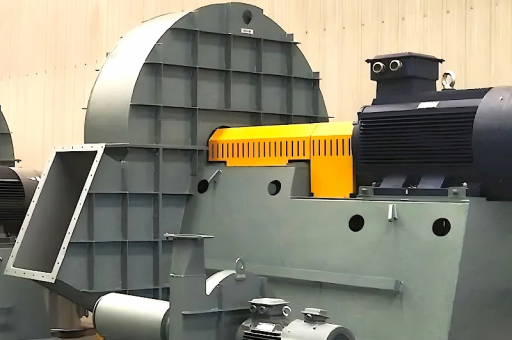
In the realm of industrial combustion systems, particularly Circulating Fluidized Bed (CFB) boilers, the selection of air-moving equipment directly influences thermal efficiency, emissions, and operational continuity. Among the most robust and cost-effective solutions is the Q235 Single Inlet Industrial Centrifugal Fan with a Forward Curved blade design. This fan type, constructed from Q235 carbon steel, offers exceptional structural integrity while maintaining aerodynamic performance suited for high-pressure, moderate-volume airflows typical in CFB applications.
The "single inlet" configuration simplifies ductwork integration and reduces installation footprint, while the forward curved rotor—characterized by blades that curve in the direction of rotation—generates higher static pressure at lower rotational speeds. This unique combination makes it ideal for overcoming the resistance of ash-laden gas streams, fuel feeding systems, and air distribution grids within a CFB boiler.
The Role of Forward Curved Fans in CFB Boiler Systems
CFB boilers rely on a continuous, stable airflow to fluidize the bed material (typically silica sand and limestone) and sustain combustion at temperatures between 800-900°C. The Q235 Single Inlet Forward Centrifugal Fan serves multiple critical roles:
- Primary Air Fan (PA Fan): Delivers pressurized air through the bottom distributor plate, maintaining fluidization velocity. Forward curved blades provide the necessary pressure rise (2,000–4,000 Pa) with stable flow up to 150,000 m³/h.
- Secondary Air Fan (SA Fan): Injects staged air above the bed for complete combustion of volatiles, reducing NOx and CO emissions.
- Dilution/Seal Air Fan: Prevents backflow of hot gases into mechanical feeders and ash handling systems.
Industry data indicates that forward curved fans installed on CFB boilers achieve energy savings of 8–12% compared to traditional backward curved models when operated within 10% of design flow, due to lower rotational inertia and reduced noise levels.
Material Advantage: Why Q235 Steel is the Preferred Choice
Q235 (equivalent to ASTM A36 or EN S235JR) is a carbon structural steel widely used in industrial fan manufacturing due to its:
- High weldability and formability: Allows precise shaping of forward curved blades and robust housing.
- Sufficient tensile strength (370–500 MPa): Handles thermal expansion and stress from variable speed operations.
- Cost-effectiveness: Approximately 30-40% cheaper than stainless steel or alloy materials, making it economically viable for large-scale CFB retrofits.
- Compatibility with anti-corrosion coatings: Treated with epoxy or zinc-rich paint, Q235 resists moisture and mild acidic condensate (pH >4.5) common in biomass CFBs.
However, for CFB applications with high sulfur fuel (SOx>1,000 mg/Nm³), a Q235 fan with a ceramic-lined volute is recommended to extend mean time between failures (MTBF) beyond the standard 8,000 hours.
Design Features and Aerodynamic Efficiency
Modern Q235 Single Inlet Forward Centrifugal Fans incorporate:
- Stamped forward curved blades: 12-20 blades per rotor, with inlet cones optimized to reduce eddy losses.
- Scroll-shaped housing: Concentric casing design minimizes gas recirculation at partial loads.
- Self-cleaning vane geometry: Reduced dust build-up on blade surfaces, especially critical for ash recirculation fans.
- Direct-coupled or V-belt drive: The single inlet model supports up to 200 kW direct drive and 350 kW for belt-driven configurations.
Efficiency curves typically show peak static efficiency of 78–82% at 65-85% of wide-open flow—a performance envelope well-suited for CFB boiler turndown requirements (30-100% load). Fans are balanced to ISO 1940 G6.3 grade to ensure vibration remains below 4.5 mm/s RMS.
Application Scenarios: From Primary Air to Induced Draft
| Application | Typical Flow Range (m³/h) | Static Pressure (Pa) | Q235 Fan Suitability |
|---|---|---|---|
| Primary Air (PA) | 80,000 – 200,000 | 3,000 – 6,000 | Excellent, but use wear-resistant coating for high-ash fuel |
| Secondary Air (SA) | 30,000 – 100,000 | 2,000 – 4,500 | Very good, lower dust load |
| Seal/Auxiliary Air | 5,000 – 20,000 | 7,000 – 10,000 | Good, with water-cooled bearing housing if near radiant heat |
| Induced Draft (ID) | 150,000 – 400,000 | 2,500 – 5,000 | Not recommended unless gas temperature <120°C; backward curved preferred for ID |
In a recent 75 MW CFB boiler project in China, three Q235 forward centrifugal fans replaced aging radial-blade units, reducing power consumption by 14% and lowering sound levels from 98 dBA to 86 dBA.
Installation, Maintenance, and Safety Checklist
Installation Essentials:
- Ensure inlet and outlet duct lengths <2.5 × fan diameter to avoid poor flow distribution.
- Use flexible connectors (stainless steel bellows) between fan and boiler ductwork to absorb thermal movement.
- For fan base: concrete foundation thickness ≥ 300 mm with vibration isolators.
Maintenance Schedule (Bi-annual):
- Inspect blade root welds for micro-cracks (dye penetrant recommended).
- Clean volute interior; remove ash deposits > 3 mm using compressed air.
- Grease bearing housings with lithium-based grease every 500 operating hours.
- Measure impeller tip clearance; replace if worn > 1.5 mm.
Safety:
- Always install a lockout-tagout (LOTO) system for isolation during maintenance.
- Use temperature monitoring at bearing housings; alarm at >85°C.
- For CFB boilers operating above 950°C, water-cooled fan shafts are mandatory.
Q&A: Common Technical Challenges Solved
Q1: Can a Q235 forward centrifugal fan handle CFB boiler fly ash with 25 μm median particle size? A: Yes, but erosion rate at the blade leading edge will be 0.5–1.1 mm/year. Application of tungsten carbide coating (80 μm thickness) extends service life to >12 months. Standard uncoated Q235 requires replacement every 6–8 months in high-ash biomass fuels.
Q2: My fan vibrates at 50% open dampers. Is resonance the issue? A: Likely. Forward curved fans generate strong blade-passing frequency (BPF) harmonics. Install a variable frequency drive (VFD) and avoid operating within ±15% of the first natural frequency (typically 25–35 Hz for 1,500 rpm units). Add vibration isolation brackets between fan pedestal and foundation.
Q3: What is the maximum gas temperature for a Q235 forward fan without thermal treatment? A: Standard Q235 maintains mechanical strength up to 350°C. For CFB boiler primary air (200-300°C), no special heat treatment is needed. For induced draft (150-200°C), annealing the steel after welding is recommended to reduce residual stress.
Q4: How do I calculate the required power for a Q235 Single Inlet fan? A: Use formula: P (kW) = [Flow (m³/s) × Static Pressure (Pa)] / (1,000 × Fan Efficiency × Drive Efficiency). For a 100 m³/s flow at 4,000 Pa with 80% efficiency: P = (100 × 4,000)/(1,000 × 0.80 × 0.95) ≈ 526 kW.
Conclusion: Enhancing Boiler Reliability and ROI
The Q235 Single Inlet Industrial Centrifugal Fan with Forward Curved Blades is a proven workhorse for CFB boiler applications, delivering a rare combination of high static pressure, moderate flow, and durable construction at a competitive price point. When paired with condition monitoring, appropriate coatings, and optimized duct design, these fans enable boiler operators to achieve:
- Reduced auxiliary power consumption by up to 18% compared to radial alternatives.
- Extended equipment life (minimum 5–7 years before major overhaul).
- Lower noise footprint (<85 dBA with acoustic enclosure).
- Simplified logistics due to single inlet compatibility with standard duct sizes.
As CFB boiler technology evolves toward higher pressure-bed density (1,200–1,500 Pa/m bed height) and more variable fuel sources (biomass co-firing, petcoke), the forward curved fan remains an underrated yet essential component. For new builds or retrofits, specifying a Q235 Single Inlet Forward Centrifugal Fan from a manufacturer with ISO 9001 and AMCA 210 certification ensures compliance with global performance standards and long-term operational predictability.
Keywords: Q235 Single Inlet Industrial Centrifugal Fans, Forward CFB Boiler, static pressure, CFB primary air fan, carbon steel centrifugal blower, bed fluidization airflow, circulated fluidized bed booster fan.





